


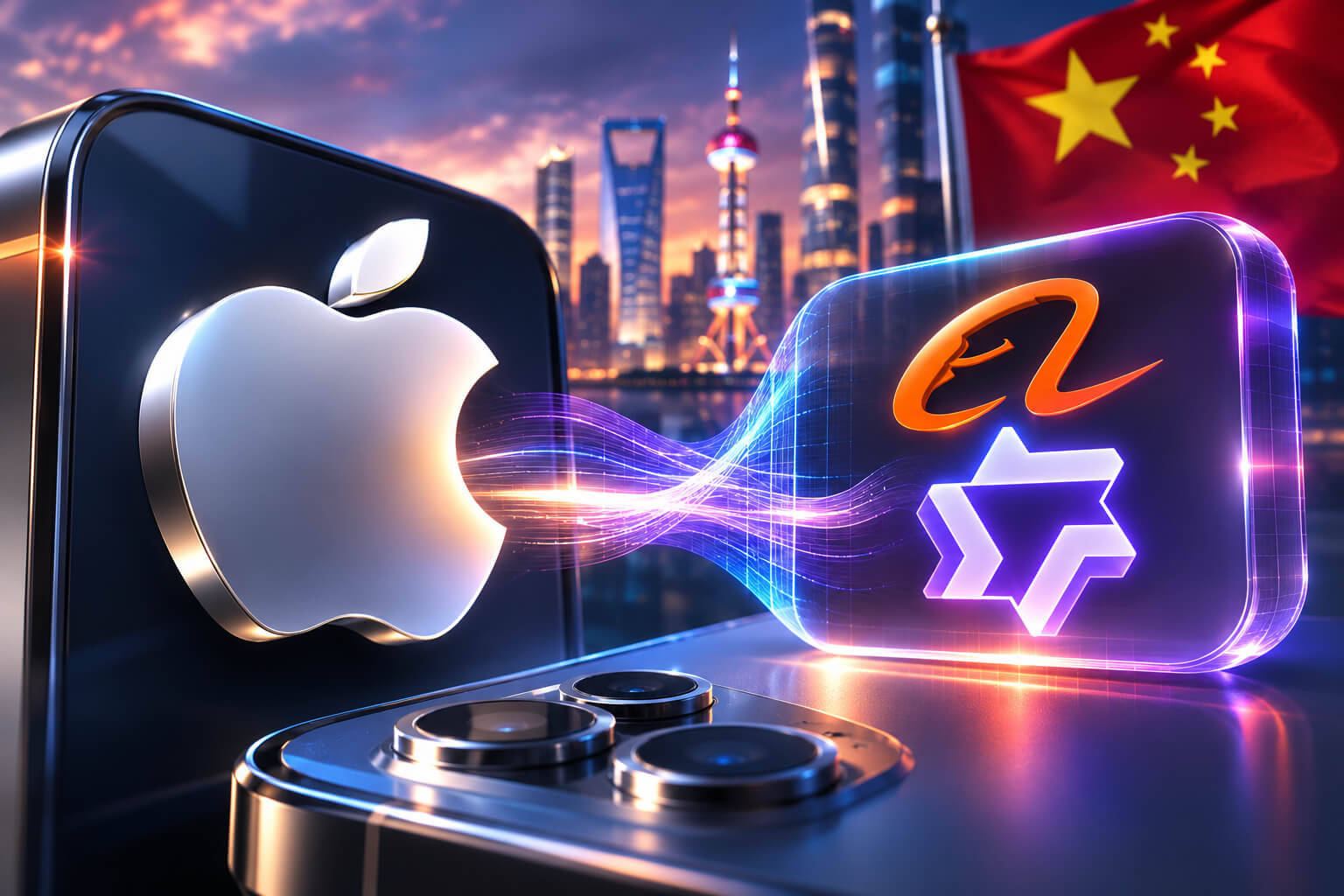
Apple is turning to Chinese artificial intelligence technology to strengthen its position in one of the world’s most competitive smartphone markets.
The iPhone maker is working with Alibaba to integrate its Qwen AI models into Apple Intelligence in China, bringing locally supported generative AI capabilities to Siri, Writing Tools, and Visual Intelligence.
The partnership comes as international smartphone manufacturers face growing pressure from Chinese competitors offering increasingly sophisticated AI-powered devices.
Samsung has taken a similar approach through its collaboration with Baidu, showing how local AI partnerships are becoming an important part of competing in China’s technology market.
Apple Brings Alibaba’s Qwen AI to Siri and Apple Intelligence
Apple’s collaboration with Alibaba aims to bring generative AI features to Chinese iPhone users while meeting the country’s regulatory requirements. Through the integration, Qwen will support Siri’s ability to answer questions, interpret information, and assist with content creation. Apple’s Writing Tools will also gain additional capabilities, allowing users to generate and refine written content more easily. Visual Intelligence is another area expected to benefit, with Qwen’s multimodal technology helping users understand images, objects, and documents. Apple will continue relying on its own AI models for certain functions, maintaining a combination of proprietary technology and locally developed AI services.
Samsung Strengthens Its AI Partnership With Baidu
Samsung has already been working with Baidu to bring localized artificial intelligence features to its Galaxy smartphones in China. The partnership, which began in January 2024, uses Baidu’s Ernie AI technology to support functions such as document summarization, intelligent search, and language assistance. Samsung has also adapted Circle to Search for Chinese users through Baidu’s search infrastructure rather than Google’s services. The collaboration reflects Samsung’s efforts to remain competitive in a market where domestic manufacturers have built strong AI ecosystems around their devices. By working with Baidu, Samsung can deliver features that better match local consumer expectations without relying entirely on international AI platforms.
China’s AI Regulations Are Driving Local Technology Partnerships
China’s regulatory environment plays a major role in how international smartphone companies introduce generative AI services. Public-facing AI systems must comply with local security, content, and registration requirements, creating additional challenges for foreign technology providers. Working with established Chinese AI developers gives Apple and Samsung access to models and infrastructure designed for the domestic market. Alibaba and Baidu already operate within China’s technology ecosystem, making them practical partners for companies seeking to introduce AI-powered services. These arrangements also highlight a growing divide between global AI products and the versions specifically developed for Chinese consumers.
Apple Faces Growing Competition From Huawei in China
Apple’s decision to work with Alibaba comes at a time when Chinese smartphone manufacturers are becoming increasingly competitive. Huawei has strengthened its position through domestic technology development and AI-powered features, while other Chinese brands continue investing in intelligent assistants and connected device ecosystems. Counterpoint Research figures cited by The Korea Herald showed Huawei leading China’s smartphone market with a 21.3% share in the third quarter of 2026, followed by Apple at 19.5%. For Apple, bringing more advanced AI features to Chinese iPhones could help address an important gap in its local product offering. Consumers increasingly expect smartphones to do more than run applications, and AI capabilities are becoming another factor influencing purchasing decisions.
Alibaba and Baidu Could Expand AI Beyond Smartphone Assistants
The potential value of these partnerships extends beyond answering questions or generating text. Alibaba operates major Chinese digital services, including Taobao and Alipay, while Baidu has established platforms covering search, navigation, and mapping. These ecosystems could eventually create opportunities for more connected AI experiences, allowing smartphone assistants to interact with services consumers already use. An AI assistant capable of understanding a shopping request, identifying relevant products, or helping users navigate local services could become more useful than a standalone chatbot. Such deeper integrations remain possibilities rather than confirmed features, but they illustrate why partnerships with established Chinese technology companies could offer Apple and Samsung broader strategic advantages.
Reliance on Chinese AI Providers Creates New Challenges
Depending on domestic AI companies also introduces complications for international smartphone manufacturers. Apple and Samsung must maintain control over their user experiences while relying on external technology for important AI functions. Questions surrounding data protection, model performance, service consistency, and long-term technology independence could become more significant as these integrations expand. Alibaba and Baidu are valuable partners today, but both companies are also developing their own AI platforms and commercial ecosystems. Apple and Samsung will need to balance the benefits of local collaboration with the risks of becoming increasingly dependent on technology they do not fully control.
China’s Smartphone Market Is Becoming a Testing Ground for Localized AI
The partnerships between Apple and Alibaba, and Samsung and Baidu, point toward a broader change in the smartphone industry. Artificial intelligence is no longer simply an additional software feature. It is becoming part of how manufacturers differentiate their devices, compete for users, and adapt to regional technology requirements. China’s combination of regulatory restrictions, powerful domestic AI developers, and intense smartphone competition makes the country a particularly important market for this transition. Apple’s Qwen integration could help the company deliver a more competitive AI experience to Chinese iPhone owners, while Samsung’s Baidu partnership demonstrates the value of long-term localization. The larger question is whether these regional AI strategies will eventually influence how smartphone manufacturers develop and distribute intelligent features in other markets.
Sources
- UA.News — Apple Integrates Alibaba’s Qwen AI in China
- The Korea Herald — Apple, Samsung Turn to Chinese AI Rivals to Stay Competitive
- Euronews — Apple Begins AI Trial in China, Powered by Alibaba
- Tech Wire Asia — Apple Intelligence Comes to China in December, Built on Alibaba’s Qwen
- Business Korea — Apple Taps Alibaba’s Qwen to Bring AI Features to China
