


Artificial intelligence is creating new opportunities across Southeast Asia. However, the region’s ability to capitalize on the technology depends on more than advanced software and computing power. Reliable energy, digital connectivity, industrial infrastructure, and investment will play equally important roles.
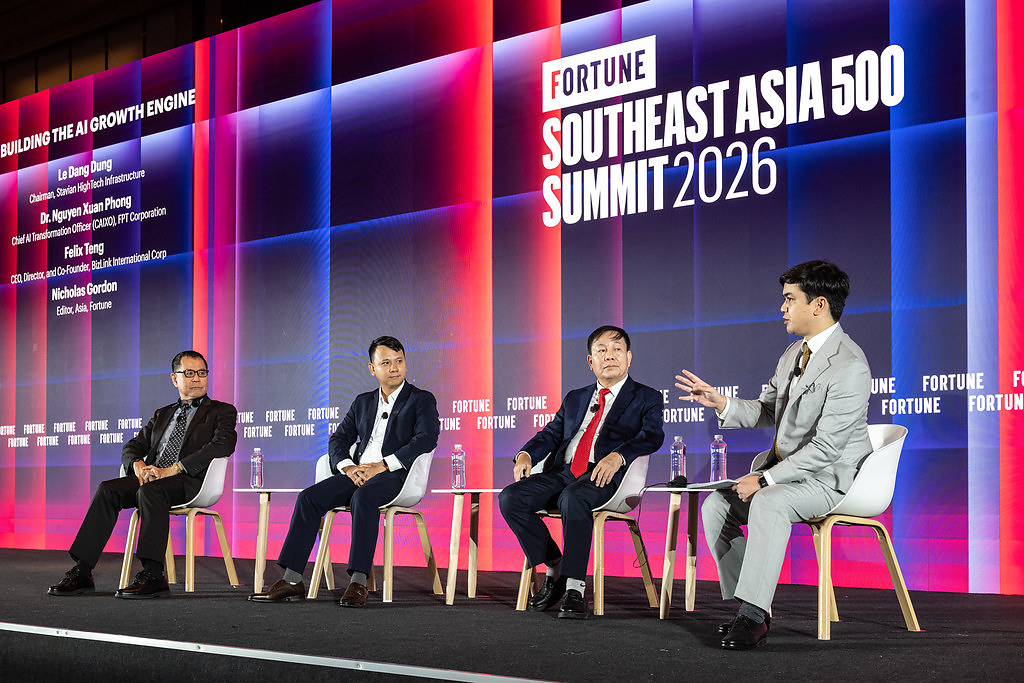
Vietnam-based Stavian Group brought that perspective to the inaugural Fortune SEA500 Summit 2026 in Ho Chi Minh City. Business leaders and investors gathered there to discuss the region’s economic future.
The summit, held on November 3 under the theme “New Horizons, Enduring Growth,” provided a platform for Stavian Group to present its infrastructure-focused strategy. The strategy is tailored for the AI era.
Rather than concentrating solely on artificial intelligence applications, the company emphasized the physical and digital foundations needed to support widespread AI adoption.
Stavian Group Highlights Infrastructure as the Foundation of AI Growth
During the panel discussion “Building the AI Growth Engine,” Le Dang Dung, Chairman of Stavian High Tech Infrastructure, outlined the importance of developing reliable infrastructure to support Southeast Asia’s expanding AI economy. Moreover, his remarks reflected a growing reality for businesses investing in artificial intelligence: sophisticated technology cannot deliver its full potential without dependable energy supplies, high-speed networks, sufficient investment, and skilled professionals.
For Stavian Group, infrastructure development represents an opportunity to participate in the AI economy beyond software and computing services. The company sees long-term value in strengthening the industrial and digital systems that businesses depend on. These systems are critical as they introduce automation, intelligent manufacturing, and data-driven operations.
Energy and Digital Connectivity Become Critical to AI Expansion
AI infrastructure requires substantial electricity, particularly as businesses expand data center operations and deploy increasingly demanding computing systems. Reliable energy networks and digital connectivity have therefore become important considerations for companies planning large-scale technology investments. Stavian Group’s strategy recognizes this connection, positioning energy and infrastructure development as essential components of sustainable AI growth.
The company’s broader business ecosystem operates across four strategic pillars: Industry, Technology, Energy, and Trade. By connecting these sectors, Stavian Group aims to create opportunities that extend beyond its traditional industrial operations. The approach could prove relevant in Southeast Asia, where digital transformation is accelerating but infrastructure capabilities differ considerably between markets.
Stavian Chemical Earns Second Consecutive Fortune Southeast Asia 500 Recognition
Stavian Group’s participation in the summit also coincided with another corporate achievement. Stavian Chemical secured a place on the 2026 Fortune Southeast Asia 500 list for the second consecutive year. It ranked 227th among the region’s largest companies by revenue. Consequently, the recognition highlighted the company’s established position in Southeast Asia’s industrial and trading sectors.
According to Stavian Group, Stavian Chemical recorded a 3.4% year-on-year revenue increase and a 9.3% improvement in profit in the financial results reflected in the ranking. Tony Dinh Duc Thang, Founder and Chairman of Stavian Group, accepted the recognition certificate during the event. In addition, the company views its existing industrial network and international operations as a foundation for pursuing additional infrastructure and technology-related opportunities.
Southeast Asia’s AI Economy Creates New Investment Opportunities
Southeast Asia’s growing interest in artificial intelligence is opening opportunities across industries. Many of these industries may not traditionally be associated with advanced technology. Manufacturing facilities, logistics networks, energy systems, and industrial parks are increasingly connected to the infrastructure requirements of AI-driven businesses. Therefore, this creates potential demand for companies capable of developing and operating the systems that support digital transformation.
Stavian Group believes its international presence and experience across industrial sectors could help it participate in this transition. With operations spanning more than 100 countries and territories, the company has an established commercial network. This network may support future partnerships and infrastructure investments. Its participation in the Fortune SEA500 Summit also offered opportunities to engage with regional executives, investors, and policymakers.
Stavian Group Expands Its Vision Beyond Traditional Industrial Operations
Stavian Group’s infrastructure ambitions reflect a broader effort to diversify its business activities. It aims to build on its established strengths in industry, energy, and trade. Therefore, the company is looking at how these sectors can support emerging technology requirements. This is particularly relevant as artificial intelligence becomes more deeply integrated into business operations.
The strategy does not necessarily require Stavian Group to compete directly with major AI developers. Instead, the company is positioning itself within the infrastructure ecosystem that supports AI deployment. Electricity, connectivity, industrial facilities, and reliable operating environments are becoming increasingly valuable as organizations expand their use of intelligent systems.
However, the company’s summit announcement did not provide specific investment commitments, project completion dates, or AI infrastructure capacity targets. Those details will be important in assessing how its strategic ambitions develop into commercial projects.
AI Infrastructure Could Determine Southeast Asia’s Next Growth Phase
The discussions at Fortune SEA500 Summit 2026 highlighted an increasingly important challenge for Southeast Asia. The region may have strong ambitions for artificial intelligence. Still, achieving widespread adoption will require sustained investment in the infrastructure that makes the technology practical and accessible.
Stavian Group wants to contribute to that development by combining its industrial experience with opportunities in energy, technology, and digital infrastructure. Furthermore, its approach reflects an understanding that AI transformation extends beyond software innovation. It also depends heavily on the systems supporting it.
Whether that vision translates into major infrastructure projects remains to be seen. For now, Stavian Group is making its priorities clear: the companies building the foundations of the AI economy could become just as important as those developing the technology itself.
Sources
- PR Newswire (November 8, 2026) — Stavian Group Showcases Its Infrastructure Vision for the AI Era at the Inaugural Fortune SEA500 Summit 2026. PR Newswire
- Stavian Group — Official Website
