


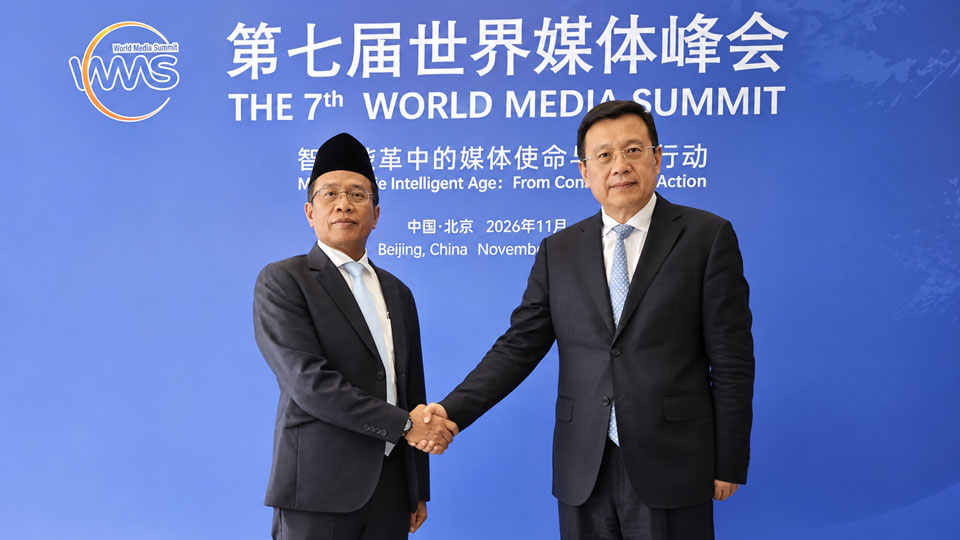
China has spent years strengthening its relationships with Indonesian media organizations, building partnerships that allow Chinese state-backed news content to reach millions of readers through established local platforms. These arrangements have become an important part of Beijing’s broader effort to shape how international audiences understand its economic policies, diplomatic relationships and growing regional presence.
Now, artificial intelligence is adding another layer to that strategy. As newsrooms increasingly experiment with automated translation, AI-generated summaries and algorithm-driven content distribution, the boundaries between original reporting and republished information are becoming harder for audiences to recognize.
Indonesia presents an interesting case. Its large digital population, competitive media industry and strong economic ties with China create opportunities for international news cooperation. Yet those same conditions raise concerns about transparency, editorial independence and the influence of foreign state-controlled information.
ANTARA and Xinhua Partnerships Strengthen China’s Media Presence
At the center of China’s media engagement in Indonesia is the relationship between ANTARA, the country’s national news agency, and Xinhua, China’s official state news agency. Their cooperation has included news exchanges and the distribution of Chinese-produced reporting to Indonesian audiences.
For Xinhua, working with an established national news organization provides access to local distribution channels and an audience that might not ordinarily seek information from Chinese state media. For ANTARA, international partnerships can expand access to foreign reporting and provide additional resources for covering developments outside Indonesia.
The arrangement also raises questions about how clearly the original source of a story is identified. When content from a foreign state-backed organization appears through a familiar domestic news outlet, readers may not immediately understand where the information originated or what editorial decisions shaped its presentation.
Other Indonesian media organizations have also maintained relationships with Chinese outlets, reflecting a broader approach to media diplomacy that extends beyond a single news agency.
AI Could Reshape How Chinese News Reaches Indonesian Audiences
Artificial intelligence is changing the economics of international news distribution. Tools capable of translating articles, generating summaries and adapting content for different audiences can significantly reduce the time and resources required to publish foreign reporting.
For international news agencies, these capabilities create opportunities to distribute information across multiple languages and platforms more efficiently. A report originally written in Chinese can potentially be translated into Bahasa Indonesia, summarized for mobile readers and repackaged for social media with considerably less manual work.
That efficiency comes with complications. Automated systems can preserve the framing and assumptions of the original source, even when the resulting article appears neutral. AI-generated summaries may also omit important context or competing viewpoints, particularly when the underlying material presents only one perspective.
There is no established evidence that the ANTARA-Xinhua partnership uses AI specifically to manipulate Indonesian news coverage. The concern is broader: as AI becomes more common in publishing, established content-sharing networks could gain additional distribution capabilities while making source attribution more difficult.
Indonesia’s Media Industry Faces Growing Financial Pressure
Indonesian news organizations operate in an increasingly difficult commercial environment. Advertising revenue has shifted toward digital platforms, audiences consume information across multiple channels, and traditional publishers face pressure to produce more content without substantially increasing operating costs.
International news partnerships offer one way to address those challenges. Access to foreign reporting, photographs and multimedia material allows local organizations to cover international developments without maintaining extensive overseas reporting networks.
The trade-off involves editorial responsibility. Publishers that rely heavily on externally supplied material must determine whether the reporting meets their own standards for accuracy, balance and independence.
This becomes particularly important when the content comes from state-controlled media organizations. Stories emphasizing trade, infrastructure investment and diplomatic cooperation may offer useful information, but they can also reflect the priorities of the governments supporting those outlets.
For Indonesian audiences, understanding the distinction between independent reporting and state-produced content remains essential.
China’s Media Diplomacy Confronts Indonesia’s Social Media Culture
China’s approach to media engagement in Indonesia has traditionally included content-sharing agreements, journalist exchanges, institutional partnerships and cultural cooperation. These initiatives help establish relationships with influential organizations and create opportunities for Chinese perspectives to appear in local reporting.
Indonesia’s changing media habits complicate that approach. Many audiences now encounter news through TikTok, YouTube, Instagram and other digital platforms rather than relying exclusively on newspapers or television broadcasts.
Social media has also changed who influences public conversations. Independent creators, online commentators and digital communities can shape how international developments are interpreted, sometimes reaching audiences that traditional media organizations struggle to attract.
For Beijing, relationships with established publishers may provide credibility and access, but they do not guarantee that audiences will accept the narratives being presented.
AI-powered recommendation systems introduce another variable. Content visibility increasingly depends on platform algorithms, audience behavior and engagement patterns rather than editorial placement alone.
AI-Generated Content Raises Concerns Over News Transparency
The expansion of AI tools in journalism creates new questions about accountability. Automated translation and summarization can improve newsroom productivity, but they can also make it more difficult to distinguish original reporting from adapted or republished material.
A news article may pass through several stages before reaching readers. It could begin as a report from an international agency, undergo translation through an automated system, receive an AI-generated headline and appear on a local website with limited information about its original source.
Each stage introduces opportunities for errors, missing context or changes in emphasis.
These risks are not unique to Chinese media. They apply to any publisher using automated systems to process externally produced reporting. The challenge becomes more sensitive when the original material comes from an organization directly controlled by a government.
Clear attribution, independent verification and human editorial oversight remain important safeguards as AI becomes more deeply integrated into news production.
Indonesia’s Editorial Independence Remains Under Pressure
Indonesia maintains extensive economic and diplomatic relationships with China, making cooperation between organizations in both countries unsurprising. Media partnerships can support legitimate information exchanges and help audiences understand developments that might otherwise receive limited coverage.
However, cooperation becomes more controversial when questions emerge about whether foreign government priorities influence editorial decisions.
Research examining China’s international media activities has identified concerns surrounding the distribution of state-backed content, the transparency of partnerships and the presentation of politically sensitive subjects.
Coverage involving the South China Sea, regional security and China’s domestic policies can be particularly revealing because these issues frequently involve competing national interests.
The central question is not whether Indonesian media organizations should maintain relationships with Chinese counterparts. It is whether those partnerships allow newsrooms to preserve independent editorial judgment and provide audiences with sufficient information to evaluate the material they publish.
The Future of AI and Foreign Media Influence in Southeast Asia
China’s media relationships in Indonesia illustrate how international influence can develop through ordinary publishing arrangements rather than overt political campaigns. Content exchanges, translation agreements and institutional partnerships provide established pathways for foreign reporting to enter domestic news ecosystems.
Artificial intelligence could make those pathways more efficient, allowing publishers to process greater volumes of information and distribute material across more platforms.
But faster distribution does not automatically produce better journalism.
As automated publishing becomes more common, the credibility of news organizations will depend increasingly on their ability to identify sources, verify information and maintain editorial control over the material they distribute.
Indonesia’s experience offers a broader lesson for Southeast Asia. International media cooperation will likely continue expanding, and AI will play a growing role in how information reaches audiences. Whether those developments strengthen public understanding or create new opportunities for influence will depend largely on transparency and the independence of the newsrooms involved.
Sources and References
- The China-Global South Project – China’s Media Influence in Indonesia, ANTARA, Xinhua and AI — Original article.
- Freedom House – Beijing’s Global Media Influence: Indonesia — Research on Chinese media partnerships and information influence.
- CSIS – Understanding the Chinese-Language Media Landscape in Southeast Asia — Analysis of Chinese-language media networks and regional information influence.
- Voice of America – China Expands Media Influence in Indonesia — Reporting on Chinese media cooperation with Indonesian news organizations.
- The China-Global South Project – China’s Expanding Media Diplomacy in Indonesia — Background on Chinese media diplomacy and Indonesia’s digital news environment.
