

Close Menu
    What's Hot
    Ethics & Society

    Hackers Used Autonomous AI Agents to Attack Taiwan — and Cyberwarfare May Have Just Changed

    By Art RyanAugust 14, 20260

    AI agents have been pitched as digital coworkers: software that can research, plan, use tools…

    IBM and OpenAI Partner to Push Secure Enterprise AI Into Core Business Operations

    August 14, 2026

    Google Launches Gemini 3.7 Flash With Faster Coding, Agents and Lower Introductory Pricing

    August 14, 2026

    AIREV’s OnDemand AI Is Coming to Qualcomm Hardware — and the Cloud Isn’t Required

    August 14, 2026
    Facebook X (Twitter) Instagram
    Facebook X (Twitter) Instagram
    Breaking AI News
    Saturday, August 15
    • Home
    • Events
    • Videos
      • Machine Can Think Summit 2026
      • Step Dubai Conference 2026
    • Technology & Innovation

      Hackers Used Autonomous AI Agents to Attack Taiwan — and Cyberwarfare May Have Just Changed

      August 14, 2026

      IBM and OpenAI Partner to Push Secure Enterprise AI Into Core Business Operations

      August 14, 2026

      Google Launches Gemini 3.7 Flash With Faster Coding, Agents and Lower Introductory Pricing

      August 14, 2026

      AIREV’s OnDemand AI Is Coming to Qualcomm Hardware — and the Cloud Isn’t Required

      August 14, 2026

      OpenAI Brings Inference Residency to the UAE, Keeping AI Processing Inside the Country

      August 14, 2026
    • Business & Marketing

      Google DeepMind Hands More AI Power to Koray Kavukcuoglu as Gemini Race Intensifies

      August 13, 2026

      SpaceXAI Launches Grok Bot, an AI Teammate That Can Actually Do the Work

      August 13, 2026

      Upwork’s AI Shift Is Getting Real: Smaller Freelance Jobs Are Disappearing, but Bigger AI Work Is Growing

      August 11, 2026

      NVIDIA Taps Wall Street Giants to Unlock $500 Billion for AI Factories

      August 11, 2026

      Firebird Launches Massive NVIDIA AI Factory in Armenia With 70,000+ Blackwell and Rubin GPUs Planned

      August 10, 2026
    • Industry Applications

      AIREV’s OnDemand AI Is Coming to Qualcomm Hardware — and the Cloud Isn’t Required

      August 14, 2026

      OpenAI Brings Inference Residency to the UAE, Keeping AI Processing Inside the Country

      August 14, 2026

      Dubai Is Building an AI System That Could Approve Building Permits in Minutes

      August 12, 2026

      AI-Powered Wearable Could Warn Athletes Before a Dangerous ACL Injury

      August 12, 2026

      Jordan Turns to AI to Find Water Leaks Before More Supply Disappears

      August 11, 2026
    • Trends & Insights

      Google Launches Gemini 3.7 Flash With Faster Coding, Agents and Lower Introductory Pricing

      August 14, 2026

      NVIDIA Pushes Local AI Forward With Nemotron 3.5 Lightning and Open-Source Agent Tools

      August 13, 2026

      Tencent Takes Hy3 Global as Its Open-Source AI Push Moves Beyond China

      August 8, 2026

      ChatGPT Free Users Get Unlimited GPT-5.6 Luna Chats as OpenAI Expands Access

      August 8, 2026

      Google Expands Dreambeans to AI Pro Subscribers in the US

      August 7, 2026
    • AI in Travel

      Fliggy’s New Agentic AI Travel Assistant Can Book, Change and Manage Trips

      August 13, 2026

      Airlines Are Using AI to Rethink Ticket Prices — And Pricing Is Only the Beginning

      August 11, 2026

      SlickTrip Launches Flight Price Tracker App for Real-Time Fare Drop Alerts

      August 10, 2026

      Direct Travel Pushes Avenir Further Into AI-Powered Business Travel

      August 9, 2026

      Oversee Brings Conversational AI to AgentSee as Travel Tech Pushes Deeper Into Agentic AI

      August 9, 2026
    Breaking AI News
    Home » AI Doomsday Predictions Fall Short as Technology Evolves Responsibly
    Technology & Innovation

    AI Doomsday Predictions Fall Short as Technology Evolves Responsibly

    AdminBy AdminSeptember 21, 2024No Comments5 Mins Read
    Facebook Twitter Pinterest LinkedIn Tumblr Email
    Share
    Facebook Twitter LinkedIn Pinterest Email

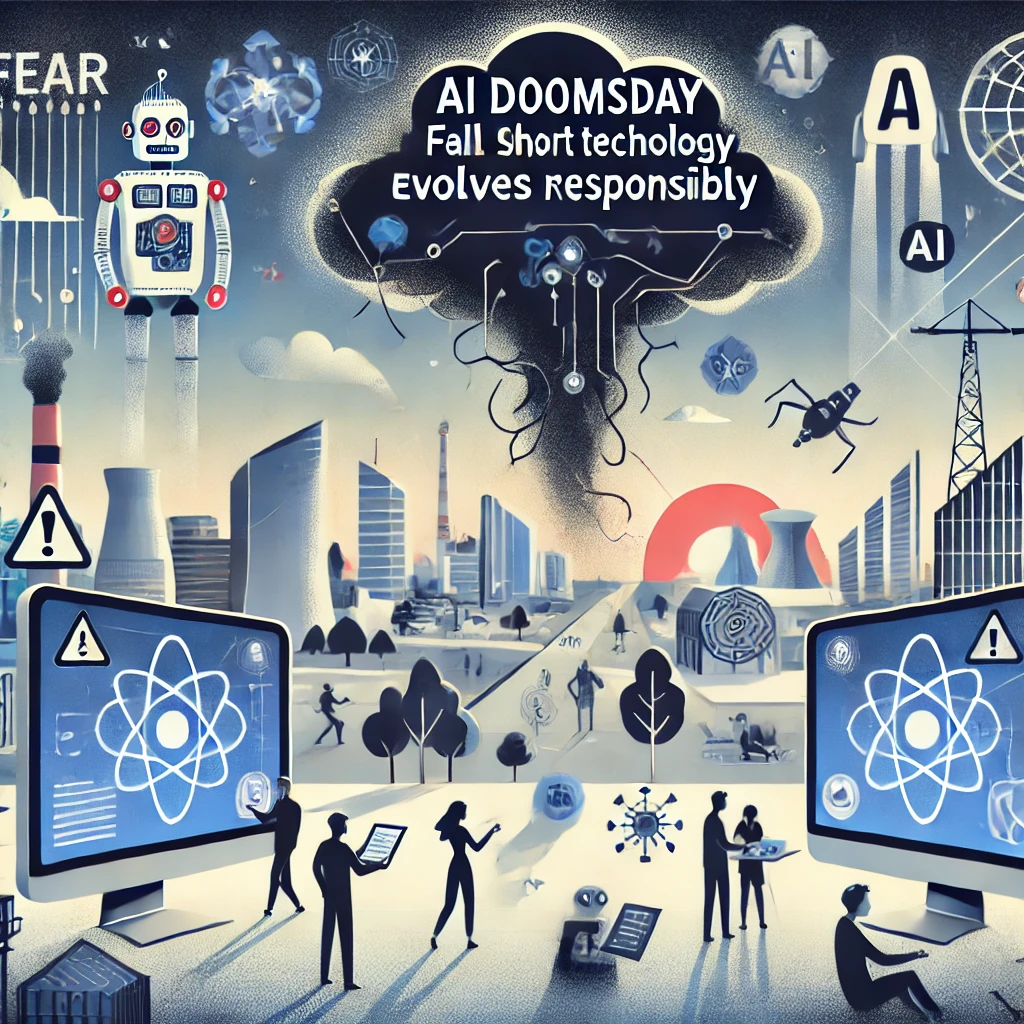
    For years, a vocal group of AI pessimists, often referred to as “AI doomers,” have warned that the rapid development of artificial intelligence would inevitably lead to catastrophic outcomes. From fears of widespread job loss and economic collapse to the idea of AI systems running amok and causing irreversible damage, these skeptics painted a grim picture of a future dominated by AI.

    But as the AI industry continues to grow and mature, many of these doomsday predictions have yet to materialize, leaving AI doomers licking their wounds. Instead of collapse and chaos, AI is being integrated into everyday life in ways that seem to benefit businesses, governments, and individuals alike. So why haven’t the worst-case scenarios come to pass, and does this mean the doomers were wrong?

    The Rise of AI Doom Predictions

    The concerns around AI have been echoed by some prominent figures in tech and academia. Elon Musk, the founder of Tesla and SpaceX, has famously called AI an existential threat to humanity. Likewise, Stephen Hawking warned that AI could “spell the end of the human race” if not properly controlled. These warnings resonated with the public, giving rise to a movement that questioned the wisdom of pushing AI development without sufficient safeguards.

    The AI doomers envisioned scenarios where machines would outthink humans, take over critical systems, or eliminate jobs on a massive scale. The underlying fear was that AI systems, once they surpassed human intelligence, would be difficult to control, leading to unintended and dangerous consequences.

    Why the Worst Hasn’t Happened (Yet)

    While the fears of AI doomers are not entirely without merit, several factors have kept their most dire predictions from coming true.

    1. AI Development Is Still Limited: Despite rapid advances, AI is not yet at a stage where it can truly replicate or surpass human intelligence. Today’s AI systems excel at narrow, specific tasks, like language processing or image recognition, but they lack the generalized intelligence and autonomy that doomers fear.
    2. Human Oversight: In most cases, AI systems are closely monitored and controlled by human operators. From self-driving cars to AI in healthcare, these systems require human supervision to function safely. Companies and researchers have also put significant effort into developing fail-safes and ethical guidelines to minimize the risks associated with AI.
    3. Focus on Practical Applications: Much of the current AI development is focused on practical applications that improve efficiency, automate tasks, or enhance decision-making. From AI-powered chatbots to personalized marketing tools, the focus has been on AI tools that complement human work, rather than replace it entirely.
    4. AI Regulation and Ethics: Policymakers and tech companies alike have begun to take the potential risks of AI seriously. Ethical AI development, transparency, and bias reduction have become key issues, with organizations working to establish frameworks that prevent harmful outcomes. Countries like the U.S. and the EU have started enacting regulations that address AI usage, ensuring more responsible development and deployment.

    Where the Risks Still Lie

    Despite these encouraging developments, it would be premature to declare the AI doomsday scenario completely over. Some of the risks associated with AI development are still present, and the future could hold new challenges as the technology evolves.

    • Job Displacement: One of the most tangible risks remains the potential for job displacement as AI automates more roles. Industries such as manufacturing, retail, and even white-collar sectors like law and finance could see shifts as AI handles repetitive tasks more efficiently than humans.
    • Autonomous AI Systems: If AI systems become more autonomous, the risk of unintended consequences increases. Autonomous AI could make decisions in complex environments that humans might not fully understand or control, leading to unforeseen complications or even harm.
    • Bias and Discrimination: AI systems are only as good as the data they are trained on. If AI models are built using biased or incomplete data, they can perpetuate and even amplify existing inequalities. Ensuring that AI is used responsibly to avoid discrimination remains a critical concern.

    The Path Forward

    As AI continues to develop, it’s likely that society will need to strike a balance between optimism and caution. The AI doomers may not have been entirely wrong in their concerns, but the key to preventing a worst-case scenario lies in thoughtful, responsible development, regulation, and oversight.

    Addressing the potential risks head-on while still allowing AI to enhance industries and improve lives will be crucial. AI is here to stay, and the onus is now on developers, businesses, and governments to ensure that it evolves in a way that benefits humanity without succumbing to the risks once feared by the doomers.

    Conclusion

    While the AI doomers’ worst fears have not materialized, their concerns continue to shape the dialogue around the future of AI. For now, AI remains a tool that, when used responsibly, has the potential to improve efficiency and decision-making across industries. But as AI technology continues to evolve, it is critical to maintain vigilance and ensure that this powerful tool is developed with care and ethical considerations at its core. The AI doomers may not have been entirely wrong—just early.

    Share. Facebook Twitter Pinterest LinkedIn Tumblr Email
    Admin

    Related Posts

    Hackers Used Autonomous AI Agents to Attack Taiwan — and Cyberwarfare May Have Just Changed

    August 14, 2026

    IBM and OpenAI Partner to Push Secure Enterprise AI Into Core Business Operations

    August 14, 2026

    Google Launches Gemini 3.7 Flash With Faster Coding, Agents and Lower Introductory Pricing

    August 14, 2026

    Comments are closed.

    Latest News

    Hackers Used Autonomous AI Agents to Attack Taiwan — and Cyberwarfare May Have Just Changed

    August 14, 2026

    IBM and OpenAI Partner to Push Secure Enterprise AI Into Core Business Operations

    August 14, 2026

    Google Launches Gemini 3.7 Flash With Faster Coding, Agents and Lower Introductory Pricing

    August 14, 2026

    AIREV’s OnDemand AI Is Coming to Qualcomm Hardware — and the Cloud Isn’t Required

    August 14, 2026
    Facebook X (Twitter) Pinterest Vimeo WhatsApp TikTok Instagram LinkedIn YouTube Spotify Reddit Snapchat Threads

    AI University

    • Global Universities
    • Universities in Africa
    • Universities in Asia
    • Universities in Europe
    • Universities in Latin America
    • Universities in Middle East
    • Universities in North America
    • Universities in Oceania

    AI Tools & Apps Directory

    • AI Productivity Tools
    • AI Coding Tools
    • AI Voice Tools
    • AI Video Tools
    • AI Image Generators
    • AI Writing Tools

    Info

    • Home
    • About Us
    • AI Organizations & Associations
    • Contact Us
    • Cookie Policy
    • Copyright Policy
    • Disclaimer
    • Editorial Policy
    • Terms and Conditions

    Subscribe to Updates

    Get the latest creative news from FooBar about art, design and business.

    © 2026 Breaking AI News.
    • Privacy Policy

    Type above and press Enter to search. Press Esc to cancel.

    Sign Up

    Want to stay ahead In Artificial Intelligence?

     Sign up now and get exclusive breaking AI news and special updates—FREE!