


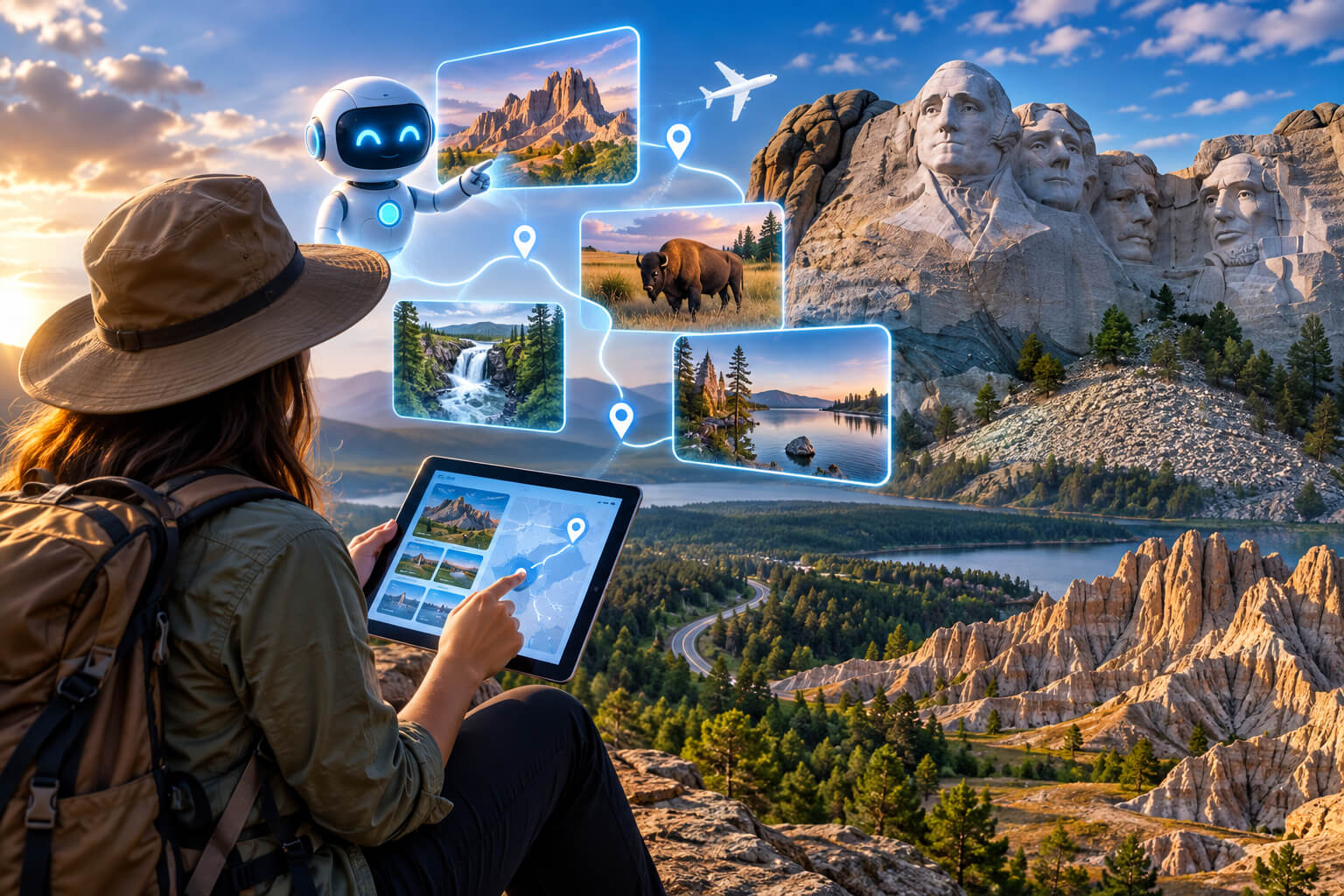
Planning a South Dakota trip is becoming much more conversational. Travel South Dakota and the Black Hills & Badlands Tourism Association have partnered with Mindtrip to bring AI-powered trip planning directly into their official tourism websites. Instead of jumping between attraction pages, maps, saved links and separate planning tools, visitors can now ask questions, explore recommendations and begin building an itinerary from one place.
The partnership also marks a notable milestone for Mindtrip. The company says this is its first simultaneous launch involving both a statewide tourism organization and a destination partner within the same state.
Mindtrip AI Trip Planning Comes to South Dakota
Mindtrip’s conversational platform has been integrated into TravelSouthDakota.com and BlackHillsBadlands.com, giving travelers access to AI-powered trip planning while they research destinations across the state. Visitors can ask about attractions, activities and places to visit, then use the platform to shape those suggestions into a more personalized itinerary based on their interests and travel preferences.
The experience is designed to reduce some of the friction that comes with planning a trip through a traditional tourism website. A traveler may know they want to see Mount Rushmore but have little idea what else to include during a three- or four-day stay. The AI can help connect that starting point with additional attractions, scenic routes, outdoor activities and local businesses that might otherwise be overlooked.
AI Moves From Travel Inspiration to Actual Itineraries
Generative AI has already changed the way many travelers research destinations, but Mindtrip is pushing the technology further into the practical side of trip planning. Instead of simply producing lists of popular places, the platform combines conversational AI with a proprietary travel knowledge base to help users turn broad ideas into structured travel plans.
That shift matters because travel planning rarely happens in a straight line. Someone may begin with a vague request for outdoor activities, then narrow the trip around wildlife, scenic drives, family-friendly stops or food experiences. A conversational interface makes that process more flexible because the traveler can keep refining the itinerary instead of starting over with each new search.
South Dakota Wants Travelers to Look Beyond Mount Rushmore
Mount Rushmore National Memorial remains one of South Dakota’s most recognizable attractions, but the state’s tourism industry has much more to offer. South Dakota includes national and state parks, scenic highways, caves, wildlife destinations, historic communities, Indigenous cultural experiences and a growing range of local food and outdoor tourism options.
AI can help bring those lesser-known experiences into the planning process. Instead of presenting every visitor with roughly the same set of highlighted attractions, a conversational system can adjust recommendations based on what the traveler actually wants. Someone interested in hiking could receive a very different itinerary from a family traveling with children or a visitor focused on history and local culture.
Black Hills and Badlands Gets Its Own AI Discovery Layer
The Black Hills & Badlands region covers more than five million acres across western South Dakota and includes forests, mountain areas, lakes, caves, wildlife attractions and historic communities. While Mount Rushmore remains a major tourism draw, the region has enough variety to support much longer and more specialized trips.
Mindtrip gives the regional tourism organization another way to surface those experiences. A visitor who initially plans a short stop could discover enough relevant activities to justify staying another day or exploring a different part of the region. That could benefit smaller attractions, hospitality businesses and local communities that receive less visibility through traditional destination searches.
Tourism Websites Are Becoming AI Travel Assistants
Tourism websites have traditionally functioned like digital brochures. They publish attraction guides, hotel listings, maps, events, travel tips and suggested itineraries, but visitors still have to connect those pieces on their own. Conversational AI changes that model by allowing the website to respond directly to a traveler’s questions and preferences.
That turns the destination website into something closer to a personal travel assistant. Instead of asking users to browse dozens of pages, the platform can help interpret their interests and bring together relevant options in a more useful sequence. For tourism boards, this also creates an opportunity to keep visitors within their own digital ecosystem rather than losing them to third-party travel platforms during the planning process.
Mindtrip Expands Its Presence Across Destination Marketing
The South Dakota partnership is part of a wider push by Mindtrip into destination marketing. The company has been building relationships with tourism organizations that want to add conversational AI and personalized itinerary tools to their websites.
Mindtrip says its destination partnerships include Brand USA, The Bahamas, Visit Costa Rica, Discover Puerto Rico, Visit California, Travel Wyoming, Travel Nevada and New Orleans & Company. The growing list suggests that destination organizations are starting to view AI not simply as an experimental website feature but as another layer of their visitor engagement strategy.
Mindtrip Builds Around Conversational AI
Founded in Silicon Valley in 2023, Mindtrip built its platform around conversational AI combined with a proprietary travel knowledge base. The company positions the service as an all-in-one environment where travelers can move from initial inspiration to a more detailed trip plan without constantly switching between different tools.
That approach gives specialized travel AI platforms a different role from general-purpose chatbots. Travelers can already ask large AI models where to eat or what to visit, but travel-focused platforms are trying to make those recommendations more practical by connecting them with destination data, itinerary tools and structured travel information.
AI Could Change How Destinations Compete for Travelers
The more interesting part of this partnership is not simply that South Dakota now has an AI feature on its tourism websites. Destination marketing organizations compete for attention long before a traveler books accommodation or buys a ticket, and AI could become part of how destinations persuade people to stay longer, visit more places and explore beyond the obvious attractions.
A traveler who begins with Mount Rushmore could end up discovering Badlands National Park, a scenic highway, a local restaurant, a wildlife experience and a historic town during the same planning session. That kind of personalized discovery could give destinations more opportunities to distribute visitor spending across a wider range of businesses and communities.
Embedded AI Is Becoming Part of Travel Planning
South Dakota’s deployment reflects a broader direction for travel AI. Instead of expecting travelers to visit a standalone chatbot, tourism organizations are beginning to embed AI directly into the websites people already use for destination research.
That makes the technology feel less like an extra tool and more like part of the travel planning process itself. Travelers can move from asking a simple question to shaping a full itinerary without leaving the destination’s official website, while tourism organizations gain another way to guide visitors toward relevant experiences.
What the Mindtrip Partnership Means for AI in Travel
The Mindtrip partnership shows how AI travel planning is shifting from generic itinerary generation toward more tightly integrated destination experiences. Rather than offering the same recommendations to every visitor, tourism websites can increasingly respond to individual interests, trip length and preferred activities.
There are still challenges around recommendation accuracy, changing business information and the quality of AI-generated itineraries. Even so, the direction is becoming clearer. Travelers increasingly expect digital tools to understand what they want instead of simply returning a long list of links.
For South Dakota, Mindtrip now creates a shorter path between travel inspiration and an actual itinerary. That space between deciding where to go and figuring out what to do there is becoming one of the most competitive areas in travel AI.
Sources
PR Newswire — Mindtrip Empowers Travelers with AI-Powered Trip Planning
https://www.prnewswire.com/news-releases/mindtrip-empowers-travelers-with-ai-powered-trip-planning-302874938.html
Mindtrip
https://mindtrip.ai/
