


Google is making a bigger push into Mexico’s artificial intelligence market, and this time, the focus isn’t just on powerful AI models. It’s about getting the technology into the hands of people who might otherwise struggle to access it.
At Google for Mexico 2026, held on November 18, the company introduced several initiatives aimed at making AI more accessible, improving weather forecasting and supporting digital education.
One announcement stood out: a lighter version of Gemini designed to run on Android smartphones with just 2GB of RAM. That could make Google’s AI assistant available to more people using affordable devices.
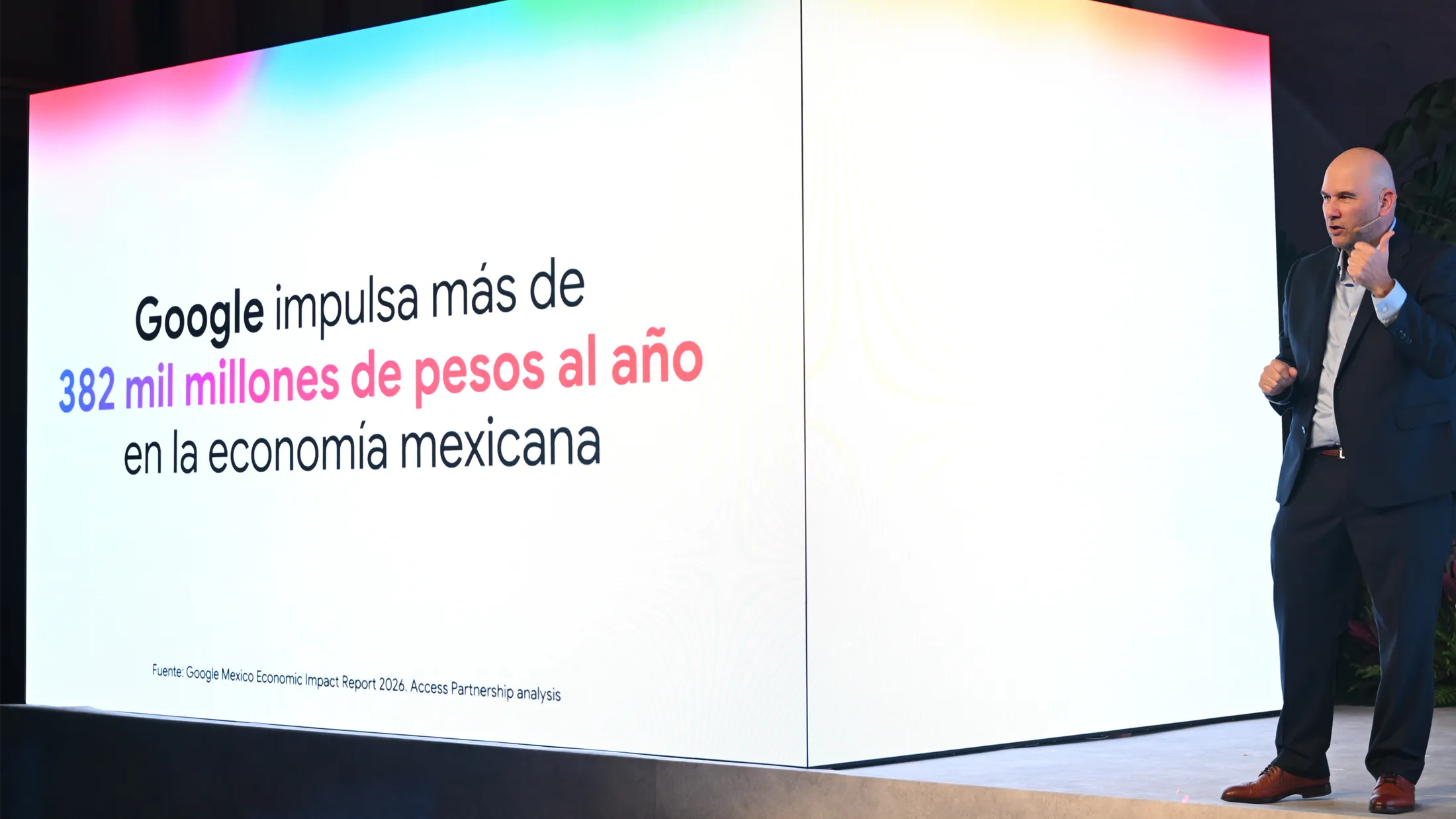
Google also shared new economic figures, reporting that its products and services contributed more than 382 billion Mexican pesos in economic activity during 2025.
Google Says Its Services Generated 382 Billion Pesos in Economic Activity
Google’s latest Economic Impact Report puts the company’s estimated contribution to Mexico’s economy at more than 382 billion pesos in 2025. That’s roughly one billion pesos in economic activity every day.
The company also claims that businesses generate an average of eight pesos in commercial returns for every peso spent on Google Ads. For small businesses that depend on online visibility, those numbers offer a glimpse into how important digital advertising has become.
Of course, these are Google’s own estimates, not independently verified economic figures. Still, they show why Mexico remains an important market for the company’s digital services and growing AI ambitions.
Gemini Is Coming to Android Phones With Just 2GB of RAM
Not everyone owns a high-end smartphone, and Google appears to be taking that reality seriously.
The company announced a lighter Gemini experience that can operate on Android devices with as little as 2GB of RAM. The goal is to bring AI assistance to people who use older or more affordable smartphones.
Users could turn to Gemini for learning support, voice-based assistance and everyday creative tasks. A student might ask for help understanding a difficult lesson, while a small business owner could use the assistant to organize ideas or prepare content.
It’s a practical move. AI adoption depends on more than software capabilities. The technology also needs to work on devices people already own.
Google has yet to provide a complete rollout schedule or explain which Gemini features will be available on these lower-memory phones.
Google Uses AI to Improve Weather Forecasting and Emergency Alerts
Weather forecasting is another area where Google wants AI to make a noticeable difference.
The company is working with Mexico’s National Water Commission (CONAGUA) and National Meteorological Service to improve weather predictions and provide more useful alerts.
Google says its AI forecasting technology can generate hourly predictions extending up to 15 days ahead. The initiative is intended to help authorities and communities prepare for dangerous weather conditions, including severe storms and flooding.
For a country frequently exposed to hurricanes and extreme rainfall, earlier warnings could make a real difference.
The technology builds on Google’s previous work in AI-powered weather forecasting and flood prediction. However, the company has not confirmed when the expanded alert system will reach users nationwide.
Google.org Invests $1.65 Million in Online Safety Education
Google’s latest initiatives aren’t limited to AI tools and business growth.
Through Google.org, the company has contributed $1.65 million to UNICEF to support online safety education across Latin America.
In Mexico, the program aims to reach more than 300,000 students, parents, caregivers and teachers. Participants will learn about online risks, responsible technology use and ways to protect younger internet users.
The timing is important. As AI tools become easier to access, concerns about misinformation, harmful content and digital safety are becoming harder to ignore.
Giving people access to technology is one thing. Helping them understand the risks that come with it is another.
Google Plans New Mexico City Office for More Than 1,000 Employees
Google is also expanding its physical presence in Mexico.
The company plans to open a new office in Mexico City that will bring together more than 1,000 employees. The location will support teams working across Google’s operations, including software engineers contributing to international products such as Google Chrome.
The expansion suggests that Mexico is becoming more than a consumer market for Google’s technology.
Local engineering talent is already contributing to products used globally, and the new office could strengthen that role.
Google has not announced a specific opening date.
Why Google’s AI Expansion in Mexico Matters
There’s a noticeable difference between announcing another powerful AI model and making existing AI technology useful to millions of people.
Google’s latest Mexico initiatives lean toward the second approach.
A lighter Gemini app could remove a hardware barrier for users with affordable smartphones. Better weather predictions could help communities prepare for emergencies. Digital education programs could give families more confidence when navigating an increasingly AI-driven internet.
Whether these initiatives deliver meaningful results will depend on their availability, accessibility and performance outside controlled demonstrations.
For now, Google’s strategy in Mexico shows where AI competition may be heading: beyond developing smarter systems and toward making those systems useful in everyday life.
Sources
- Google Official Blog – Google for Mexico 2026 (November 18, 2026)
https://blog.google/company-news/inside-google/around-the-globe/google-latin-america/google-for-mexico-2026-november/ - Google Official Blog – Celebrating 20 Years of Google in Mexico
https://blog.google/company-news/inside-google/around-the-globe/google-latin-america/google-mexico-20-years/ - CONAGUA – National Water Commission of Mexico
https://www.gob.mx/conagua - Google.org – Google’s Philanthropic Initiatives
https://www.google.org/
