


SpaceX has been nominated for the 2026 World AI Awards in the Aerospace category, recognising a company whose spacecraft, launch vehicles and autonomous systems have pushed software-driven operations into some of the most demanding environments in aerospace.
The nomination comes as autonomy becomes increasingly important to modern spaceflight. SpaceX has developed systems capable of autonomously navigating spacecraft to the International Space Station, controlling complex phases of orbital flight and returning reusable rocket boosters to Earth with high precision.
The World AI Awards recognises organisations, individuals, products and technologies contributing to the development and real-world application of artificial intelligence across industries.
For SpaceX, the clearest story is not a conventional AI product. It is the increasing amount of decision-making, navigation and vehicle control that sophisticated onboard software can perform during missions where speed, precision and limited opportunities for human intervention make automation essential.
Dragon makes autonomous docking operational
SpaceX’s Dragon spacecraft provides one of the most established examples of autonomous spacecraft operations.
Dragon can perform the sequence of orbital manoeuvres required to approach and dock with the International Space Station automatically. NASA describes Dragon as a fully autonomous spacecraft that can still be monitored and controlled by astronauts onboard and by SpaceX mission control.
The capability is not merely experimental.
In May 2026, a SpaceX Dragon carrying nearly 6,500 pounds of scientific investigations, supplies and equipment launched aboard Falcon 9 for NASA’s 34th commercial resupply services mission. Two days later, the uncrewed spacecraft autonomously docked with the forward port of the station’s Harmony module.
SpaceX traces this capability back to March 2019, when Dragon became the first American spacecraft to autonomously dock with the International Space Station during its initial demonstration mission.
That autonomy addresses a fundamental problem in orbital operations: bringing two vehicles travelling at orbital velocity together safely and precisely without requiring continuous manual control throughout the rendezvous.
Reusable rockets depend on precision automation
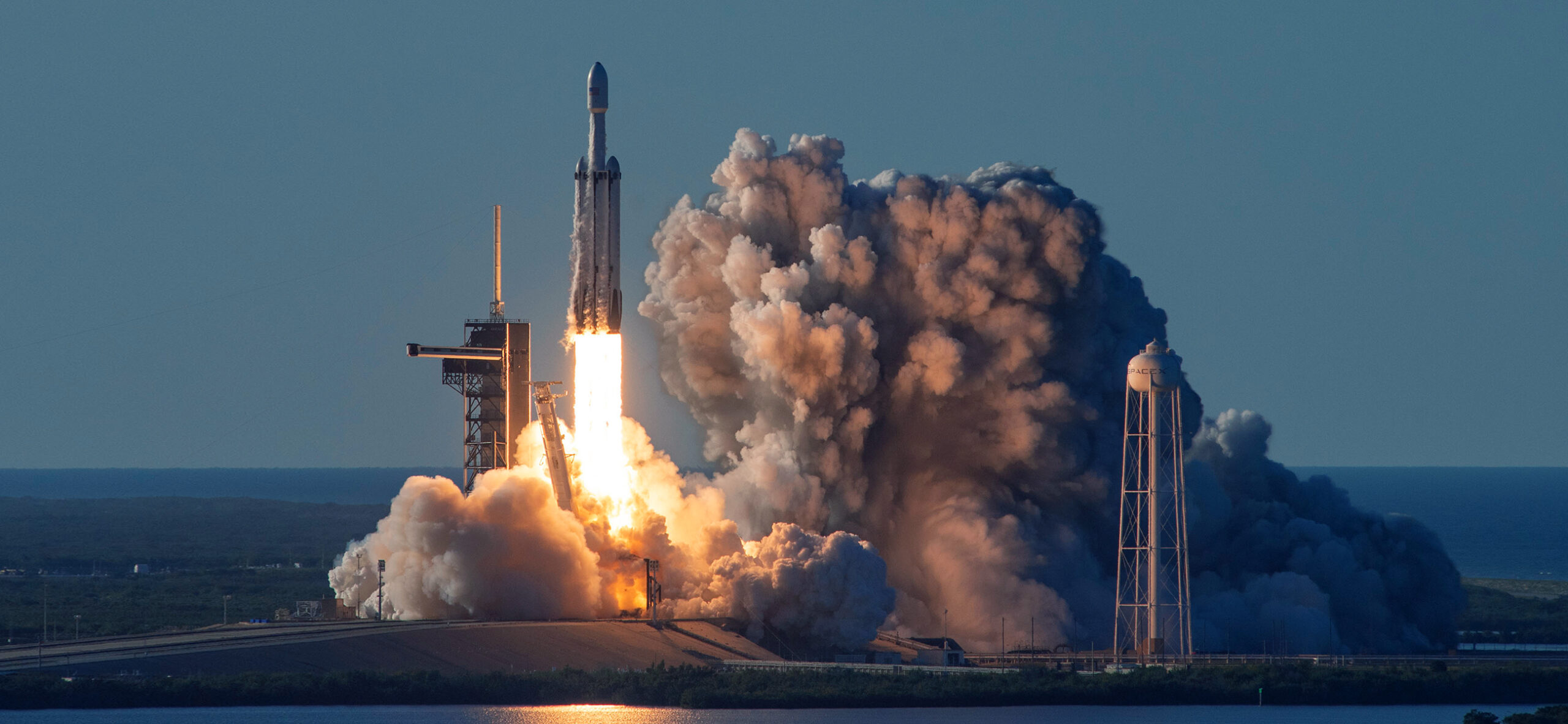
Autonomous control is equally important to SpaceX’s reusable launch system.
After separating from Falcon 9’s second stage, reusable first-stage boosters can perform a sequence of manoeuvres to return toward Earth. Grid fins help control the vehicle during atmospheric descent before the booster performs its landing burn and targets either a ground landing zone or an autonomous droneship at sea.
The process has transformed booster recovery from an experimental demonstration into a routine part of SpaceX launch operations.
SpaceX’s own launch records show Falcon 9 boosters continuing to return to droneships during operational missions in September 2026, including Starlink, O3b mPOWER and U.S. Space Force launches.
The company’s Falcon documentation describes four grid fins used to assist precision landing, while the first stage incorporates landing legs and restartable Merlin engines that support recovery after launch.
These systems illustrate an important distinction in aerospace technology: advanced automation can deliver sophisticated autonomous behaviour without every underlying function necessarily qualifying as artificial intelligence.
Starship pushes autonomy toward a much larger system
SpaceX is extending the same software-intensive approach through Starship, its next-generation launch and spacecraft system.
Starship is being developed as a fully reusable transportation system designed for missions to Earth orbit, the Moon and eventually Mars. That ambition requires automated control across launch, navigation, atmospheric re-entry, landing and, ultimately, operations far beyond immediate human support.
The programme remains under active development. SpaceX was continuing development of its first Starship V3 vehicle in 2026, meaning its planned capabilities should be distinguished from the mature operational record of Falcon 9 and Dragon.
The contrast is important. Dragon’s autonomous rendezvous and docking is already used on NASA missions. Falcon booster recovery is an established operational capability. Starship, by comparison, remains a development programme working toward a much broader reusable spaceflight architecture.
Together, the systems demonstrate how autonomy can move from a software concept into machines that must navigate, manoeuvre and respond to rapidly changing conditions in the physical world.
Graham Cooke, President of the World AI Awards, said:
“SpaceX’s nomination highlights the growing importance of autonomous systems in aerospace, where spacecraft and launch vehicles increasingly need to perform complex operations with extraordinary precision.
“From Dragon’s autonomous rendezvous and docking to the software-driven control required for reusable rocket operations, SpaceX demonstrates how advanced automation can change what is possible in spaceflight. We congratulate the SpaceX team on its 2026 World AI Awards nomination and look forward to following the development of its next generation of aerospace technologies.”
SpaceX joins organisations, researchers, entrepreneurs and technology developers being recognised through the 2026 World AI Awards.
The programme recognises organisations, individuals and technologies contributing to the development and application of artificial intelligence across industries, including fields where intelligent and autonomous software increasingly interacts directly with complex physical systems.
SpaceX provides an unusual example of that transition. Its most significant achievements are not centred on a public-facing generative AI product. Instead, sophisticated software and autonomy sit inside spacecraft and launch systems, handling tasks ranging from orbital rendezvous to precision vehicle control.
As aerospace systems become more autonomous, that relationship between software and physical engineering is likely to become increasingly important. SpaceX’s operational Dragon and Falcon programmes already provide practical examples, while Starship is testing how much further that model can extend.
Learn more about SpaceX and its aerospace technology at spacex.com.
Discover the World AI Awards 2026, explore the nominees and learn more about the awards at worldawards.ai.
