


Saudi Arabia is not treating artificial intelligence as a side conversation anymore.
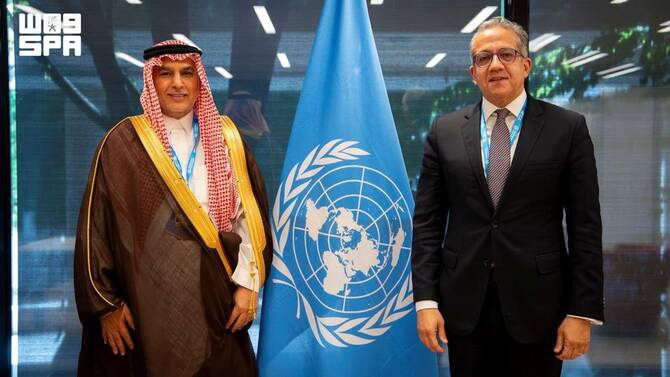
During the Global Dialogue on AI Governance in Geneva, the president of the Saudi Data and Artificial Intelligence Authority, Abdullah Al-Ghamdi, met with UNESCO Director General Khaled El-Enany to discuss deeper cooperation on artificial intelligence, ethical policy, and international partnerships.
The meeting took place alongside the AI for Good Global Summit, where governments, global institutions, researchers, and technology leaders are trying to answer a problem that keeps getting bigger: who gets to shape the rules of AI, and how fast can those rules keep up?
Saudi Arabia Pushes AI Ethics Onto the Global Stage
The discussion between Saudi Arabia and UNESCO focused on strategic cooperation in artificial intelligence. Not just research. Not just investment. The bigger issue was governance.
That matters because AI is moving faster than most regulatory systems can handle. Deepfakes, automated misinformation, biased systems, data privacy risks, and uneven access to AI tools are already here. They are not future concerns anymore.
Saudi Arabia used the Geneva meeting to underline its role in supporting responsible AI and the UN Sustainable Development Goals. Al-Ghamdi also highlighted the Kingdom’s work in turning broad AI principles into actual programs through SDAIA.
That is where the story gets more interesting.
Riyadh Wants to Become a Global AI Ethics Hub
A major part of Saudi Arabia’s AI push is the International Center for Artificial Intelligence Research and Ethics in Riyadh.
The center was approved by UNESCO’s General Conference as a Category 2 center under its auspices. In plain terms, that gives it international weight. It is designed to support AI research, build awareness around AI ethics, and help develop global capacity in responsible AI.
For Saudi Arabia, this is more than a diplomatic announcement. It fits into a larger national strategy where AI is tied directly to Vision 2030, digital transformation, public services, economic diversification, and global technology leadership.
The Kingdom does not just want to use AI. It wants a seat at the table where AI rules are written.
SDAIA Says AI Ethics Must Become Practical
One of the harder parts of AI governance is moving from nice-sounding principles to real enforcement.
Saudi Arabia says it is already working on that shift. Through SDAIA, the Kingdom has launched AI Ethics Principles, awarded AI ethics labels to more than 60 companies, and introduced a National AI Index to measure AI adoption across government entities.
That last point is important.
Many countries talk about responsible AI. Fewer actually track how public institutions are adopting it, how mature those systems are, and whether human-centered principles are being applied in real operations.
Saudi Arabia is trying to build that measurement layer early.
Why This Matters for the AI Race
The global AI race is usually framed around chips, models, cloud infrastructure, and giant funding rounds. Fair enough. Those are the loud parts.
But governance is becoming just as strategic.
Countries that help define AI ethics, testing standards, data rules, and deployment norms may end up shaping how AI products are built and trusted internationally. That is why Saudi Arabia’s cooperation with UNESCO matters. It is not only about local AI adoption. It is about influence.
The Kingdom has already been expanding its AI ecosystem through national programs, regulatory work, global partnerships, and talent development. The Geneva meeting adds another layer: Saudi Arabia wants to position itself as a serious player in responsible AI, not just an investor in the technology.
AI Governance Is Becoming a Diplomatic Battleground
AI is now part of foreign policy.
That may sound dramatic, but it is already happening. Nations are discussing AI safety, data sovereignty, digital rights, misinformation, workforce disruption, and access to advanced technologies at the same tables where they discuss trade, security, and development.
Saudi Arabia’s meeting with UNESCO shows how quickly this has changed.
A few years ago, AI ethics sounded like an academic topic. Now it is a national strategy issue. Governments know that whoever builds trusted AI systems — and helps define what “trusted” means — will have an advantage.
Saudi Arabia clearly wants to be in that group.
Saudi Arabia’s AI Strategy Is Getting More Global
The Geneva talks are another sign that Saudi Arabia is moving its AI ambitions beyond domestic transformation.
The Kingdom is building institutions, working with international organizations, supporting AI ethics programs, and trying to connect its national AI agenda with global governance frameworks.
There is still a long road ahead. Responsible AI is difficult. It requires technical standards, legal clarity, public trust, skilled talent, and constant oversight.
But Saudi Arabia is making the message clear: its AI strategy is no longer only about adoption. It is also about shaping the future rules of the technology.
