


Buying AI is no longer just a technology decision for governments. It is becoming a policy decision, a security decision, and in many cases, a national infrastructure decision.
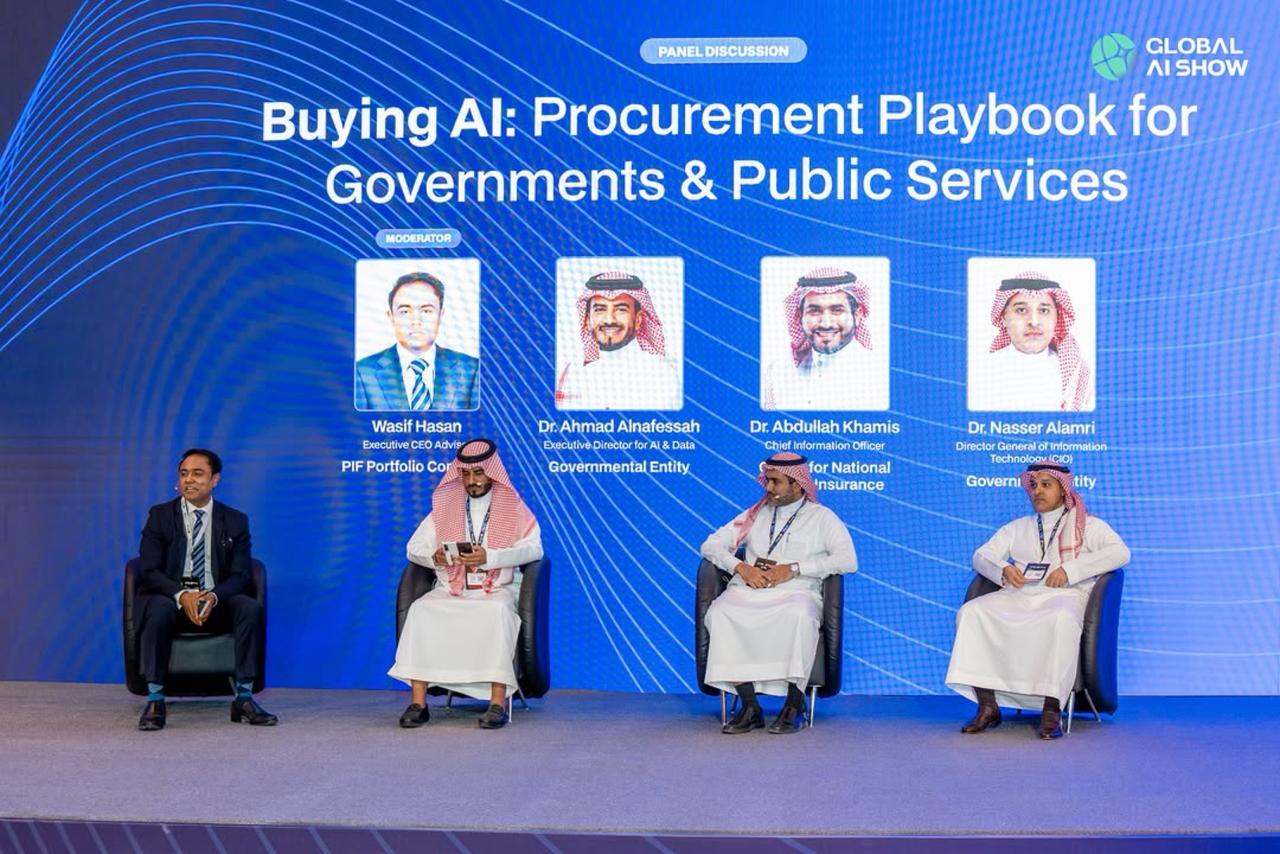
That was the core theme of the panel discussion “Buying AI: Procurement Playbook for Governments & Public Services.” The session brought together government technology leaders and public sector advisors to discuss how countries and public institutions can purchase, deploy, and govern AI without losing control of their data, systems, or long-term digital direction.
The discussion has already taken place, but the questions raised remain highly relevant as governments around the world accelerate AI adoption.
Avoiding Vendor Lock-In in Public Sector AI
One of the biggest concerns in government AI procurement is vendor lock-in.
When public institutions buy AI systems, they are not simply purchasing a software tool. They may be committing to a full ecosystem that includes models, cloud infrastructure, data pipelines, licensing terms, technical support, and future upgrades.
That can become a problem.
If systems are not interoperable, governments may find themselves dependent on one provider for years. Switching vendors becomes expensive. Integrating new tools becomes difficult. Innovation slows down because public agencies are forced to build around a closed environment.
The panel explored how technical interoperability can help reduce this risk. Open standards, modular architectures, clear data portability rules, and procurement requirements that demand integration flexibility can give governments more control over their AI stack.
For public services, this matters. A health platform, public benefits system, national ID service, or digital government portal cannot afford to be trapped inside a technology environment that limits future options.
Data Sovereignty Is Now a Procurement Issue
The conversation also focused on data sovereignty.
For governments, AI procurement comes with a sensitive question: where does national data go?
Public AI systems may process citizen records, healthcare information, economic data, security-related material, and internal government documents. That makes hosting, storage, access control, and model deployment far more serious than in ordinary enterprise software buying.
On-premise requirements were discussed as one way to protect sensitive public data. In some cases, governments may need AI systems that can run inside national infrastructure rather than depending fully on external cloud environments.
This does not mean every public AI project must be on-premise. But for high-risk or highly sensitive use cases, public institutions need clear rules. They must know which data can leave national borders, which workloads require local processing, and which systems need stricter controls.
AI procurement teams now have to ask questions that were once handled later by technical teams. Where is the data stored? Who can access it? Can the system run locally? What happens if a foreign provider changes its terms? Can the government audit the system?
These are not small details. They shape national digital resilience.
From Software Licensing to Local Co-Development
Traditional software procurement usually follows a familiar pattern. A government buys a license, pays for support, and receives upgrades from the vendor.
AI may require something different.
The panel looked at how governments can move toward local co-development ecosystems. Instead of simply importing AI tools, public institutions can work with local technology companies, research institutions, and national talent pools to build systems that reflect domestic needs.
This approach can create stronger public sector AI capacity over time. It can also support local innovation and reduce long-term reliance on foreign platforms.
For governments, the question is not just “Which AI product should we buy?” A better question may be: “What capability do we want to build inside the country?”
That shift changes the procurement playbook.
It encourages partnerships instead of one-way purchasing. Knowledge transfer also becomes a priority. Meanwhile, local developers, universities, startups, and public agencies work inside the same AI development environment.
Building Sovereign Cloud for National AI Systems
The panel also addressed sovereign cloud architecture.
As governments adopt AI, they need infrastructure that keeps sensitive national AI data within local borders. Sovereign cloud environments can help public agencies maintain control over data storage, processing, access, and compliance.
But building a sovereign cloud is not just about locating servers inside a country. It requires governance, cybersecurity, technical standards, operational control, and clear accountability.
A sovereign AI environment must answer practical questions. Who manages the infrastructure? Who controls encryption keys? How are AI workloads separated by sensitivity level? Can agencies share data safely? Can models be trained without exposing protected information?
These are the details that determine whether sovereign AI becomes a real capability or just a policy slogan.
Why This Discussion Matters
Governments are under pressure to adopt AI quickly. Citizens expect faster services. Public agencies want better decision-making tools. National leaders want AI to support competitiveness, efficiency, and security.
Speed matters, but control matters too.
The panel discussion made one point clear: public sector AI procurement needs more than price comparisons and vendor presentations. It needs a deeper understanding of infrastructure, sovereignty, interoperability, local capability, and long-term dependency.
Buying AI for governments is not like buying another office software package.
It is closer to building part of the digital state.
Panel Details
Panel Discussion: Buying AI: Procurement Playbook for Governments & Public Services
Moderator:
Wasif Hasan, Executive CEO Advisor, PIF Portfolio Company
Panelists:
Dr. Ahmad Alnafessah, Executive Director for AI & Data, Governmental Entity
Dr. Mohammed Nasser Alshahrani, Executive Advisor to the Minister, Council of Economic & Development Affairs
Dr. Abdullah Khamis, Chief Information Officer, Center for National Health Insurance
Dr. Nasser Alamri, Director General of Information Technology, Government Entity
