


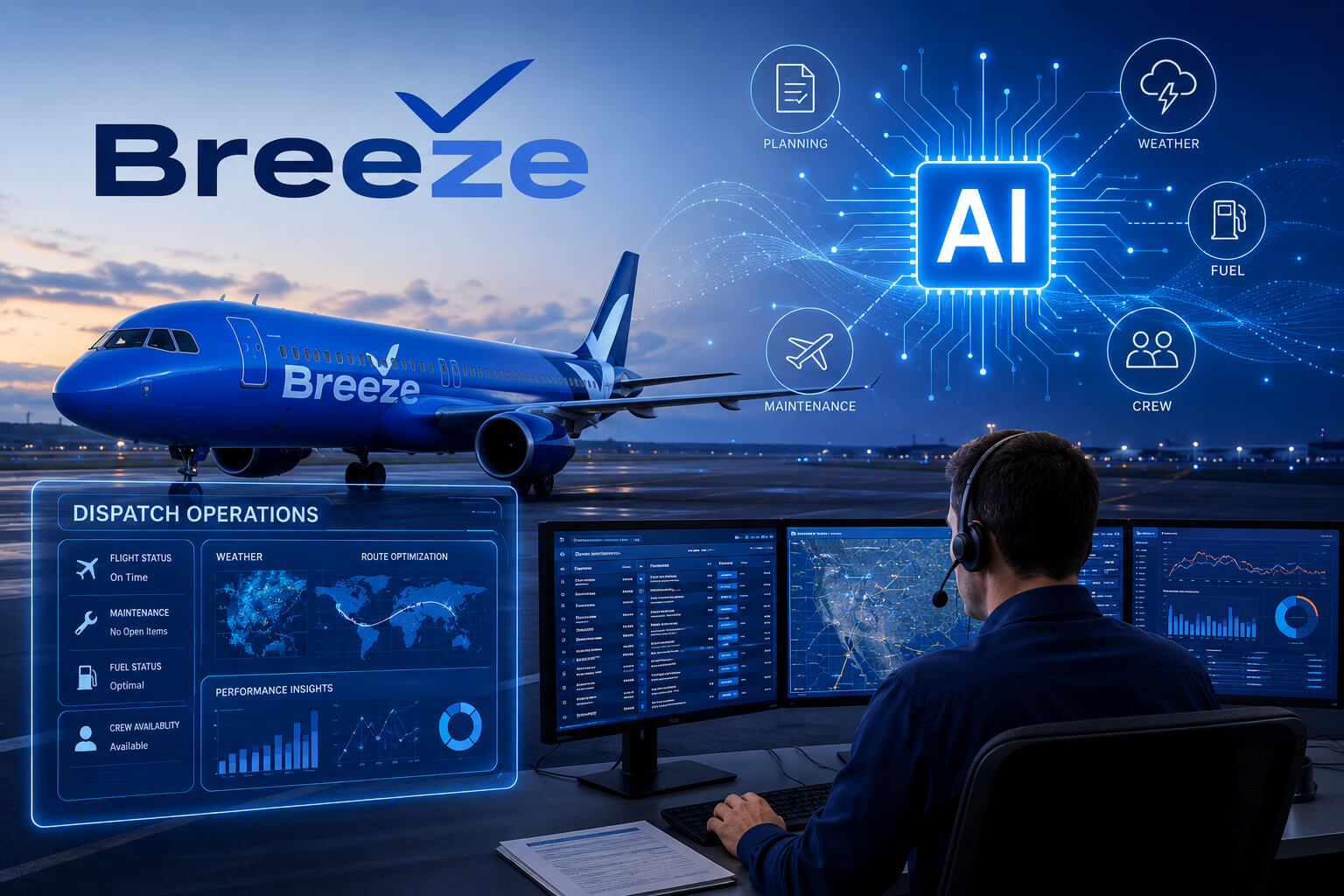
Breeze Airways is deploying an AI-powered platform in dispatch to streamline flight-following operations and improve decision-making for its dispatch teams.
The airline is using Maverick Dispatch, a cloud-based platform from The Weather Company. This platform integrates key operational data into one interface. As a result, dispatchers can track flights, assess weather threats, view alerts and respond more efficiently to potential disruptions.
The move underscores the growing importance of artificial intelligence in aviation operations. This is especially true in areas where teams have to process large volumes of real-time information quickly and accurately.
AI Enters the Airline Dispatch Room
Flight dispatch is one of the most information-heavy functions in airline operations. Dispatchers must track weather, airport conditions, alerts, flight status, routing considerations, and safety-related updates before and during a flight.
Traditionally, that process can require dispatchers to switch between multiple tools, websites, and browser tabs. Breeze Airways says Maverick Dispatch is intended to reduce that complexity by consolidating important information into a single display.
The AI-powered platform is designed to reduce cognitive load and help dispatchers make more informed operational decisions. It does this by providing data in one place.
What Maverick Dispatch Offers
Maverick Dispatch is a comprehensive platform. It integrates with several tools like advanced weather visualization, predictive storm modeling, analytics, alert dashboards, and a NOTAM viewer.
The platform also integrates meteorological data and forecasting from The Weather Company. This gives dispatchers access to weather intelligence directly from the same platform they use to flight-follow.
This is particularly relevant to airlines as weather continues to be one of the top causes of delays, diversions, rerouting decisions and operational disruption.
Better visualization and predictive modeling provide dispatch teams with a clearer picture of changing weather. This shows how it may affect flights.
AI Powered Smart NOTAMs
Smart NOTAMs is one of the major AI features in Maverick Dispatch.
NOTAMs (notices to airmen) contain important information about airport conditions, airspace changes, runway closures, navigation issues and other operational considerations. However, dispatchers often have to sift through large amounts of NOTAM data to find what is most relevant for a particular flight.
Maverick Dispatch uses AI to help dispatchers sort, filter and summarize relevant NOTAM information faster. This means dispatchers can get summaries that are concise, instead of having to manually review long lists of notices.
Airline operations can use this type of AI-assisted summarization to save time and reduce the risk of missing important details.
Reducing Dispatcher Workload
Breeze Airways’ AI dispatch platform is designed to help dispatchers, not replace them.
Maverick Dispatch uses AI to sort through the data and present insights in a more clear cut fashion. This allows dispatchers to make decisions with more confidence and speed. The system is built so users can take advantage of the technology even if they aren’t artificial intelligence experts.
This points to a larger trend in enterprise AI: tools are more valuable when integrated directly into existing workflows rather than forcing employees to learn complex new systems.
In Breeze Airways’ case, AI is being used as an operational assistant that improves access to information, supports situational awareness, and helps reduce unnecessary manual work.
From Flight Tracking to Cloud-Based Dispatch
Breeze Airways has already used The Weather Company’s Fusion flight tracker. Maverick Dispatch expands on that capability by moving toward a browser-based, cloud platform designed for broader dispatch workflow support.
Because the system is cloud-based, dispatchers can access a more unified platform without relying on separate app-based tools or multiple disconnected data sources.
Breeze employees also provided feedback during development, helping shape the platform’s features, interface, and display methods. This user-centric approach is important because aviation dispatch tools must be practical, fast and reliable in high-pressure environments.
AI’s Growing Role in Aviation Operations
The use of Maverick Dispatch is an example of how AI is moving beyond customer-facing airline applications into core operational functions.
Most airline AI use cases are in areas like chatbots, pricing, customer service or baggage tracking. But dispatch operations are a more mission-critical area where AI can help with real-time analysis, summarization and decision support.
Benefits for airlines could include increased operational efficiency, faster disruption response, improved communication and reduced workload for teams managing complex flight networks.
With more challenges from weather events, airspace restrictions and operational disruptions, AI-enhanced systems could play a larger role in the way airlines manage day-to-day flight operations.
Why It Matters
Breeze Airways’ deployment of an AI-augmented dispatch platform is part of an emerging trend in aviation technology.
Rather than deploying AI as a standalone tool, airlines are starting to integrate it into the systems employees already use to manage complex operations. In dispatch, this means helping teams process weather data, alerts, NOTAMs, and flight-following information more quickly and efficiently.
For Breeze Airways, Maverick Dispatch could help improve efficiency and ease the burden on dispatchers. For the wider aviation industry, it adds yet another example of how AI is becoming embedded into key operational decision-making.
As airlines continue to modernize their technology systems, AI-powered dispatch platforms could become an ever more important part of the future of aviation operations.
