


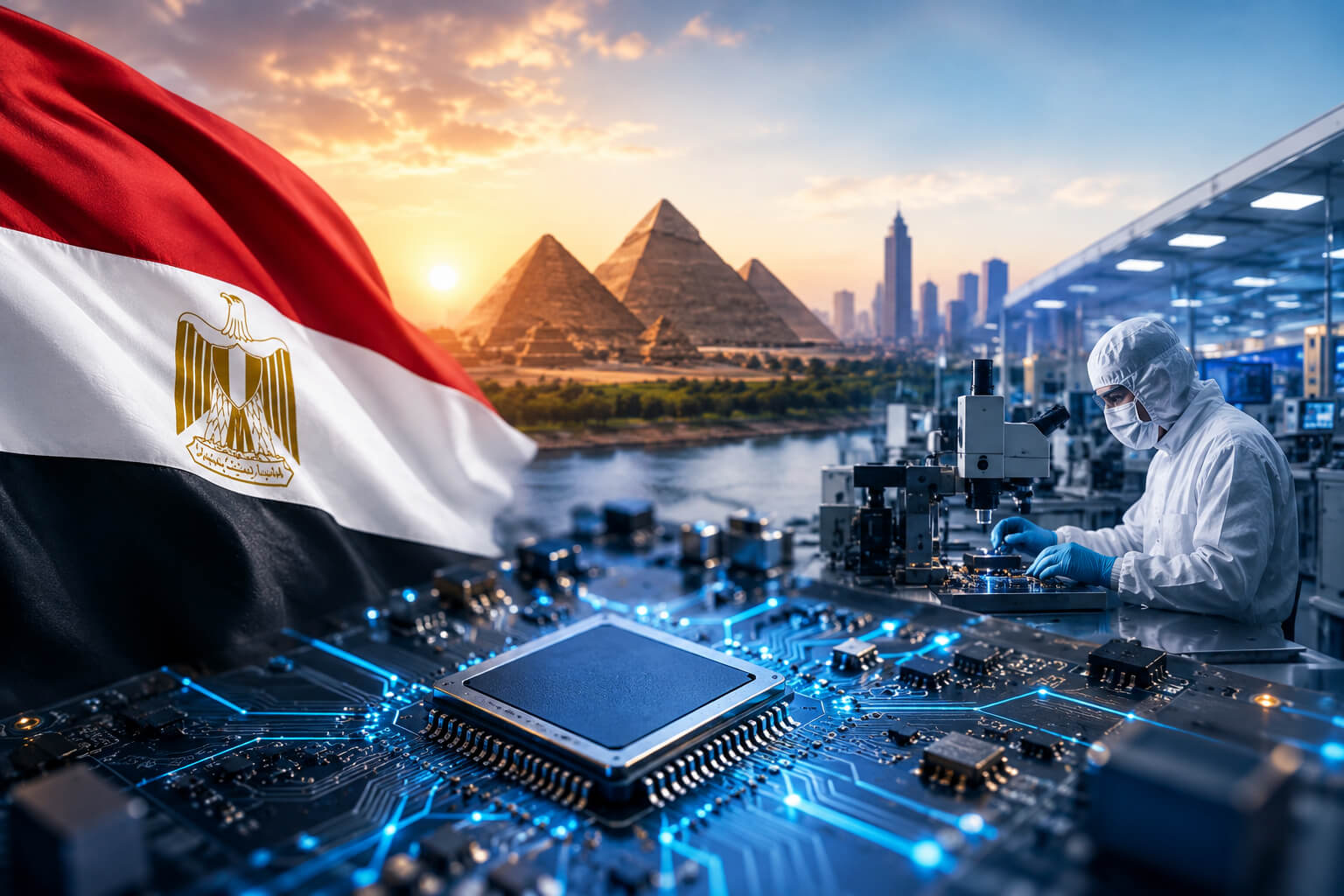
Egypt is stepping up its push to become a regional hub for high-value technology exports with a new seven-year incentive scheme aimed at semiconductor design, embedded systems, electronics design, and advanced digital services.
The initiative was launched through an agreement between Egypt’s Export Development Fund and the Information Technology Industry Development Agency, known as ITIDA. The programme will provide financial support to companies based on measurable export growth and job creation, rather than relying only on broad tax incentives.
Egypt Targets Semiconductor Design and High-Value Tech Exports
The new funding plan is designed to strengthen Egypt’s position in advanced engineering and technology services. It brings semiconductors, electronics design, mobile services, and embedded systems into the country’s formal national export development framework starting from the 2025/2026 financial year.
Unlike chip fabrication, which requires massive investment in manufacturing plants, Egypt appears to be focusing on a fabless semiconductor strategy. The emphasis is on chip design, intellectual property, software engineering and embedded systems development.
That focus could help Egypt compete with established technology outsourcing and engineering markets, while avoiding the extreme capital costs associated with semiconductor manufacturing facilities.
Performance-based incentives for tech companies
The scheme has a performance-based structure as a key component. Companies will receive cash incentives and financial rewards linked to export growth and job creation. This makes the programme more targeted than traditional support models that offer generic corporate tax benefits.
The initiative is also expected to support Egypt’s long-term “Egypt Makes Electronics” strategy, which aims to deepen local electronics capabilities and attract international research and development investment.
Egypt already has a growing advanced engineering ecosystem, with more than 86 multinational and local companies operating in areas such as automotive software and electronics design. The technology sector in the country also has a local value-added rate of over 90%, making it one of the highest value segments in Egypt’s offshoring industry.
Why This Matters For Egypt’s AI and Tech Economy
The semiconductor industry is becoming increasingly important as the demand for AI chips, automotive electronics, smart devices and advanced computing systems increases. Although countries across the Middle East are investing heavily in AI infrastructure and chip-related strategies, Egypt is focusing on talent, design and engineering services.
Egypt’s large pool of engineering graduates could give the country a cost advantage compared with traditional European design hubs. By linking funding to exports and job creation, the government is trying to turn this talent base into a stronger source of foreign currency and long-term technology investment.
The strategy also supports the wider shift from basic IT outsourcing toward higher-value engineering work. Semiconductor design, embedded systems, and electronic design services can generate more local value than standard business process outsourcing.
Digital Reforms to Support Export Growth
The programme will also include administrative reforms to make incentive payments more transparent and efficient. Egypt plans to digitize the incentive disbursement process through the Export Development Fund, while a joint government coordination committee will oversee the rollout and technical compliance for participating companies.
Government bodies are also working on an integrated digital portal intended to reduce licensing delays and make it easier for foreign companies to enter the Egyptian market.
Egypt’s Role in the Global Semiconductor Supply Chain
Egypt’s seven-year export fund comes as countries worldwide compete for a larger role in the semiconductor supply chain. While some Gulf countries are exploring large-scale chip manufacturing investments, Egypt is focusing on chip design and intellectual property creation.
Egypt could carve out a more sustainable niche in the semiconductor industry without directly competing in the expensive fabrication market. The country has also invested billions of dollars in digital infrastructure and has joined the Global Semiconductor Alliance as part of its larger technology ambitions.
Conclusion
Egypt’s new semiconductor and high-tech export fund is an important step in the country’s strategy to move beyond traditional outsourcing and into advanced engineering services. By supporting semiconductor design, embedded systems, electronics design and export-oriented technology companies, Egypt is positioning itself to be a more competitive player in the global digital economy.
This move is especially important for the AI industry. As demand for chips and advanced computing continues to grow, countries that can offer engineering talent, design capabilities and high-value technology services could become more strategically important to the global AI supply chain.
For more Breaking AI news visit: https://breakingai.news
