


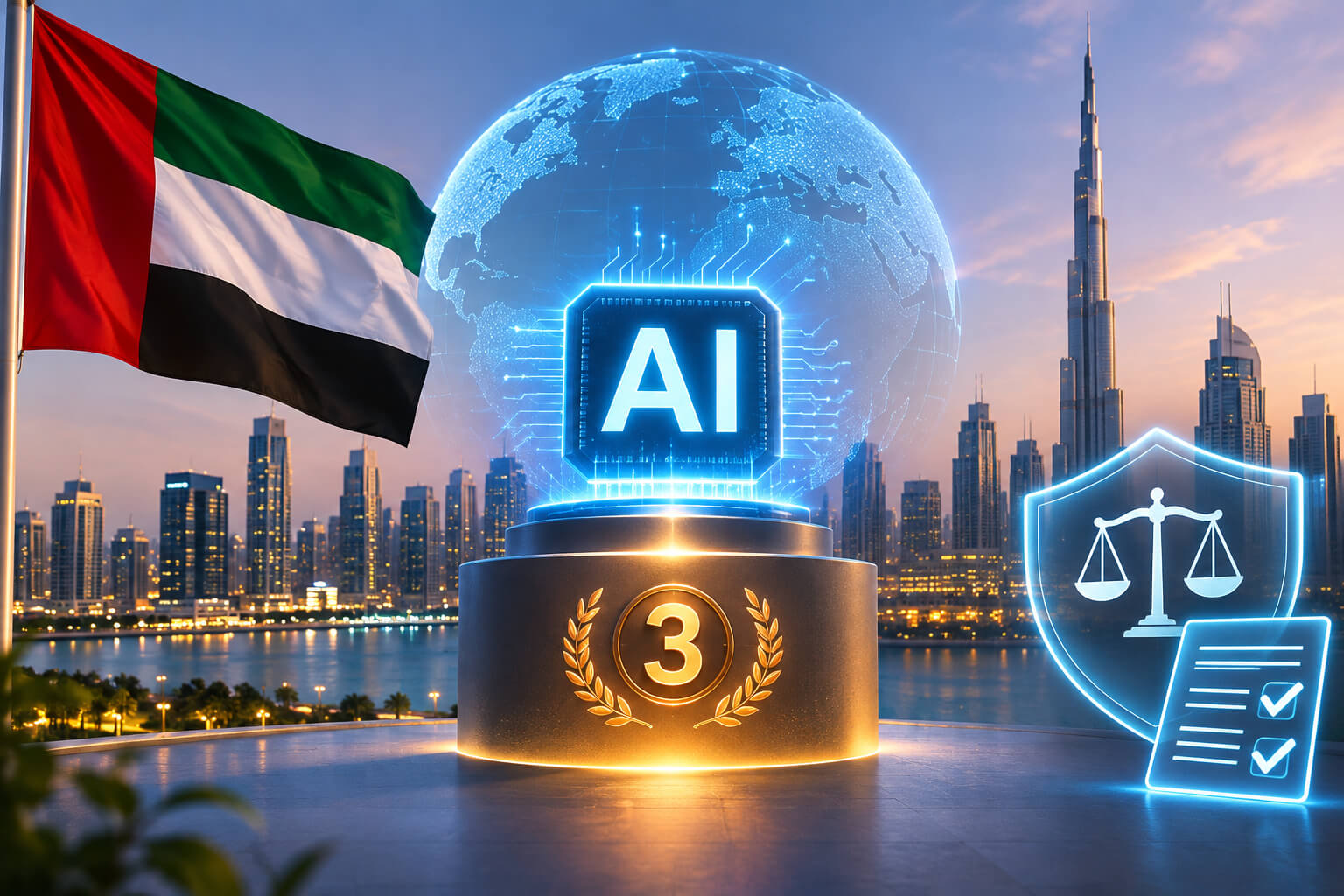
The United Arab Emirates has emerged as one of the world’s most optimistic countries toward artificial intelligence, ranking third for positive public attitudes toward the technology. According to SEC Newgate’s 2026 Impact Monitor, 75% of UAE respondents expressed positive views about AI’s growing influence on society, highlighting the country’s increasing confidence in emerging technologies.
The research, which surveyed more than 20,000 people across 20 countries and territories, also found strong enthusiasm in Saudi Arabia, where 69% of respondents viewed AI positively. The findings reflect growing acceptance of artificial intelligence across the Gulf, particularly as governments and businesses expand its use in everyday services.
Still, optimism comes with reservations. Residents recognize AI’s potential to improve productivity, healthcare, and education, but many remain concerned about privacy, job security, misinformation, and the need for stronger oversight.
UAE Residents Expect AI to Transform Everyday Life
Artificial intelligence is becoming increasingly familiar to UAE residents, and many believe it will make everyday activities significantly easier. According to the survey, 80% of UAE respondents expect AI to improve convenience in daily life, considerably higher than the global average of 60%. The findings suggest that people are becoming more comfortable with AI-powered applications, automated services, and digital tools designed to simplify routine tasks.
The positive outlook extends to economic development and essential services. Around 75% of respondents believe AI can improve productivity and economic growth, while the same percentage expects improvements in education. Healthcare also emerged as an important area of optimism, with 70% anticipating better medical services and outcomes through AI technologies. These expectations suggest that residents increasingly view artificial intelligence as a practical tool capable of improving how people work, learn, and access services.
Saudi Arabia Shares Strong Enthusiasm for Artificial Intelligence
Saudi Arabia also recorded substantial public support for artificial intelligence, reinforcing the Gulf region’s growing interest in advanced technologies. The survey found that 69% of Saudi respondents held positive attitudes toward AI, while 76% believed the technology would make everyday life easier. Another 73% expected artificial intelligence to contribute to productivity and economic growth, reflecting confidence in its potential to support business development and technological modernization.
The results align with Saudi Arabia’s broader efforts to expand its digital economy and encourage innovation across major industries. As AI becomes more common in public services, commercial operations, and consumer applications, residents appear increasingly aware of its potential benefits. However, the findings also indicate that public enthusiasm is accompanied by expectations for responsible development and effective safeguards.
Privacy and Job Security Remain Major AI Concerns
Despite strong public support, artificial intelligence continues to raise questions about personal information and employment opportunities. In the UAE, 61% of respondents believe AI could increase privacy risks, while 60% are concerned that automation may reduce job opportunities. Saudi Arabia reported similar concerns, with 63% identifying potential privacy threats and 60% expressing worries about employment.
The findings highlight a complicated relationship between technological progress and public confidence. People recognize that AI can improve efficiency and reduce repetitive workloads, but they also understand that greater automation could reshape industries and change the skills employers require. Businesses adopting AI may therefore face growing pressure to invest in employee training, communicate clearly about workplace changes, and demonstrate how personal information is protected. For many residents, the question is no longer whether AI will become more widespread, but how its expansion will affect their livelihoods.
AI-Generated Misinformation Raises Concerns Across the Gulf
The increasing sophistication of generative artificial intelligence has also created concerns about the spread of misleading information. According to the research, 64% of Saudi respondents believe AI will make false or misleading news easier to distribute, while 58% of UAE respondents expressed similar concerns. These figures reflect growing awareness of the challenges associated with AI-generated images, synthetic audio, realistic videos, and automated written content.
As generative AI tools become more accessible, distinguishing authentic information from manipulated material is becoming more difficult. Social media platforms, news organizations, and digital publishers face mounting challenges in verifying content before it reaches large audiences. The survey suggests that residents understand both sides of the technology: AI can improve creativity and communication, but it can also be used to produce convincing misinformation. Maintaining trust in digital information will likely require stronger verification practices, clearer disclosure of AI-generated material, and greater public awareness.
UAE Residents Favor Stronger Government Regulation of AI
Public enthusiasm for artificial intelligence has not reduced demand for government oversight. In the UAE, 80% of respondents believe national governments should play an important role in regulating AI, while 78% support accountability from companies developing the technology. Another 66% believe international organizations should participate in establishing appropriate standards and safeguards, indicating broad support for shared responsibility in AI governance.
Saudi Arabia demonstrated a slightly different preference, with 79% of respondents favoring a leading regulatory role for AI developers and 75% supporting government involvement. International organizations received support from 60% of respondents. The findings suggest that residents across both countries want artificial intelligence to develop within a framework that protects users and encourages responsible innovation. Rather than viewing regulation as an obstacle, many appear to consider effective oversight necessary for maintaining confidence in increasingly powerful AI systems.
UAE’s Expanding AI Adoption Strengthens Its Global Position
The UAE’s high level of AI optimism comes as the country continues investing in artificial intelligence across government operations, healthcare, education, transportation, and business services. National initiatives have encouraged public institutions and private companies to explore how AI can improve operational efficiency, enhance service delivery, and support economic diversification. These developments have helped make artificial intelligence more visible in everyday activities, potentially contributing to the country’s favorable public attitudes.
Separate research from Microsoft’s AI Economy Institute estimated that 73.3% of the UAE’s working-age population used generative AI during the second quarter of 2026, placing the country first among the markets measured for AI usage. While adoption and public optimism measure different aspects of technological development, the findings suggest that the UAE combines widespread use with strong confidence in AI’s potential. This combination could provide a favorable environment for companies introducing new AI-powered services and applications.
Long-Term AI Risks Remain Part of the Public Conversation
Beyond immediate concerns about privacy and employment, some residents are questioning the long-term implications of increasingly advanced artificial intelligence. The SEC Newgate survey found that 47% of UAE respondents and 49% of Saudi respondents believe AI could eventually become more intelligent than humans and difficult or impossible to control. These concerns reflect broader international debates about AI safety, human oversight, and the potential consequences of developing more autonomous systems.
Environmental considerations are also becoming part of the discussion, with 44% of respondents in both countries expecting AI to negatively affect the natural environment. Expanding AI infrastructure requires significant computing resources, making energy consumption and sustainability increasingly relevant to discussions about technological growth. Although these concerns have not prevented strong public enthusiasm, they indicate that residents are thinking beyond AI’s immediate benefits and considering how the technology could affect society over time.
Public Trust Will Shape the Future of AI in the Middle East
The UAE’s third-place ranking for AI optimism suggests that the country has established a favorable environment for continued technological adoption. Residents increasingly recognize artificial intelligence as a tool that can improve public services, strengthen economic performance, and simplify daily activities. Yet the same research makes clear that enthusiasm does not automatically translate into unconditional trust.
For governments and technology companies, maintaining public confidence will require a stronger focus on transparency, data protection, workforce development, and responsible AI deployment. People want innovation, but they also expect institutions to address the risks associated with increasingly capable systems. The findings offer a reminder that successful AI adoption is not measured solely by the number of people using new technologies. It also depends on whether those technologies deliver meaningful benefits while protecting the interests of the communities they serve.
The UAE has demonstrated that public enthusiasm for artificial intelligence can grow alongside rapid technological development. The next challenge will be ensuring that confidence remains strong as AI becomes more deeply integrated into everyday life.
