


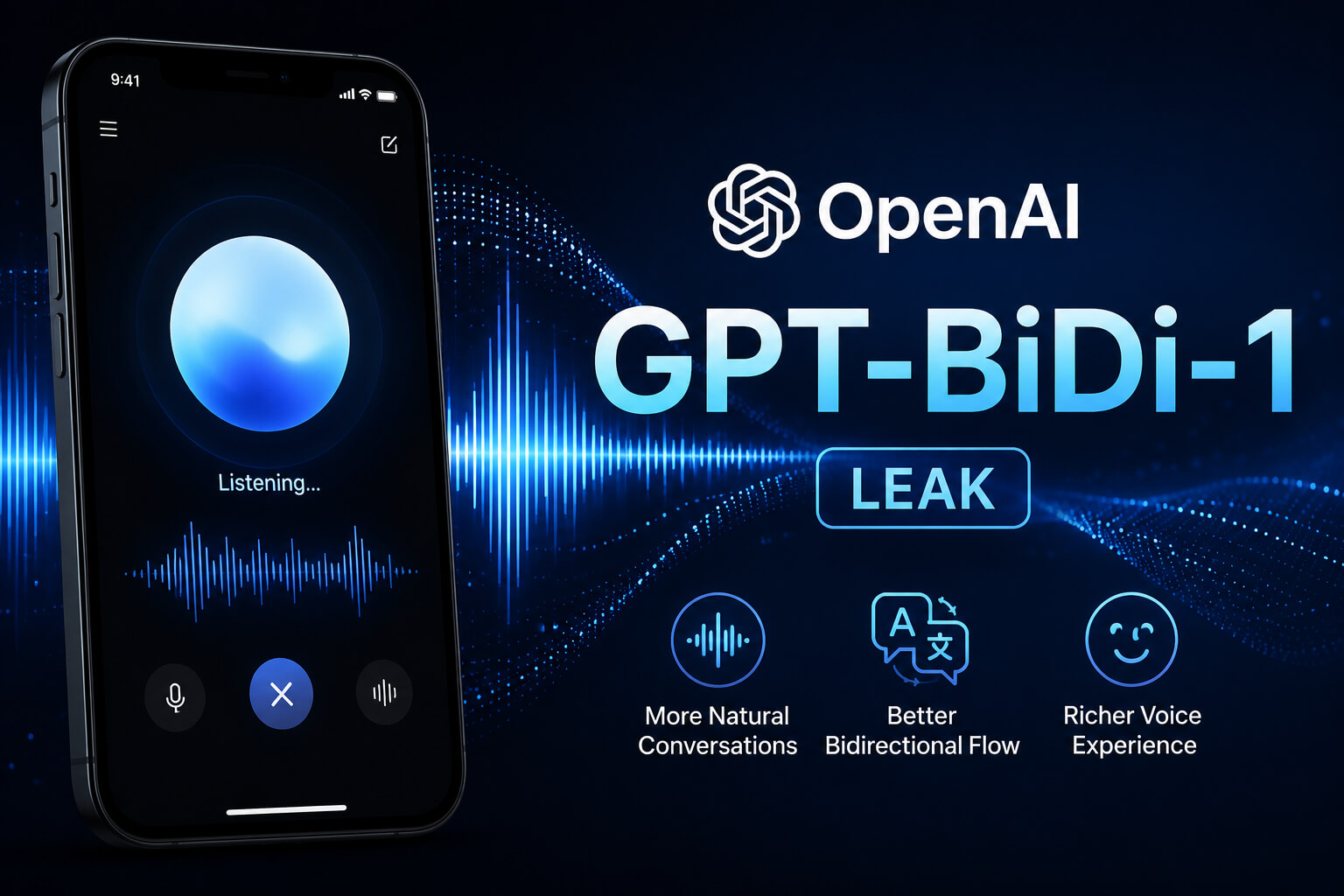
New reports suggest that OpenAI may be working on a major upgrade for ChatGPT’s voice experience with a possible next-generation model called GPT-BiDi-1.
References to the model reported by AI watchers have sparked speculation that the company is working on a more advanced voice system for ChatGPT that could make spoken AI conversations feel faster, smoother and more natural, but the company hasn’t officially announced GPT-BiDi-1 or released technical details or a launch date.
The model name that was reported appears to suggest “bidirectional” audio communication. In layman’s terms, this could mean a voice AI that is better at listening and responding simultaneously, rather than the slower back-and-forth style of many traditional voice assistants.
What Is GPT-BiDi-1?
GPT-BiDi-1 is an unconfirmed OpenAI voice model that seems to be related to the future of the voice mode for the chatbot. The “BiDi” part probably refers to bidirectional communication, allowing audio to flow more naturally between the user and the AI.
Today’s AI voice assistants usually operate in separate phases. The user speaks, the system analyzes the audio, the AI generates an answer, and then the answer is spoken back. This method is effective, but it can still feel sluggish or mechanical, especially when the user interrupts, clarifies, or shifts direction during a conversation.
If the leaked GPT-BiDi-1 references are accurate, OpenAI may be working to reduce those delays to make ChatGPT’s voice experience feel more like a human conversation.
Why GPT-BiDi-1 Could Matter for ChatGPT Voice
Voice is becoming one of the most important interfaces for AI. Instead of typing prompts, users increasingly want to talk naturally with AI assistants while working, studying, driving, learning languages or managing daily tasks.
A future voice model for ChatGPT could improve upon a few things:
More natural conversations: ChatGPT may improve upon pauses, tone, and changing mid-sentence.
Better handling of interruptions Users may be able to interrupt or redirect the assistant without breaking the flow of conversation.
Faster responses: An improved voice model could shorten the lag between a user’s question and ChatGPT’s spoken response.
Better long-form voice chats: ChatGPT might be better at keeping track of context during longer spoken conversations.
More realistic AI help: A less stilted voice experience could make ChatGPT feel less like a command-based tool and more like an interactive assistant.
ChatGPT Voice Mode Is An Essential OpenAI Feature Already
OpenAI already has Voice Mode for ChatGPT that lets users have spoken conversations with the AI on supported mobile and desktop platforms. The feature allows users to speak in a natural way, select a voice of their choice and receive spoken responses back.
If GPT-BiDi-1 is real and released to the public, it could be the next step in that experience. Instead of just improving the voice quality, the bigger upgrade might be the conversational intelligence: how well ChatGPT listens and responds and adapts in live speech.
That matters because real conversations are rarely perfectly structured. People interrupt, pause, add context, correct themselves, and change topics. A better bidirectional voice model could help make it easier for ChatGPT to respond more effectively to those real-world patterns.
Potential Use Cases of GPT-BiDi-1
OpenAI could introduce GPT-BiDi-1 or a similar voice model to ChatGPT and unlock a range of use cases with the upgrade.
ChatGPT could become a more useful personal assistant for everyday users. It can help manage reminders, support planning, facilitate brainstorming, and answer questions hands-free.
For students, tutoring sessions could feel more natural and interactive. Meanwhile, language learners may benefit from more fluid and responsive real-time speaking practice.
Businesses could benefit as well. If AI voice systems can handle natural interruptions and longer conversations, it could make customer support, sales training, onboarding, internal knowledge assistants and workplace productivity tools more effective.
Another big area is accessibility. A more responsive ChatGPT voice could help users who prefer speech over typing.
OpenAI Has Not Announced GPT-BiDi-1 Officially
OpenAI has not officially announced GPT-BiDi-1; it remains an unconfirmed leak at this point. What is known comes from early mentions and sources within the AI community, not an official OpenAI announcement.
That means the final model name, features, availability and launch timing could change. OpenAI could also release a voice upgrade under a different name or roll out improvements gradually across the ChatGPT apps.
But the leaks do show that OpenAI is investing in voice AI. If GPT-BiDi-1 gets added to ChatGPT at some point, it could be one of the biggest leaps forward for voice AI so far.
The Bottom Line
GPT-BiDi-1 could mark OpenAI’s next major step in making ChatGPT a real-time conversational assistant. While it’s not official just yet, the reported bidirectional voice model suggests a future where users can talk to AI more naturally, interrupt more easily, and get faster and more context-aware responses.
For now, ChatGPT users will have to wait for official updates from OpenAI before assuming GPT-BiDi-1 will launch publicly. But if the leaks are true, the next big ChatGPT upgrade may not just be about smarter text responses. It might be about making AI conversations sound and feel more human.
