

Close Menu
    What's Hot
    Technology & Innovation

    Weekly AI News: July 19–25, 2026

    By Art RyanJuly 26, 20260

    Artificial intelligence moved in several directions this week. The biggest stories were not only about…

    Verizon Lands $1 Billion Google Deal as AI Infrastructure Demand Surges

    July 25, 2026

    Ajman Launches AI Agent That Can Renew Trade Licences Automatically

    July 25, 2026

    Fugu Ultra v1.1 Upgrades Its AI Agent Team Without Raising Prices

    July 25, 2026
    Facebook X (Twitter) Instagram
    Facebook X (Twitter) Instagram
    Breaking AI News
    Monday, July 27
    • Home
    • Events
    • Videos
      • Machine Can Think Summit 2026
      • Step Dubai Conference 2026
    • Technology & Innovation

      Weekly AI News: July 19–25, 2026

      July 26, 2026

      Verizon Lands $1 Billion Google Deal as AI Infrastructure Demand Surges

      July 25, 2026

      Ajman Launches AI Agent That Can Renew Trade Licences Automatically

      July 25, 2026

      Fugu Ultra v1.1 Upgrades Its AI Agent Team Without Raising Prices

      July 25, 2026

      Qwen Audio 3.0 TTS Gives Developers More Control Over AI Voices

      July 25, 2026
    • Business & Marketing

      Verizon Lands $1 Billion Google Deal as AI Infrastructure Demand Surges

      July 25, 2026

      Fugu Ultra v1.1 Upgrades Its AI Agent Team Without Raising Prices

      July 25, 2026

      HubSpot Launches Agent Hub to Bring Its AI Agents Under One Roof

      July 24, 2026

      MGX Joins $40 Billion Aligned Data Centers Deal as AI Infrastructure Spending Accelerates

      July 24, 2026

      ServiceNow AI Growth Helps Push Sales and Bookings Higher

      July 23, 2026
    • Industry Applications

      Ajman Launches AI Agent That Can Renew Trade Licences Automatically

      July 25, 2026

      Qwen Audio 3.0 TTS Gives Developers More Control Over AI Voices

      July 25, 2026

      NVIDIA and KAIST Launch $300M AI Lab for Korean Agentic AI

      July 25, 2026

      Abu Dhabi Launches AI Policy Training for Government Leaders

      July 24, 2026

      UAE Ministry of Finance Uses GenAI to Resolve 97% of Customer Calls

      July 24, 2026
    • Trends & Insights

      Microsoft Launches MAI-Image-2.5-Pro and MAI-Voice-2-Flash

      July 25, 2026

      FLUX 3 Pushes Black Forest Labs Beyond AI Image Generation

      July 25, 2026

      Google Confirms Gemini 4 as Its Biggest AI Training Run Begins

      July 24, 2026

      Grok Build Could Become a Full AI App Platform

      July 24, 2026

      Microsoft Wants Communities to Have More Control Over AI Data

      July 23, 2026
    • AI in Travel

      SAS Uses Amadeus AI Pricing to Lift Airline Revenue by More Than 3%

      July 24, 2026

      Trip.com Uses AI Tools to Make Travel Less Confusing

      July 23, 2026

      StepFun and Alipay Want AI Agents to Do More Than Chat

      July 23, 2026

      DerbySoft and Travelodge Partner to Make Corporate Hotel Booking Less Messy

      July 22, 2026

      Dubai AI World Series Reveals 26 Finalists as Enterprise AI Moves Past the Pilot Stage

      July 21, 2026
    Breaking AI News
    Home » The Environmental Toll of AI Chatbots: One Bottle of Water Per Email
    Technology & Innovation

    The Environmental Toll of AI Chatbots: One Bottle of Water Per Email

    AdminBy AdminSeptember 19, 2024No Comments4 Mins Read
    Facebook Twitter Pinterest LinkedIn Tumblr Email
    Share
    Facebook Twitter LinkedIn Pinterest Email

    AI chatbots, like ChatGPT, have become indispensable tools for businesses and individuals, helping automate tasks, answer questions, and streamline communication. While these tools offer undeniable convenience, there’s a lesser-known side to their growing use—the environmental impact. Every interaction with an AI chatbot, whether it’s sending an email, generating a report, or answering a query, requires significant computational power. And with that power comes hidden environmental costs.

    The Energy Demands of AI

    AI chatbots, particularly those based on large language models, require vast amounts of computing resources to function. Training these models involves processing massive datasets across numerous powerful servers in data centers around the world. Even after training, running the models requires substantial energy, especially when they handle millions of interactions daily.

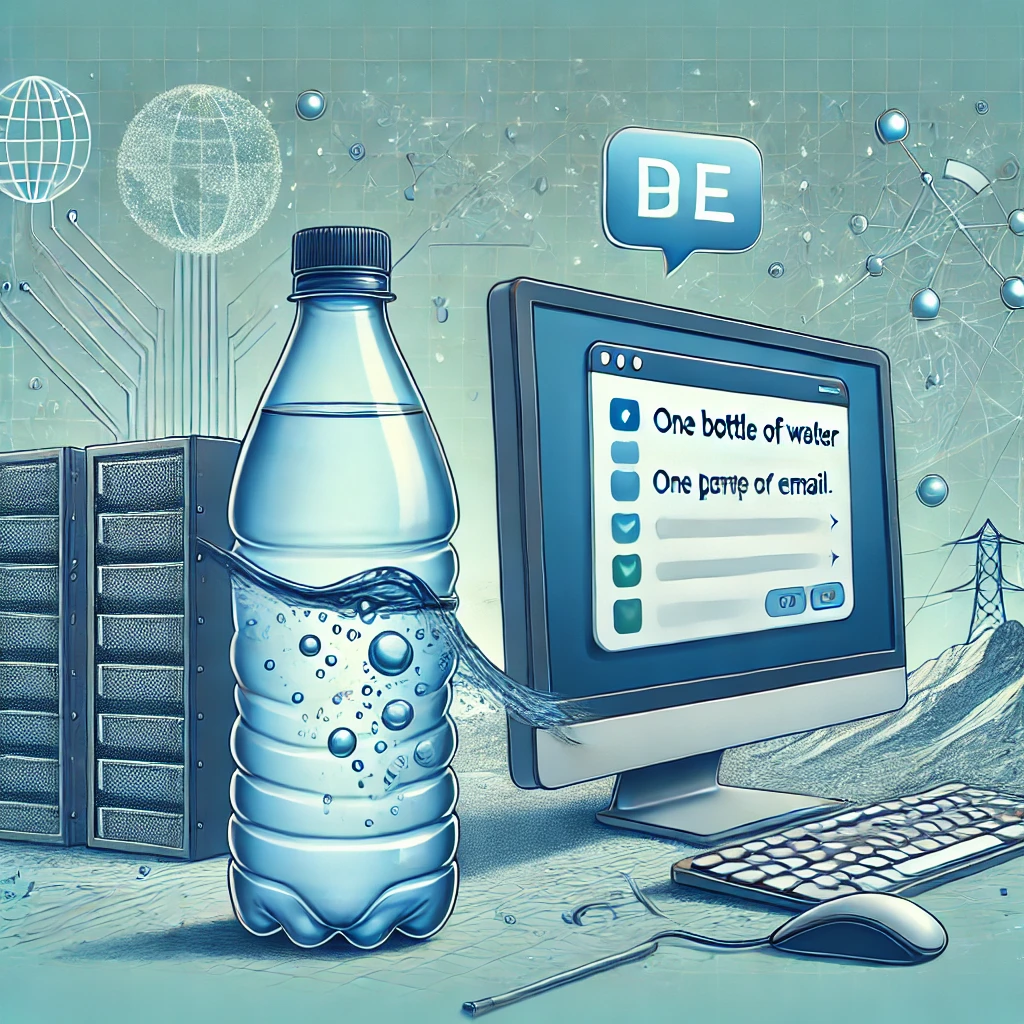
    A single query to an AI model might seem insignificant, but collectively, the energy usage adds up quickly. It’s estimated that each interaction with an AI chatbot consumes the equivalent energy of a small cup of water. On a larger scale, the environmental footprint becomes clearer: imagine sending or receiving a few emails with chatbot assistance—now equate each of those to consuming a bottle of water. Multiply this across the millions of emails or queries processed daily, and the resource consumption becomes staggering.

    Water and Carbon Footprint

    The energy used to power the data centers that support AI models contributes to both water consumption and carbon emissions. Many data centers use water for cooling their high-performance servers, leading to increased water usage. Additionally, the energy required to run these servers often comes from non-renewable sources, contributing to greenhouse gas emissions.

    A study from 2020 estimated that data centers globally used around 200 terawatt-hours (TWh) of electricity annually, close to the energy consumption of some countries. As AI adoption grows, this energy use is only expected to increase, further compounding the environmental impact.

    The Hidden Impact of Convenience

    The increasing reliance on AI chatbots is largely driven by the convenience and efficiency they provide. Whether it’s answering customer queries, assisting with administrative tasks, or generating content, AI tools make life easier. However, that convenience comes at a hidden environmental cost. The more frequently we use AI-powered systems, the more energy is consumed in the background.

    For companies and individuals aiming to reduce their carbon footprint, it’s worth considering the trade-offs between convenience and environmental impact. AI is often viewed as a purely digital tool, but its resource demands are very much tied to the physical world.

    What Can Be Done?

    There are several ways to mitigate the environmental costs of using AI chatbots:

    1. Efficient AI Models: AI developers can focus on creating more energy-efficient models that reduce the computational power needed for training and inference. This can involve optimizing algorithms and exploring more sustainable data center practices.
    2. Green Data Centers: Companies that run large-scale AI operations can invest in renewable energy sources to power their data centers. Some tech giants are already working on making their data centers carbon neutral by utilizing solar, wind, and hydroelectric power.
    3. Conscious Usage: Users and companies can be more mindful of how often they rely on AI-driven tools, reducing unnecessary interactions when possible.
    4. Offset Initiatives: Some organizations are exploring carbon offset programs to balance out the environmental impact of running AI models, such as investing in tree-planting initiatives or renewable energy projects.

    Conclusion

    While AI chatbots are revolutionizing the way we communicate and manage tasks, it’s important to recognize the environmental costs associated with their widespread use. Each interaction may seem small, but collectively, the energy and resources consumed are significant—comparable to the water and energy demands of many everyday activities. As AI continues to expand, finding ways to reduce its environmental impact will be crucial to ensuring a sustainable future for technology.

    Share. Facebook Twitter Pinterest LinkedIn Tumblr Email
    Admin

    Related Posts

    Weekly AI News: July 19–25, 2026

    July 26, 2026

    Verizon Lands $1 Billion Google Deal as AI Infrastructure Demand Surges

    July 25, 2026

    Ajman Launches AI Agent That Can Renew Trade Licences Automatically

    July 25, 2026

    Comments are closed.

    Latest News

    Weekly AI News: July 19–25, 2026

    July 26, 2026

    Verizon Lands $1 Billion Google Deal as AI Infrastructure Demand Surges

    July 25, 2026

    Ajman Launches AI Agent That Can Renew Trade Licences Automatically

    July 25, 2026

    Fugu Ultra v1.1 Upgrades Its AI Agent Team Without Raising Prices

    July 25, 2026
    Facebook X (Twitter) Pinterest Vimeo WhatsApp TikTok Instagram LinkedIn YouTube Spotify Reddit Snapchat Threads

    AI University

    • Global Universities
    • Universities in Africa
    • Universities in Asia
    • Universities in Europe
    • Universities in Latin America
    • Universities in Middle East
    • Universities in North America
    • Universities in Oceania

    AI Tools & Apps Directory

    • AI Productivity Tools
    • AI Coding Tools
    • AI Voice Tools
    • AI Video Tools
    • AI Image Generators
    • AI Writing Tools

    Info

    • Home
    • About Us
    • AI Organizations & Associations
    • Contact Us
    • Cookie Policy
    • Copyright Policy
    • Disclaimer
    • Editorial Policy
    • Terms and Conditions

    Subscribe to Updates

    Get the latest creative news from FooBar about art, design and business.

    © 2026 Breaking AI News.
    • Privacy Policy

    Type above and press Enter to search. Press Esc to cancel.

    Sign Up

    Want to stay ahead In Artificial Intelligence?

     Sign up now and get exclusive breaking AI news and special updates—FREE!