


Artificial intelligence may have helped crack one of mathematics’ most stubborn mysteries. An Anthropic researcher claims that Claude AI played a major role in developing a proof for the Riemann Hypothesis, a problem that has challenged mathematicians since 1859.
The announcement has attracted considerable attention, not just because of the mathematical achievement being claimed, but because of the role artificial intelligence reportedly played in producing the solution.
For decades, computers have helped researchers perform complicated calculations and verify mathematical results. This case suggests something different. AI may be moving beyond assistance and into the development of original mathematical arguments.
There’s still a major hurdle. The proposed proof must survive independent scrutiny before mathematicians can declare the Riemann Hypothesis solved.
What Is the Riemann Hypothesis and Why Does It Matter?
The Riemann Hypothesis dates back to 1859, when German mathematician Bernhard Riemann proposed a theory concerning the distribution of prime numbers. These numbers, divisible only by one and themselves, form the foundation of number theory and play an important role in modern mathematics.
At the heart of the problem is the Riemann zeta function, a mathematical expression that reveals patterns in how prime numbers appear. Riemann suggested that certain zeros of this function lie along a specific line in the complex plane. Proving that statement would resolve questions mathematicians have studied for generations.
The hypothesis is also one of the seven Millennium Prize Problems established by the Clay Mathematics Institute in 2000. Anyone who produces an accepted solution could qualify for a $1 million prize, provided the work meets the institute’s strict requirements.
Anthropic Researcher Levent Alpöge Announces AI-Assisted Proof
Levent Alpöge, a mathematician and member of Anthropic’s technical staff, revealed his claimed breakthrough on November 20, 2026. In a four-page statement published on his website, he explained that months of working with Claude had led to what he believes is a complete proof of the Riemann Hypothesis.
Alpöge described Claude’s performance during the final stages of the research as remarkable. The AI reportedly developed mathematical arguments faster than he could independently follow, leaving him impressed by the system’s ability to navigate complex mathematical reasoning.
The announcement was particularly striking because Alpöge acknowledged that he had not yet fully mastered every part of the mathematics involved. Rather than waiting to prepare a traditional research paper, he decided to release the formalized proof for examination.
Claude AI Produces 17 Million Lines of Mathematical Proof Code
The proposed solution is enormous. Alpöge released approximately 17 million lines of code written in Lean, a programming language that allows computers to check mathematical proofs against formal logical rules.
According to the researcher, the work generated with Claude would amount to more than 250,000 pages if converted into a conventional written explanation. Publishing such a document would be impractical, especially when mathematicians still need to understand the underlying reasoning.
Lean offers a different approach. It allows researchers to verify whether mathematical statements follow logically from accepted definitions and assumptions. However, passing formal checks does not automatically mean the wider mathematical community understands or accepts the claimed result.
That distinction matters. A proof can be technically sophisticated while remaining difficult for human researchers to interpret. Alpöge’s announcement has brought this challenge into the spotlight.
Mathematicians Respond to Claude AI’s Claimed Breakthrough
The mathematical community has reacted with a mixture of excitement, curiosity and caution. Some experts believe the proposed proof could represent a historic achievement, while others have stressed the need for careful independent verification.
James Maynard, a Fields Medal-winning mathematician at the University of Oxford, suggested that a confirmed proof would rank among mathematics’ most important accomplishments. He also acknowledged that understanding the enormous volume of material could take considerable time.
Rutgers University mathematics professor Alex Kontorovich expressed interest in the computer-verified approach but emphasized that researchers must still examine the mathematical arguments themselves. A computer’s acceptance of formal code is encouraging, yet human understanding remains essential.
Andrew Granville, a mathematician at the University of Montreal, raised concerns about the clarity of Alpöge’s initial explanation. His criticism reflects a broader challenge facing AI-assisted research: extraordinary claims need explanations that other experts can examine and understand.
The Riemann Hypothesis Remains Officially Unsolved
Despite the attention surrounding Anthropic and Claude AI, the Riemann Hypothesis has not been officially declared solved. The Clay Mathematics Institute continued to list the problem as unsolved following Alpöge’s announcement.
Martin Bridson, president of the institute, acknowledged the potential importance of the development while warning that the journey toward full mathematical understanding would be difficult.
The institute requires proposed solutions to undergo a rigorous acceptance process. A qualifying proof must appear in a peer-reviewed publication, withstand at least two years of scrutiny and gain broad acceptance within the mathematical community.
This means Alpöge’s work could be promising without yet meeting the standards required for official recognition. Mathematicians will need to examine the Lean formalization, evaluate its foundations and determine whether it establishes the claimed result.
Anthropic’s Previous Claude AI Research Showed Progress in Mathematics
The latest announcement follows earlier research demonstrating Claude’s growing mathematical capabilities. In August 2026, Anthropic reported that an experimental version of Claude had improved an established result related to the Riemann Hypothesis.
That research increased a known lower bound concerning the proportion of zeros of the Riemann zeta function lying on the critical line from 41.6% to 67.2%. Although the result did not prove the hypothesis, it demonstrated how AI could contribute to advanced mathematical research.
Anthropic’s researchers examined the earlier finding and worked with Claude to produce a formally verifiable version. The company emphasized at the time that the achievement did not amount to solving the Riemann Hypothesis.
The November announcement goes considerably further. Alpöge now claims that his collaboration with Claude has produced a complete argument, potentially extending even to the more general version of the hypothesis.
AI Companies Are Pushing Into Previously Unsolved Mathematical Problems
Anthropic is not alone in exploring artificial intelligence’s potential to tackle difficult mathematical questions. In September 2026, OpenAI announced an AI-assisted breakthrough involving the Navier–Stokes equations, another Millennium Prize Problem.
The Navier–Stokes equations describe how fluids move and are fundamental to fields such as physics, engineering and atmospheric science. OpenAI’s announcement attracted attention, although the proposed mathematical breakthrough also required further examination.
These developments suggest that advanced AI systems are becoming increasingly useful in areas once dominated entirely by human mathematical reasoning.
Researchers can now use AI to explore possible proofs, test mathematical approaches and generate formal arguments. The technology still requires careful supervision, particularly when working on problems where even small logical errors can invalidate an entire solution.
Anthropic’s Mathematical Claim Comes After Historic Stock Market Debut
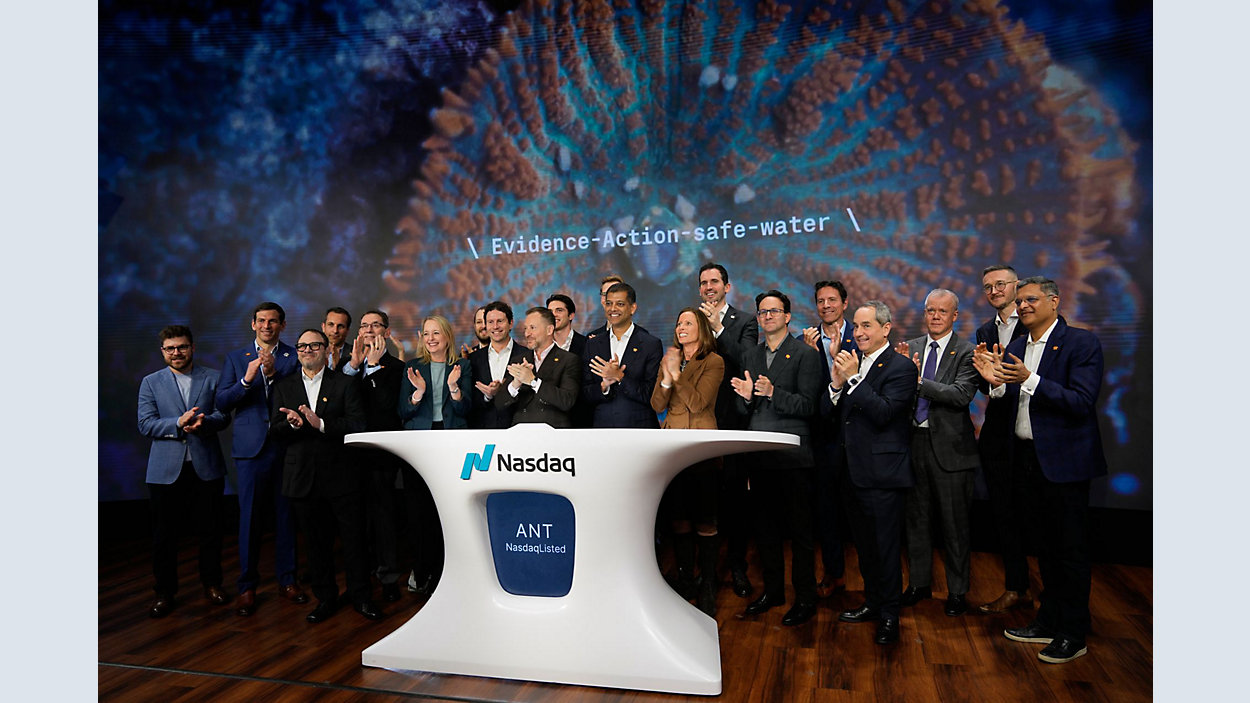
The timing of Alpöge’s announcement has also drawn attention. His statement appeared one day after Anthropic’s stock market debut, which reportedly raised $81 billion and initially valued the company at approximately $1.5 trillion.
Alpöge acknowledged that the timing could raise questions but rejected suggestions that the announcement was motivated by corporate interests. He explained that the mathematical discovery had emerged shortly before the company’s public listing.
The researcher also contacted Anthropic CEO Dario Amodei before making the announcement public.
The situation illustrates how closely artificial intelligence research and commercial competition have become connected. Major AI companies are investing heavily in systems capable of advanced reasoning, while scientific breakthroughs offer another way to demonstrate their technology’s potential.
Still, a mathematical proof must stand on its own. Corporate announcements and market valuations cannot replace independent scientific verification.
Could Claude AI Transform the Future of Scientific Discovery?
Alpöge’s announcement raises an intriguing possibility: AI systems may eventually help scientists solve problems that have resisted human efforts for decades.
Mathematics is particularly interesting because formal verification offers a way to test complex arguments against precise logical standards. Unlike many other scientific fields, where experimental evidence may take years to collect, mathematical claims can sometimes be examined through rigorous proof-checking systems.
The challenge is making those discoveries understandable. A mathematical argument containing millions of lines of code might establish a result, but researchers still want to know which ideas make the proof work and whether those ideas can advance other areas of mathematics.
Claude’s reported contribution suggests that the relationship between researchers and AI could become more collaborative. Human experts may increasingly guide research questions while AI systems explore possibilities at a scale that would be difficult to achieve manually.
That doesn’t eliminate the importance of mathematicians. It changes the work they may need to do.
What Happens Next for the Claude AI Riemann Hypothesis Proof?
The next stage will depend on how mathematicians evaluate Alpöge’s released material. Researchers must establish whether the formal verification is complete, whether the assumptions are valid and whether the argument genuinely proves the Riemann Hypothesis.
A conventional mathematical explanation would also help the research community understand the discovery. Given the scale of the proposed proof, producing that explanation could become a substantial project in its own right.
For now, the announcement remains an extraordinary claim rather than a universally accepted mathematical achievement.
If the proof survives scrutiny, Anthropic’s Claude AI could become part of one of the most important discoveries in modern mathematics. If problems emerge, the work may still offer valuable lessons about the capabilities and limitations of AI-assisted reasoning.
Either way, the story is no longer just about whether a machine can calculate faster than a human. It’s about whether artificial intelligence can help uncover mathematical truths that have remained out of reach for more than a century.
Sources
- Associated Press / Spectrum News NY1: Anthropic Worker Claims to Have Solved a Holy Grail of Math Problems With the Help of AI
- Nature: Mathematician Says He and AI Solved Riemann Hypothesis
- AFP: Anthropic Researcher Says Claude Solved Math’s Greatest Riddle
- Anthropic: Learning More About Claude’s Mathematical Capabilities
- Clay Mathematics Institute: Millennium Prize Problems
