


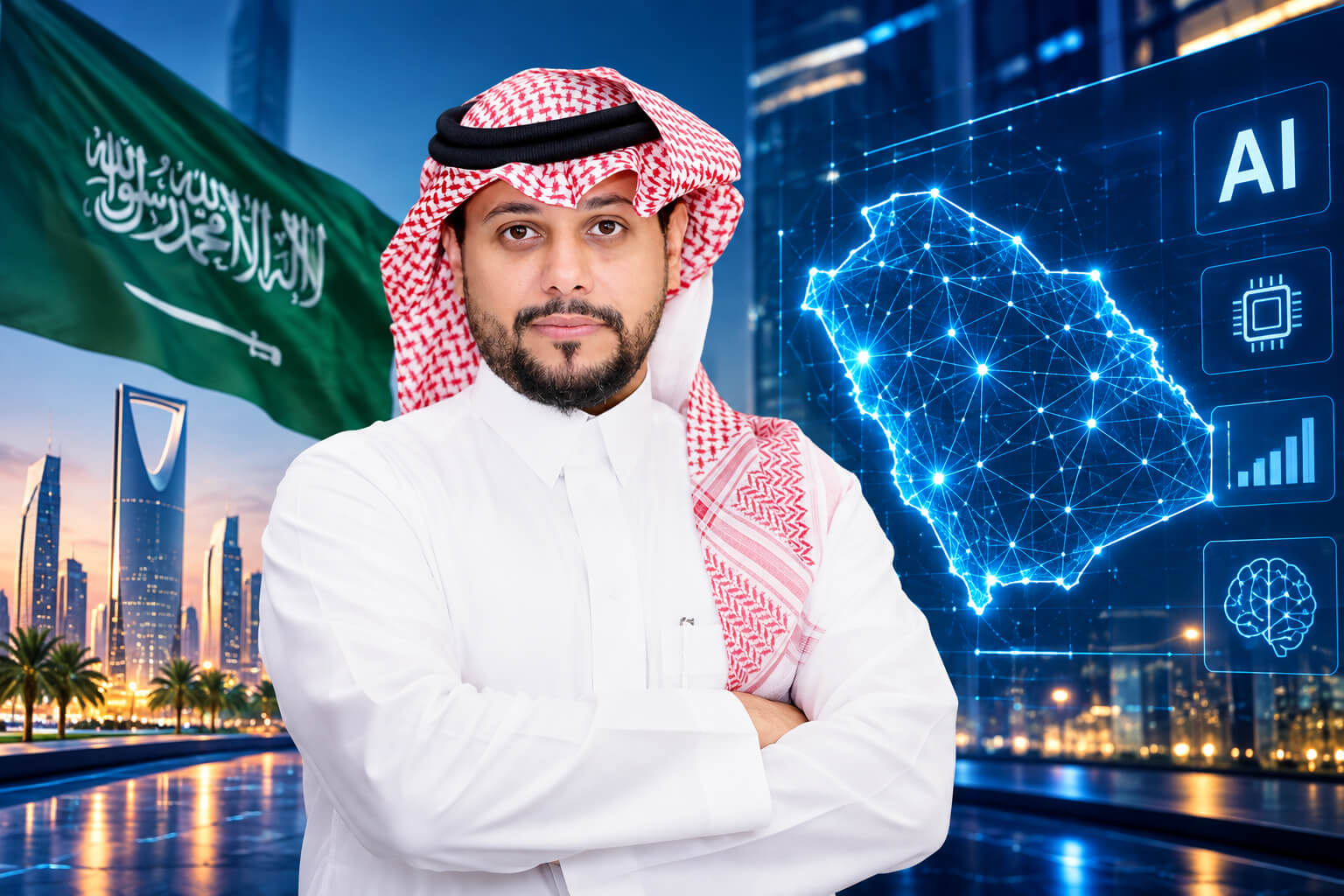
Abdullah Asiri, founder and CEO of Lucidya, has been nominated for the 2026 World AI Awards in the AI Leadership category, recognising his role in building an Arabic-first artificial intelligence company around a problem global software platforms have historically struggled with: understanding how customers across the Arab world actually communicate.
It is a different kind of AI leadership story. Lucidya did not begin with the generative AI boom.
The Saudi company was founded in 2016, years before ChatGPT turned artificial intelligence into a boardroom obsession. Asiri and his team instead focused on natural language technology capable of understanding Arabic customer conversations, including the dialects, sentiment and linguistic nuances that can be missed by systems developed primarily around English.
The World AI Awards recognises organisations, individuals and technologies contributing to the development and practical application of artificial intelligence across industries.
Building AI around an Arabic-language problem
Lucidya started with a fairly specific gap.
Asiri has said that existing customer-experience software struggled in Saudi Arabia and the wider Middle East because its AI components could not adequately understand Arabic. That made something as basic as analysing complaints, feedback and customer conversations harder than it should have been.
Lucidya built its technology around that problem.
Today, the company says its proprietary Arabic-language AI processes sentiment across 15 Arabic dialects with 92% accuracy. Its platform brings together customer conversations and signals from more than 30 channels and platforms, giving organisations a way to analyse what customers are saying and turn those signals into operational actions.
The numbers have moved beyond startup scale. Lucidya currently reports more than 120 large enterprise and government clients, with its technology serving more than 75 million customers across 13 countries through those organisations. Those are company-reported figures rather than independently audited measures, but they show the scale Lucidya says its platform has reached.
A Saudi AI company grows beyond social listening
What began around understanding customer conversations has expanded into a broader customer-experience platform.
Lucidya now describes itself as an AI-native CX platform designed to analyse intent, sentiment, tone and cultural context, then help marketing, support, research and customer-experience teams decide what to do next. Its newer direction pushes further into agentic AI, where software can trigger workflows, generate responses and handle certain customer interactions rather than simply producing another dashboard for a human to read.
Asiri has been particularly vocal about the limits that should accompany that autonomy.
In an April 2026 discussion with Entrepreneur Middle East, he argued for “governed autonomy”: AI agents operating within defined permissions, with exceptions escalated when necessary. The idea is less dramatic than giving an AI unrestricted control, but far more relevant to enterprises deciding whether an agent can be trusted to act inside real business processes.
A $30 million bet on scaling the model
Lucidya’s growth has also attracted substantial outside capital.
The company raised $30 million in Series B funding in 2025, led by Impact46 with participation from Wa’ed Ventures, Takamol Ventures, SparkLabs Group, Rua Growth Fund and ARG. Lucidya described it as the largest AI funding round in MENA at the time.
That funding matters in the context of Asiri’s AI Leadership nomination because the next challenge is not simply building Arabic-language models. It is turning regionally developed AI into enterprise software that can compete beyond its home market.
Lucidya is already building for that next stage. The company has expanded its leadership team with executives who previously worked at companies including ServiceNow, Qualtrics, Brandwatch, Talkdesk and Genesys as it scales its agentic customer-experience platform into additional enterprise markets.
The ambition is clear, even if the outcome is still being written: build AI from the region, around the region’s language and business requirements, then see how far that technology can travel.
Graham Cooke, President of the World AI Awards, said:
“Abdullah Asiri’s nomination in AI Leadership highlights an important part of the global AI story: meaningful innovation does not have to begin by adapting technology built somewhere else.
“Through Lucidya, Abdullah has helped build artificial intelligence around the linguistic and customer-experience requirements of the Arab world, while pushing that work into newer areas such as agentic customer experience. We congratulate Abdullah on his 2026 World AI Awards nomination and look forward to following Lucidya’s next stage of development.”
Abdullah Asiri joins founders, executives, researchers and technology leaders being recognised through the 2026 World AI Awards.
The programme recognises organisations, individuals and technologies contributing to the development and application of artificial intelligence across industries. In the AI Leadership category, the focus extends beyond a single model or product to the people helping turn AI research and engineering into organisations, products and practical applications.
Asiri’s story fits that conversation particularly well. Lucidya started by tackling a regional technical problem that was easy for global platforms to overlook. A decade later, it is trying to turn that foundation into a broader AI-native customer-experience business.
The interesting part now is what happens next.
Learn more about Abdullah Asiri and Lucidya’s Arabic-native AI technology at lucidya.com.
Discover the World AI Awards 2026, explore the nominees and learn more about the awards at worldawards.ai.
