


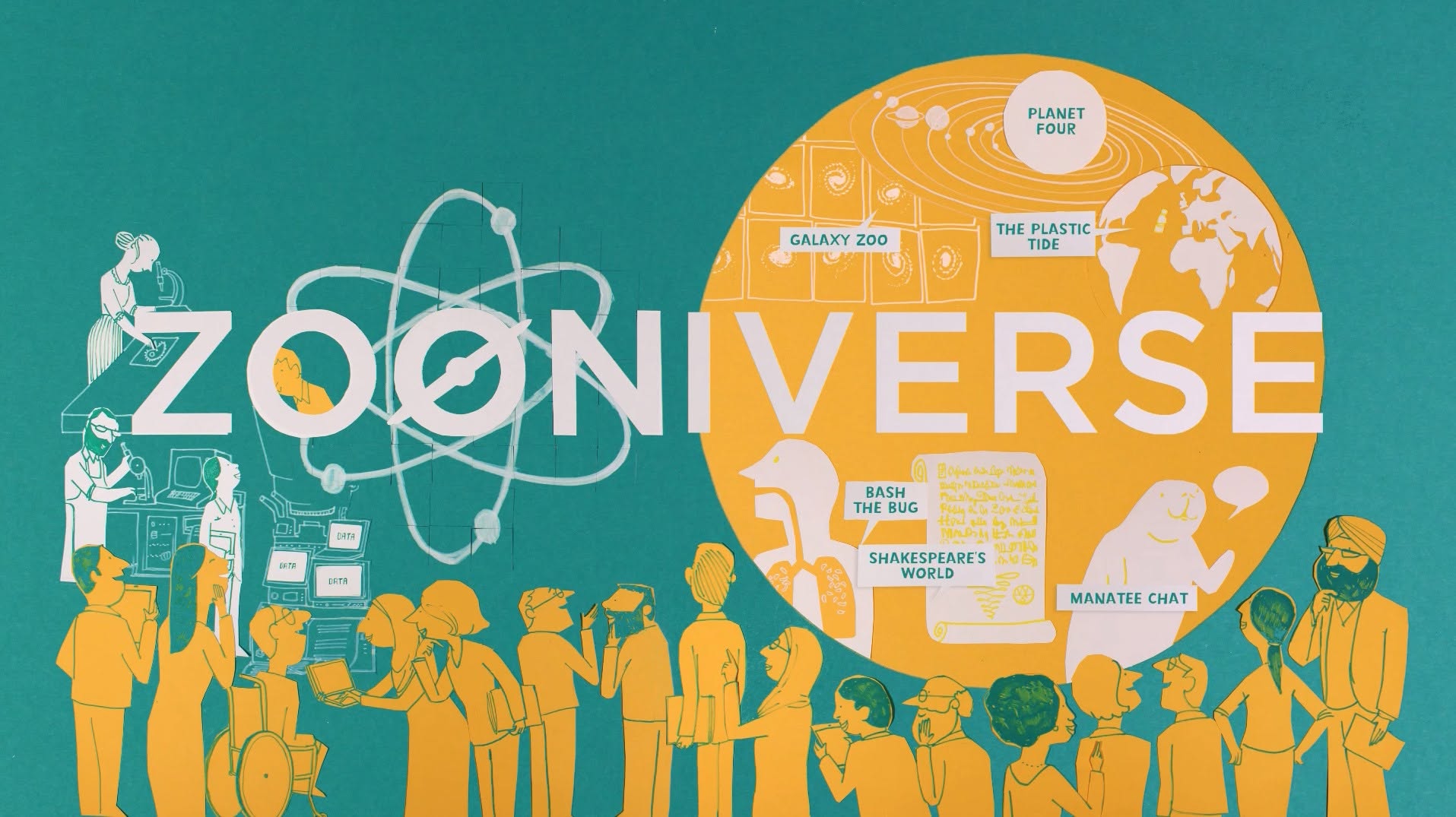
Zooniverse’s Galaxy Zoo has been nominated for the 2026 World AI Awards, recognising a citizen-science project that has turned millions of human observations into training data for artificial intelligence capable of analysing galaxies at a scale people alone could never realistically handle.
Galaxy Zoo began in 2007 with a deceptively simple idea: show members of the public astronomical images and ask them to describe what they see. Is a galaxy smooth? Does it have spiral arms? Is there a bar through its centre? Does anything look unusual?
Those answers matter. A galaxy’s shape, or morphology, contains clues about its history, star formation and interactions with neighbouring galaxies. The first Galaxy Zoo project drew participation from more than half a million people and classified roughly one million galaxies from the Sloan Digital Sky Survey.
The scale of modern astronomy has changed the problem. New observatories can produce far more imagery than astronomers—or even enormous groups of volunteers—can inspect manually.
That is where AI enters the picture.
Galaxy Zoo turned human classifications into AI training data
Galaxy Zoo has increasingly combined citizen science with machine learning rather than treating the two as competing approaches.
Its Zoobot deep-learning system learns from classifications previously made by Galaxy Zoo volunteers. Instead of removing people from the process, the model attempts to reproduce and scale the morphological judgements that humans have already supplied.
Galaxy Zoo has used Zoobot to prioritise galaxies that appear detailed or unusual, helping volunteers spend more time looking at scientifically interesting objects instead of repeatedly examining relatively featureless images.
The approach has also moved into large scientific datasets.
Galaxy Zoo’s DESI catalogue contains detailed automated morphology measurements for 8.67 million galaxies observed by the DESI Legacy Imaging Surveys. Those measurements were generated by deep-learning models trained using Galaxy Zoo volunteer votes. The project reports that its models typically predict volunteer response fractions to within 5–10% across Galaxy Zoo questions.
That is a very different AI story from a chatbot or general-purpose model. Here, artificial intelligence is being trained to recognise structure across enormous collections of astronomical images.
Euclid makes the scale problem much bigger
The arrival of the European Space Agency’s Euclid telescope makes this human-machine partnership increasingly relevant.
Euclid is designed to survey an enormous section of the extragalactic sky. Galaxy Zoo’s Clump Scout II project notes that the completed survey is expected to contain images of more than one billion galaxies, with around 250 million potentially resolved well enough for researchers to investigate star-forming clumps.
Manually examining that volume would be impractical.
Galaxy Zoo volunteers are therefore helping researchers refine deep-learning models intended to analyse future Euclid datasets. The project has already used volunteer classifications to train algorithms, while its Euclid data release includes automated morphology measurements for hundreds of thousands of galaxies generated by models trained on Galaxy Zoo labels.
Humans provide the nuanced classifications. Machines learn from those examples and carry them across datasets measured in millions of objects.
Humans still find things algorithms can miss
Galaxy Zoo has not abandoned human observation as its machine-learning systems improve.
That is partly because unusual objects are valuable precisely because they do not always resemble what an algorithm has seen before.
Galaxy Zoo’s Weird and Wonderful project, for example, used a machine-learning algorithm to identify the most unusual 1% from a pool of 1.5 million galaxies. Volunteers then examined a selected sample to decide what was genuinely interesting. The project explicitly notes that what a computer considers statistically unusual is not necessarily what a person considers scientifically interesting.
That relationship captures what makes Galaxy Zoo particularly relevant to the development of scientific AI.
People are not simply doing work until machines become good enough to replace them. Their classifications become training data. AI handles scale. Humans can then concentrate on ambiguity, unusual structures and discoveries that deserve closer attention.
Graham Cooke, President of the World AI Awards, said:
“Galaxy Zoo is a fascinating example of what can happen when human knowledge and artificial intelligence are designed to work together rather than separately.
“Thousands of volunteers have helped researchers understand what galaxies look like, while machine-learning systems can now carry those lessons into astronomical datasets containing millions of objects. That combination creates an opportunity to make scientific discovery more scalable without losing the value of human observation. We congratulate Zooniverse and the Galaxy Zoo team on their 2026 World AI Awards nomination.”
The World AI Awards recognises organisations, individuals, products and technologies contributing to the development and practical application of artificial intelligence across industries.
Galaxy Zoo brings something distinctive to that landscape. It began as people-powered astronomy, long before the current wave of generative AI, and has gradually developed into a working example of humans teaching machines how to interpret complex scientific imagery.
Nearly two decades after volunteers first started clicking through pictures of distant galaxies, their observations are helping AI tackle a much larger universe of data.
Learn more about Zooniverse and participate in Galaxy Zoo at zooniverse.org.
Discover the World AI Awards 2026, explore the nominees and learn more about the awards at worldawards.ai.
