


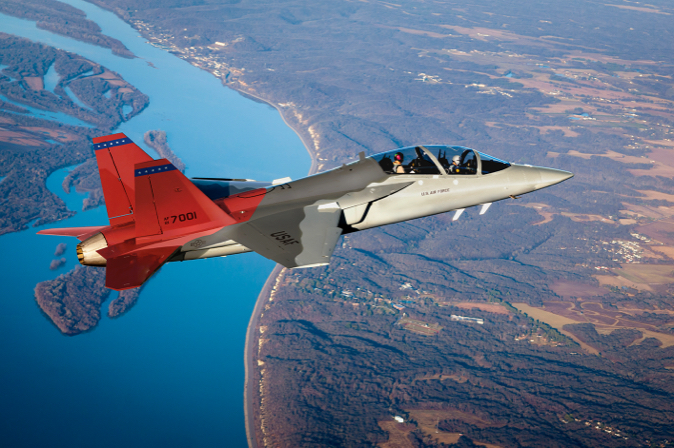
Boeing has been nominated for the 2026 World AI Awards in the Aerospace category, recognising the aerospace company’s work applying artificial intelligence, machine learning and autonomy across commercial aviation, defence and space systems.
The nomination comes as Boeing expands its use of AI beyond conventional data analytics. Its work now stretches from predictive aircraft maintenance and automated flight systems to autonomous military aircraft and experimental onboard AI designed to help spacecraft interpret problems when communications with Earth are limited.
The World AI Awards recognises organisations, individuals, products and technologies contributing to the development and real-world application of artificial intelligence across industries.
For Boeing, that work spans one of the broadest operating environments in engineering. The company develops commercial aircraft, defence platforms and space systems, while Boeing Global Services provides digital and maintenance technology to airline operators worldwide.
Autonomy moves from research into real aircraft
One of Boeing’s most visible areas of development is autonomous and highly automated flight.
In April 2026, a U.S. Army CH-47F Chinook completed its first fully automated approach and landing during flight testing of Boeing’s Approach-to-X, or A2X, technology. Boeing reported that the aircraft landed using enhanced Digital Automated Flight Control System software without pilot interaction.
The milestone followed more than 150 A2X approaches since testing began on a U.S. Army CH-47F in January 2026. According to Boeing, those approaches ranged from a 100-foot hover to ground landings, with an average final position error of less than five feet.
Boeing is also developing autonomous capabilities for the MQ-25A Stingray, the U.S. Navy’s uncrewed carrier-based aerial refuelling aircraft. Its autonomy software enables the aircraft to execute predetermined mission plans without an onboard pilot, supporting a programme intended to extend the operating range of carrier-based aircraft.
Elsewhere in Boeing’s defence portfolio, autonomy, artificial intelligence and machine learning are being developed for collaborative aircraft operations. Boeing has reported testing and mission simulations involving crewed-uncrewed teaming across platforms including the F-15EX, F/A-18 Super Hornet, MQ-25 and MQ-28.
AI targets maintenance problems before they disrupt flights
Artificial intelligence is also being applied to a less visible but commercially important challenge: keeping aircraft available for service.
Boeing’s Insight Accelerator uses AI-powered analytics to examine flight, maintenance and reliability data for patterns that could indicate developing component degradation or failure. Maintenance engineers can use the system to build and refine predictive alerts without needing dedicated data scientists.
Japan Airlines is one confirmed user. Boeing and JAL announced in 2023 that the airline would implement Insight Accelerator for its Boeing 787 fleet after participating in the development and refinement of the technology since 2017.
Boeing said at the time that implementing an Insight Accelerator recommendation could reduce unnecessary inspections by up to 85%. That figure represents Boeing’s estimate of potential benefit rather than a guaranteed result for every airline or maintenance scenario.
The technology sits alongside Boeing Airplane Health Management, which monitors aircraft data and provides maintenance teams with information about faults and emerging issues. Boeing says its predictive models have been refined using data from more than 44 million flights.
Taking artificial intelligence into space
Boeing is also experimenting with AI in environments where waiting for instructions from human operators can become a problem.
In January 2026, Boeing disclosed a prototype AI application designed to run directly on space-grade hardware aboard spacecraft.
The system is being developed to detect unusual behaviour, perform diagnostic checks, summarise problems and recommend responses when communications with ground teams are delayed, unavailable or disrupted. Under predefined safeguards, Boeing is also investigating whether onboard AI could perform limited, verified actions before communications are restored.
The current prototype uses a lightweight open model designed to operate within constrained computing and power requirements. Boeing describes the work as an early-stage prototype, with further development focused on reliability, cybersecurity and rules governing trusted autonomous behaviour.
Together, these projects illustrate the different roles AI can play in aerospace: interpreting aircraft data, assisting maintenance teams, automating parts of flight and giving uncrewed systems greater ability to operate when immediate human intervention is unavailable.
Graham Cooke, President of the World AI Awards, said:
“Boeing’s nomination highlights the breadth of opportunity for artificial intelligence across aerospace, where digital systems increasingly have to work alongside some of the world’s most complex physical machines.
“From predictive aircraft maintenance and autonomous flight to research into onboard AI for spacecraft, Boeing is exploring how intelligent systems can support engineers, operators and increasingly automated platforms. We congratulate the Boeing team on its 2026 World AI Awards nomination and look forward to following how these technologies develop.”
Boeing joins organisations, researchers, entrepreneurs and technology developers being recognised through the 2026 World AI Awards.
The programme highlights organisations, individuals and technologies contributing to artificial intelligence across a wide range of industries, providing a view of how AI is moving from general-purpose software into specialised applications shaped by the requirements of individual sectors.
Boeing’s nomination in the Aerospace category reflects that shift. Aviation and space present demanding operating environments where AI systems must interact with physical equipment, established engineering processes and strict operational requirements. Boeing’s work ranges from products already being used in airline maintenance to autonomous technologies undergoing flight testing and space AI concepts that remain at the prototype stage.
Learn more about Boeing and its aerospace technology at boeing.com.
Discover the World AI Awards 2026, explore the nominees and learn more about the awards at worldawards.ai.
