


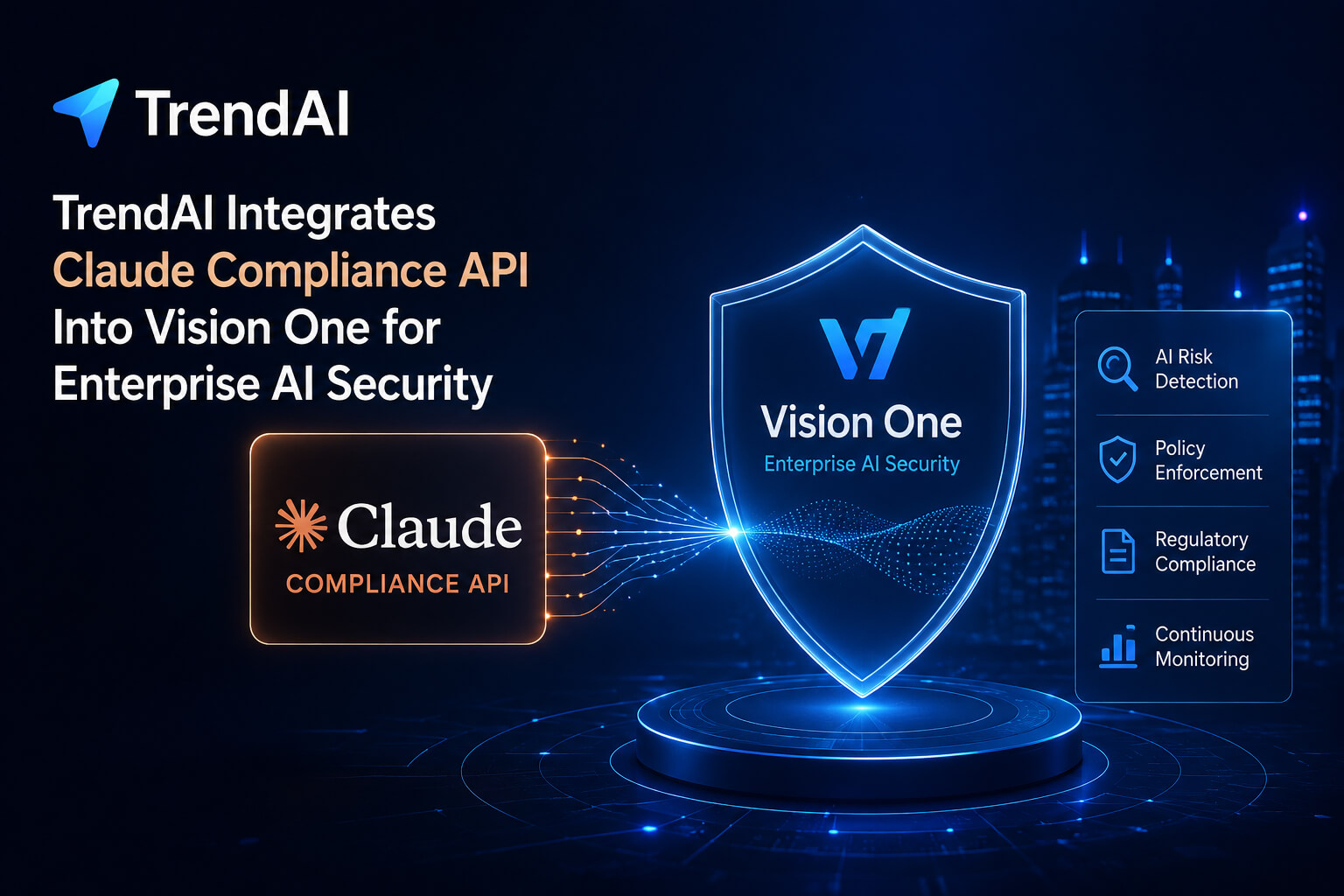
TrendAI has announced a new integration between the Claude Compliance API and TrendAI Vision One. This gives enterprise security, IT, and compliance teams a more centralized way to monitor and govern Claude usage across their organizations.
The move reflects a growing priority in enterprise AI. Companies are no longer only adopting generative AI tools for productivity. They are also looking for ways to secure, audit, and manage how those tools are used. With Claude now being used across business workflows, organizations need better visibility into user activity, uploaded files, potential data exposure, and compliance risks.
What the Integration Adds to TrendAI Vision One
According to the announcement, the Claude Compliance API allows teams to retrieve Claude usage data, including activity events and uploaded files. TrendAI is bringing that information into TrendAI Vision One, its extended attack surface management platform.
This means security teams can monitor Claude activity alongside signals from other parts of the enterprise environment. This includes endpoint, identity, network, cloud, and email systems.
The goal is to help companies detect risks connected to AI usage before they become larger security or compliance problems.
Key AI Security Capabilities
The TrendAI Claude Compliance API integration supports several enterprise security use cases, such as:
- Detecting sensitive data shared with Claude including Personally Identifiable Information (PII), Protected Health Information (PHI), credentials, source code, and confidential files.
- Identifying high-risk users, projects and AI activity patterns.
- Surface policy violations, prompt injection attempts, jailbreak patterns and harmful content.
- Support audit trails and defensible AI interaction records.
- Link Claude activity to enterprise-wide security telemetry across the attack surface.
For organizations using Claude Enterprise or Claude Platform, this may ease the governance of AI within existing security operations.
Why This Matters for Enterprise AI Governance
As AI tools get embedded into daily business operations, security leaders are being asked to think about AI activity as part of the larger corporate attack surface. Employees may upload sensitive files, include confidential business data in prompts, or interact with AI systems in ways that raise compliance concerns.
By incorporating Claude usage data into TrendAI Vision One, TrendAI is positioning AI monitoring as a part of standard security workflows. This makes it part of the process rather than a separate IT function.
This is important because AI governance is becoming a key enterprise requirement. Companies need to know who is using AI tools, what data is being shared, whether policies are being followed, and how AI-related risks connect to broader cybersecurity events.
Data Residency and Flexible Monitoring Options
TrendAI says customers can run a collector inside their own environment, helping organizations keep compliance access keys and logs within their own infrastructure. This is particularly true for companies with stringent data residency, privacy or regulatory requirements.
Claude logs can also be pulled directly into TrendAI Vision One through TrendAI Agentic SIEM. There, the data can be correlated with other enterprise security signals.
This dual approach gives organizations more flexibility depending on how they want to monitor AI usage. It also depends on where they need data to remain stored.
TrendAI’s Bigger Push Into AI Security
The Claude Compliance API integration expands TrendAI’s AI security portfolio. The company says its tools help organizations secure workforce AI usage, AI applications, and AI agents.
For enterprises, this announcement highlights a larger industry shift. AI tools are becoming standard workplace infrastructure. As a result, businesses need security platforms that monitor AI activity as seriously as cloud, identity, endpoint, and network activity.
The Bottom Line
The TrendAI Claude Compliance API integration gives enterprises a stronger way to manage Claude usage through centralized visibility, auditing, policy monitoring, and risk detection.
As companies continue to adopt generative AI, integrations like this could become more important. This is especially true for companies that want to embrace AI while reducing exposure to data leaks, policy violations and compliance risk.
