


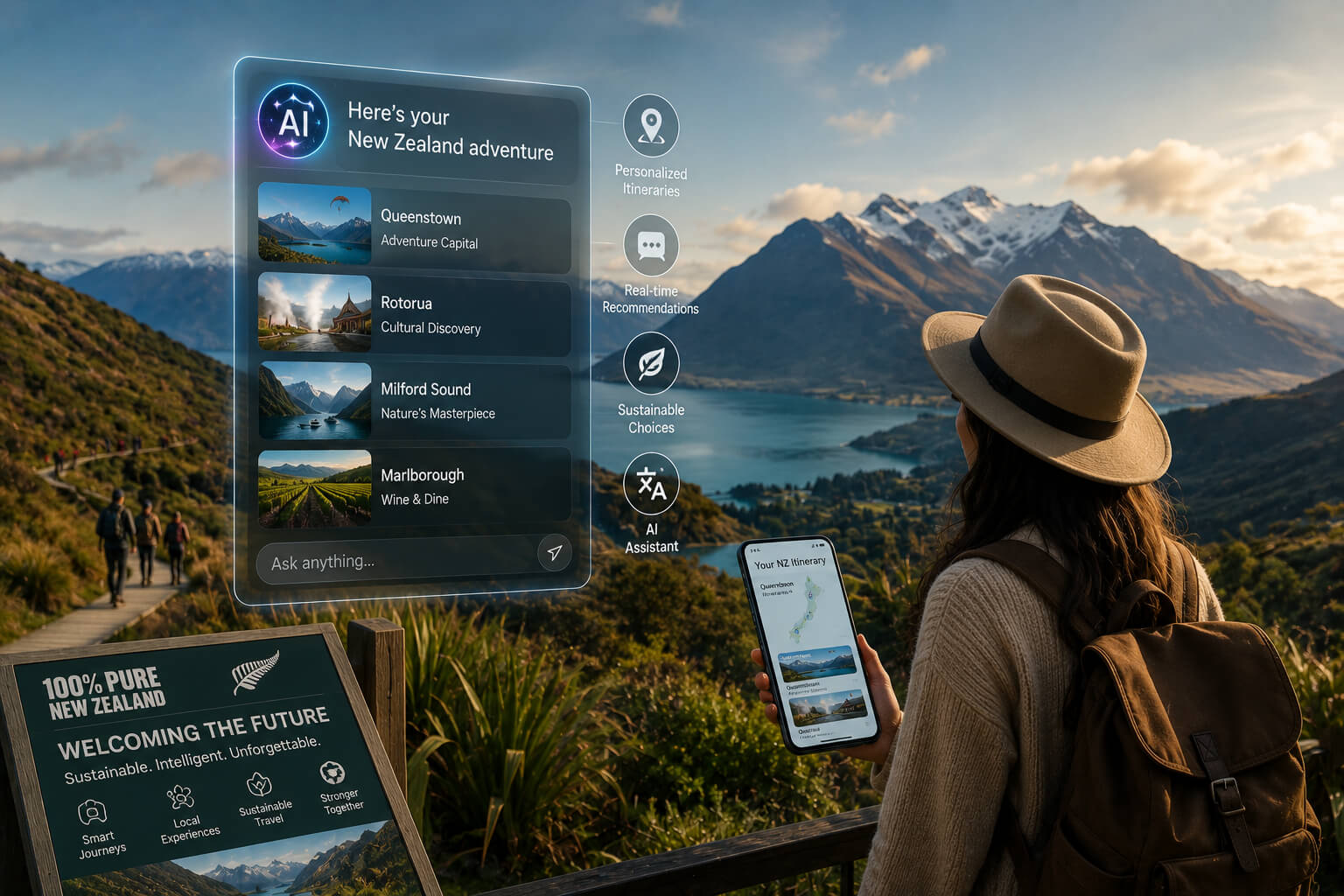
The New Zealand tourism sector is stepping up its efforts to remain competitive as artificial intelligence transforms the way travellers discover destinations, compare options and plan trips. AI travel planning is quickly becoming an essential tool for many when organising their next adventure.
“AI travel planning is pushing destinations to rethink how they appear online,” tourism and aviation leaders at TRENZ 2026 in Auckland said. Travel brands must now make sure their content is understandable, trustworthy and recommendable by AI-powered tools, rather than relying on traditional search engines.
AI Is Changing How Travellers Choose Destinations
Air New Zealand CEO Nikhil Ravishankar said the travel decision-making process is shifting. In the past, many travellers began by searching for a specific country, city, airline or hotel. Now, more people are starting with broad AI prompts, such as asking where to go for nature, food, culture or a two-week holiday during a specific month.
That means destinations may find themselves increasingly competing on AI-generated answers, rather than traditional search result pages.
For countries like New Zealand, this is both a challenge and an opportunity. If AI platforms can easily find, understand and trust official tourism information, New Zealand stands a better chance of appearing in personalised travel recommendations.
Air New Zealand Invests in AI-Ready Marketing
Air New Zealand is responding by investing in digital visibility strategies designed for the AI era. Ravishankar said the airline wants both New Zealand and Air New Zealand to be visible, trusted and machine-readable across AI platforms.
The airline is also exploring new forms of agentic advertising with major technology companies, including OpenAI and Google. Agentic advertising refers to marketing approaches designed for AI agents that may eventually help users compare options, make recommendations and complete travel bookings on their behalf.
This could become especially important as AI assistants move from simple trip inspiration to more advanced booking support.
Tourism Leaders See AI as a Major Shift
Tourism Industry Aotearoa CEO Rebecca Ingram said AI is already influencing how travellers research and book trips. She pointed to research from Phocuswright showing that more than half of US travellers are now using AI to help inform travel booking decisions.
That trend suggests tourism operators can no longer treat AI as a future issue. Travel brands, airlines, hotels and destination marketers may need to optimise their content not only for people, but also for the AI systems that help people make decisions.
New Zealand Still Has a Human Advantage
While AI is changing the discovery process, tourism leaders believe New Zealand’s emotional appeal remains a powerful advantage.
Ingram noted that people do not travel simply to collect information. They travel because they are looking for an experience, a feeling or a sense of connection that may be difficult to describe.
That distinction matters. AI can help travellers find destinations, compare itineraries and simplify bookings. But the final decision is still often driven by emotion, imagination and the promise of a memorable experience.
Tourism New Zealand Focuses on AI Discoverability
Tourism New Zealand CEO René de Monchy said the country has a major opportunity to make sure its destination content is accurate and easy for machines to find.
As AI platforms become more influential in travel planning, tourism boards may need to prioritise structured information, reliable content, strong destination storytelling and clear digital signals that help AI systems understand what a place offers.
For New Zealand, that could mean making sure AI tools understand the country’s strengths in nature, adventure, culture, food, sustainability and premium travel experiences.
Why It Matters
The emergence of AI travel planning could change the global tourism industry. Destinations that get in on the ground floor and optimise for AI discovery could have an advantage, appearing more often in AI recommendations. Those that do not risk losing future visibility to travellers.
New Zealand’s response shows how tourism marketing is entering a new phase. Search engine optimisation is no longer the only priority. The next challenge is AI visibility.
As travellers increasingly ask AI where to go, what to do and how to book, the destinations that provide accurate, trusted and machine-readable content may be the ones that win the next generation of tourism demand.
For more Breaking AI news, visit: https://breakingai.news
