


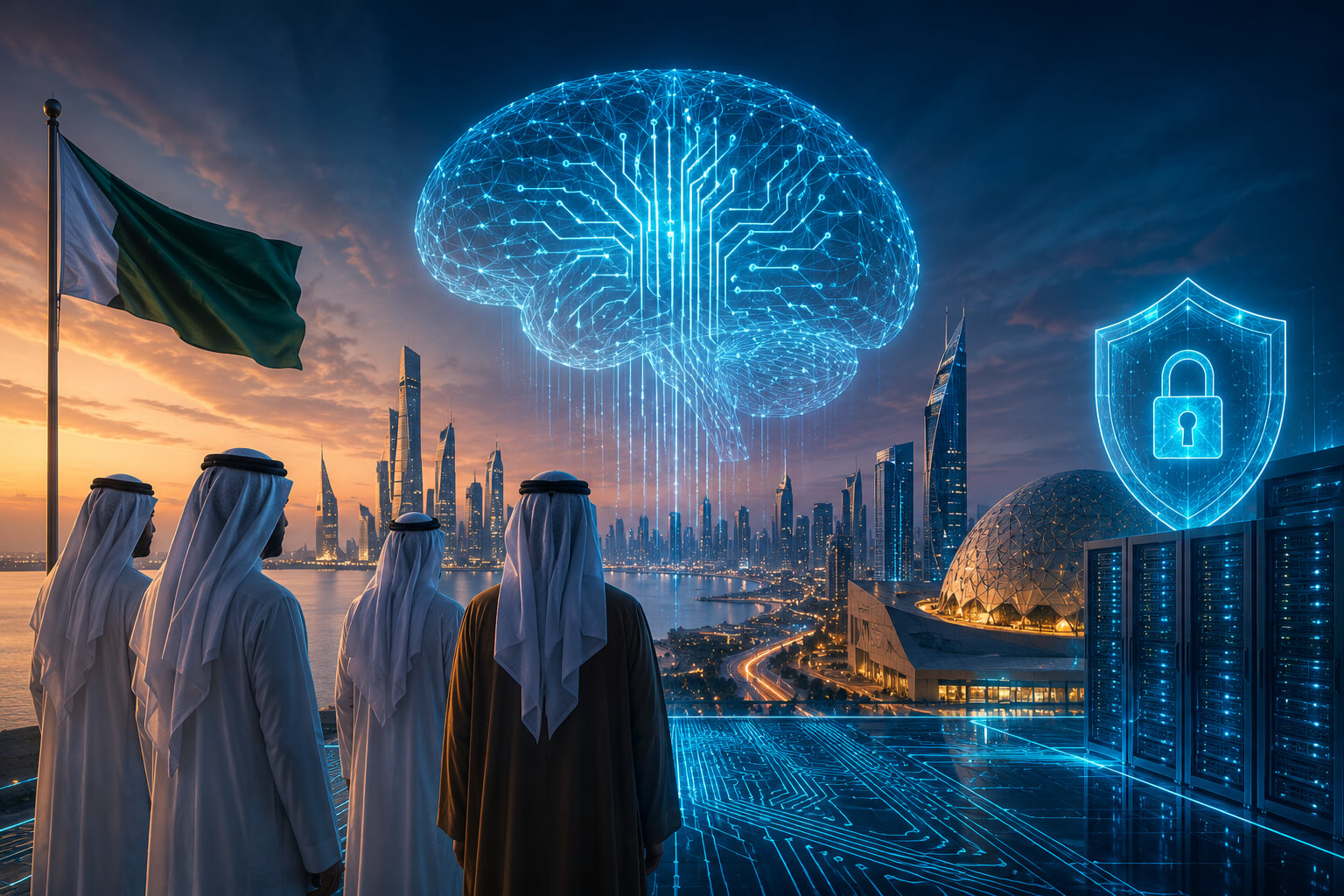
Artificial intelligence is quickly becoming more than a tool for productivity. Across the Gulf, governments are beginning to treat AI as a core part of national infrastructure, placing new emphasis on sovereign AI in Gulf states as cyber threats become faster, more automated, and more difficult to contain.
According to a Gulf News report, countries such as the United Arab Emirates and Saudi Arabia are shifting from simply adopting AI systems to building AI capabilities that they can control, secure, and govern at a national level. This reflects a broader regional strategy: AI is no longer just about innovation. It is increasingly tied to digital independence, cybersecurity, economic competitiveness, and national resilience.
Why Sovereign AI Matters for the Gulf
Sovereign AI refers to a country’s ability to develop, deploy, and control AI systems using secure national infrastructure, protected data environments, and governance frameworks aligned with national priorities.
For Gulf states, this is becoming increasingly important because AI is being integrated into essential public systems. These include government services, transportation, financial networks, emergency response, utilities, aviation, ports, telecommunications, and other critical infrastructure.
As more public services become digitized, the risks also increase. A cyberattack is no longer just a technical disruption. It can affect public trust, economic stability, and the daily systems that citizens and businesses rely on.
UAE Moves From AI Adoption to AI Control
The UAE has positioned itself as one of the most active AI-driven economies in the region. Its digital government services, smart infrastructure, financial platforms, and public-sector systems depend heavily on advanced technologies.
The next challenge is not only deploying AI, but controlling it securely.
Shalev Hulio, co-founder of Dream, told Gulf News that there is a major difference between using AI and controlling AI. He argued that while many countries are adopting AI tools, far fewer are building true sovereign AI capabilities.
This distinction is critical. Public AI models may be useful for general applications, but sensitive government environments require stronger safeguards. National data, critical systems, and security operations cannot simply be connected to external AI platforms without careful controls.
Cyber Threats Are Becoming More Automated
AI is also changing the nature of cyberattacks. Threat actors can now operate with greater speed, scale, and automation. Traditional cybersecurity systems that rely heavily on manual monitoring may struggle to keep up with AI-driven threats.
This is one reason Gulf governments are increasingly connecting AI strategy with cybersecurity strategy. Cyber resilience is becoming part of national planning rather than a separate IT concern.
For highly digitized economies like the UAE, the stakes are especially high. As more services move online, fragmented systems and disconnected data environments can create vulnerabilities. Building sovereign AI infrastructure could help governments respond more quickly and securely to emerging threats.
The Gulf’s AI Strategy Is About National Resilience
The Gulf region’s AI ambitions are closely tied to long-term economic transformation. AI is expected to support diversification, improve public-sector efficiency, strengthen digital services, and create new industries.
But the latest shift shows that speed alone is not enough. Governments now need to ensure that AI systems are reliable, secure, and aligned with national interests.
This means investing in:
- Secure AI infrastructure
- Cybersecurity frameworks
- Local talent and education
- Data governance systems
- Critical infrastructure protection
- Public-sector AI deployment
The UAE, in particular, has been building a wider AI ecosystem that includes regulation, infrastructure, talent development, and cybersecurity planning. Gulf News reported that this approach reflects a move from AI strategy announcements toward real-world deployment.
AI, Cybersecurity, and Quantum Computing
The next stage of digital competition may depend on how well countries combine multiple advanced technologies. Hulio told Gulf News that future digital economies will need strength across three strategic areas: cyber, AI, and quantum computing.
For Gulf states, this creates both an opportunity and a challenge. Countries that build secure, sovereign AI ecosystems may gain stronger control over their digital future. Those that rely too heavily on external systems could face greater strategic and operational risks.
What This Means
The rise of sovereign AI in Gulf states signals a major shift in how governments view artificial intelligence. AI is no longer being treated only as a business tool or innovation trend. It is becoming part of national security, public infrastructure, and long-term economic planning.
As cyber risks continue to grow, the Gulf’s AI race may increasingly be defined not by who adopts AI fastest, but by who can control it most securely.
For more Breaking AI news visit: https://breakingai.news
