


Key Takeaways
- NVIDIA expands its open model families to support agentic AI, physical AI, and healthcare AI systems.
- The new models, datasets, and tools accelerate AI development, enabling advanced agents that can analyze and interact with their environments.
- Key model groups like Nemotron focus on reasoning and language capabilities for creating digital agents.
- Physical AI models like Cosmos and Isaac GR00T help in robotics, providing training for machines to operate in real-world settings.
- Healthcare AI tools such as Clara and BioNeMo support biomedical applications and include resources for protein research.
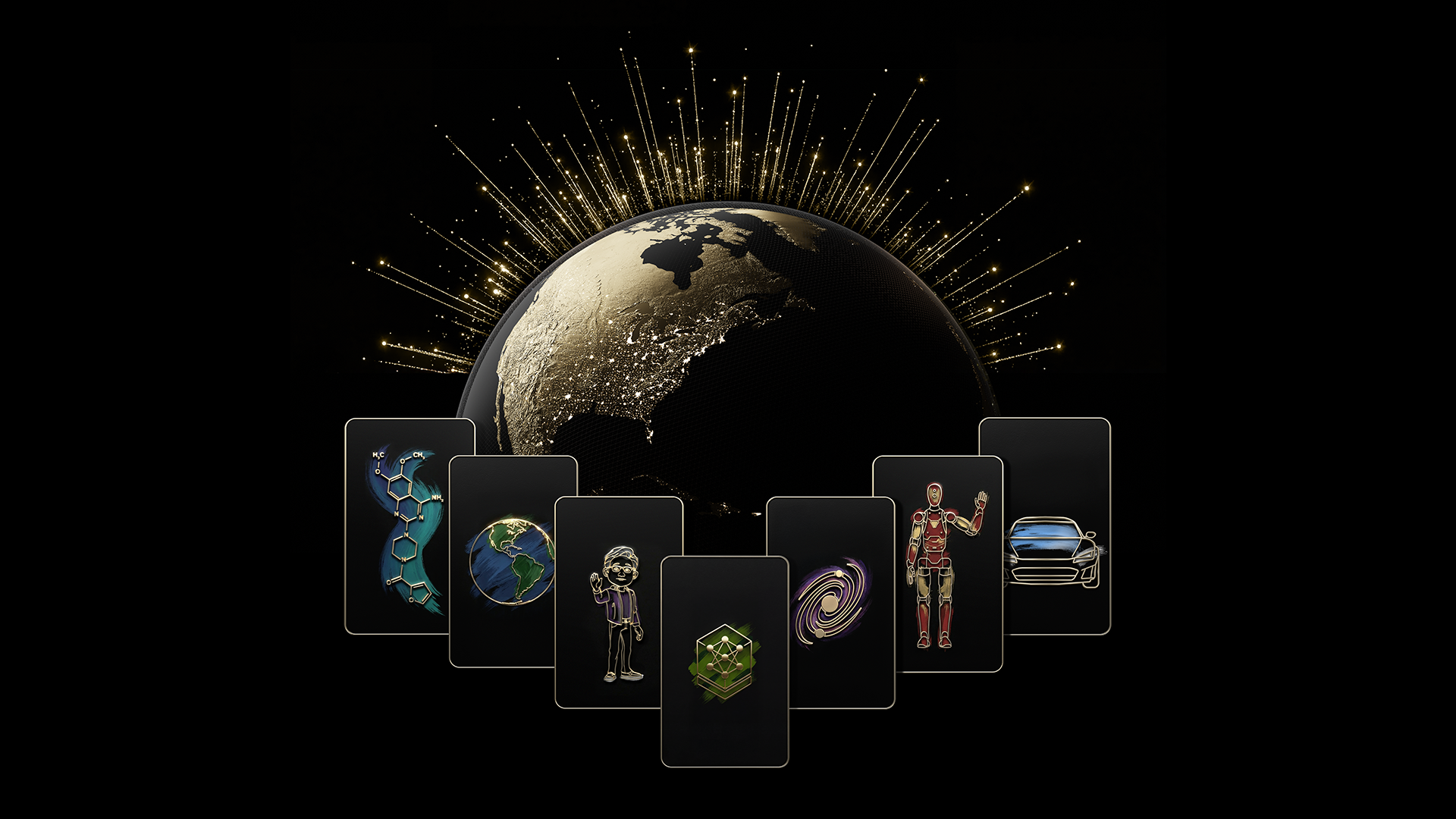
NVIDIA announced an expansion of its open model families to support the development of agentic AI, physical AI, and healthcare AI systems. The company introduced new models, datasets, and tools designed to accelerate artificial intelligence development. These NVIDIA open model families aim to help developers build AI systems capable of reasoning, interacting with environments, and supporting scientific research.
The expanded ecosystem focuses on enabling AI agents that can observe information, process data, and perform tasks. These systems are designed to operate in digital environments and real-world settings.
NVIDIA Open Model Families Support Agentic AI Development
The NVIDIA open model families include several platforms designed for advanced AI agents. One of the key model groups is Nemotron. These models focus on reasoning and language capabilities. Developers can use Nemotron models to build digital agents that analyze information and complete tasks.
Agentic AI systems rely on models that combine language understanding with reasoning abilities. NVIDIA designed these models to help organizations create specialized AI assistants and autonomous systems.
The open models allow developers to adapt and train AI systems for specific industries and applications.
Open Models for Physical AI and Robotics
NVIDIA also introduced models designed for physical AI. These systems support machines that interact with the real world.
The Cosmos platform helps generate synthetic data and simulations. These simulations are used to train AI models that operate in physical environments.
Another major component is Isaac GR00T. This model focuses on robotics development. It provides a foundation for humanoid robots and automated machines. Developers can train robots to understand surroundings and perform tasks using this platform.
Physical AI models help machines learn movement, perception, and interaction with objects.
Healthcare AI and Scientific Research Models
The NVIDIA open model families also expand support for healthcare and life-science research. Platforms such as Clara and BioNeMo provide tools for biomedical AI applications.
These tools support medical imaging, biological research, and drug discovery.
NVIDIA also released new resources related to protein research. One example is the Proteina-Complexa model. This model is designed to assist researchers studying protein interactions and drug development.
The company also introduced a large dataset containing millions of predicted protein complex structures.
The dataset was developed through collaboration with Google DeepMind, EMBL’s European Bioinformatics Institute, and Seoul National University.
Open Access to NVIDIA AI Models and Datasets
Many resources within the NVIDIA open model families are available as open models and datasets. Developers and researchers can access these resources through platforms such as Hugging Face and NVIDIA AI ecosystems.
Open availability allows organizations to experiment with models and build specialized AI systems.
The expansion of NVIDIA open models supports the development of autonomous software agents, intelligent machines, and AI systems used in scientific research and healthcare.
