


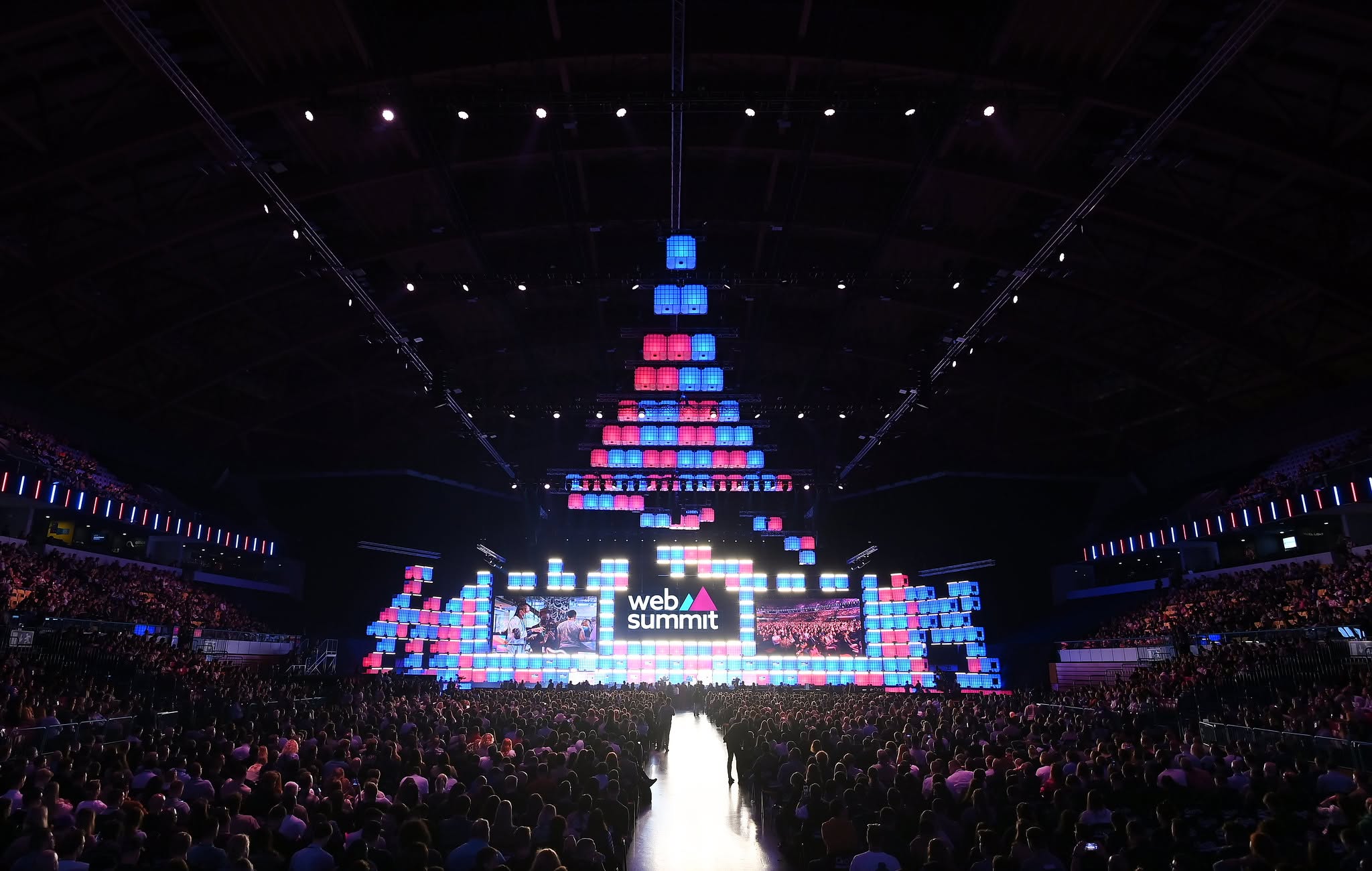
Web Summit 2026 is set to bring technology leaders, entrepreneurs, investors and policymakers to Lisbon, Portugal, from November 9 to 12, 2026, with artificial intelligence expected to dominate conversations about the future of technology.
The four-day conference will take place at the MEO Arena and surrounding event facilities, bringing together companies developing AI systems, autonomous technologies, robotics and digital platforms. Organizers expect more than 70,000 attendees, making the event a major gathering for the global technology industry.
This year’s conference comes as businesses face growing pressure to demonstrate the commercial value of artificial intelligence. Investment in AI infrastructure continues, but questions surrounding profitability, regulation and real-world deployment are becoming harder to ignore.
With 17 content tracks, Web Summit 2026 will examine developments across AI, software, digital business and emerging technologies while providing opportunities for startups and investors to establish new partnerships.
Web Summit 2026 Brings Global Technology Leaders to Lisbon
Lisbon will once again become a meeting point for the international technology community as Web Summit 2026 welcomes entrepreneurs, investors, executives and industry specialists. The conference has developed a reputation for connecting established technology companies with emerging businesses, creating an environment where new products, investment opportunities and industry challenges can be discussed directly.
The 2026 edition will feature presentations, masterclasses, roundtable discussions and networking activities across 17 content tracks. Attendees will have opportunities to hear from technology leaders, explore emerging products and engage with companies developing solutions for different industries. For startups, the event also provides access to investors and potential commercial partners, offering exposure that can be difficult to secure independently.
Artificial Intelligence Takes Center Stage at Web Summit 2026
Artificial intelligence is expected to remain one of the most closely watched subjects at Web Summit 2026, particularly as companies move beyond experimenting with AI tools and begin integrating the technology into everyday business operations. The conference’s dedicated AI Summit will explore developments in AI infrastructure, autonomous systems and the increasingly complicated relationship between technology capabilities and commercial expectations.
Businesses are investing in AI to improve productivity, automate processes and develop new products, but deploying these systems at scale presents challenges involving cost, reliability and security. Discussions at Web Summit will examine how companies can move from promising demonstrations toward practical applications that deliver measurable value. The growing competition between open-source and proprietary AI models will also shape conversations about accessibility, technological independence and the future of AI development.
AI and Robotics Innovators Join the Web Summit 2026 Speaker Lineup
Robotics and autonomous technologies will have a visible presence at Web Summit 2026, reflecting growing interest in applying artificial intelligence beyond conventional software applications. The announced speaker lineup includes representatives from companies developing humanoid robots, AI-powered development platforms and intelligent systems designed to operate in physical environments.
Among the confirmed participants is Tao Zhang, Co-founder and Chief Product Officer of Manus AI, whose company has attracted attention for developing AI agents capable of handling complex digital tasks. Li Chen, Co-founder of Unitree, will also participate, bringing experience from the robotics industry. Other announced speakers include Michele Catasta, President of Replit, and Dahai Li, Co-founder and CEO of ModelBest. Robotics companies AgiBot and Galbot are also represented in the event lineup, highlighting how physical AI is becoming a more prominent part of the technology conversation.
Agentic AI and Autonomous Systems Face Growing Expectations
AI agents are increasingly being developed to perform tasks that previously required direct human supervision, from processing information and managing digital workflows to coordinating activities across software platforms. These systems represent a shift from AI tools that primarily respond to instructions toward applications capable of carrying out more complex sequences of actions.
The technology still faces significant challenges. Businesses must consider how autonomous systems interact with existing infrastructure, protect sensitive information and handle unexpected situations without introducing additional operational risks. Web Summit 2026 will provide a forum for examining these concerns as developers and enterprises explore practical approaches to deploying AI agents. The emphasis is increasingly shifting toward reliability, accountability and whether autonomous technologies can deliver consistent results in real business environments.
Open-Source AI and Technological Sovereignty Shape Industry Discussions
The growing influence of artificial intelligence has raised questions about who controls the technology and how businesses and governments can reduce their dependence on a limited number of providers. Open-source AI models offer organizations greater flexibility to customize systems and manage deployment, while proprietary platforms continue to attract companies seeking managed services, established infrastructure and commercial support.
Technological sovereignty will also feature in discussions surrounding Europe’s digital competitiveness. Governments and institutions are examining how access to computing infrastructure, semiconductor technologies and AI development capabilities affects their ability to compete internationally. A scheduled session involving European funding initiatives will explore how public investment can support technological independence and help innovative projects move toward commercial deployment. These conversations reflect growing recognition that AI development involves infrastructure, economic policy and long-term strategic decisions, not just software innovation.
AI Startups and Investors Search for New Growth Opportunities
Startups remain central to Web Summit’s international appeal, with the conference offering emerging businesses opportunities to present their technologies and connect with potential investors. As competition within the AI sector intensifies, founders face increasing pressure to demonstrate that their products solve practical problems and can support sustainable business models.
For investors, the challenge involves identifying companies with technologies that can generate long-term commercial value rather than simply benefiting from enthusiasm surrounding artificial intelligence. AI startups developing enterprise software, automation tools and industry-specific applications must increasingly explain their competitive advantages, operating costs and potential customer demand. Web Summit’s startup activities and networking opportunities provide a setting for these discussions, bringing entrepreneurs into direct contact with individuals and organizations that may support their next stage of growth.
Web Summit 2026 Examines AI Ethics, Regulation and Human Rights
Artificial intelligence is creating new opportunities across industries, but concerns surrounding accountability, misinformation and human oversight continue to grow. Web Summit 2026 will address these issues through discussions examining the social consequences of increasingly capable AI systems and the responsibilities of organizations developing them.
A scheduled November 11 discussion will feature Michael O’Flaherty, Council of Europe Commissioner for Human Rights, alongside Bishop Paul Tighe, Secretary of Culture at the Vatican’s Dicastery for Culture and Education. Their session will examine the importance of protecting human rights and maintaining human control as AI technologies become more influential. The conversation comes amid wider concerns about algorithmic transparency, autonomous decision-making and the potential consequences of deploying AI without adequate safeguards.
Robotics and Physical AI Expand Beyond Software Applications
Artificial intelligence is increasingly being integrated into machines capable of interacting with physical environments, creating new possibilities for manufacturing, logistics, transportation and other industries. Robotics companies are developing systems that combine advanced perception, machine learning and autonomous movement, allowing machines to perform tasks that require more flexibility than traditional industrial automation.
The participation of companies such as Unitree, AgiBot and Galbot at Web Summit 2026 reflects growing interest in these applications. Humanoid robots and embodied AI systems are attracting attention because of their potential to operate in environments designed for people. Commercial adoption, however, depends on improvements in reliability, safety and cost efficiency. The presence of robotics developers at the conference will give attendees a closer look at how AI is moving into physical systems and what challenges remain before broader deployment becomes practical.
Web Summit 2026 Highlights the Changing Future of Work
Artificial intelligence is also reshaping conversations about employment, productivity and the skills businesses will need in the coming years. As organizations introduce AI-powered software and automation tools, employees are increasingly expected to work alongside systems capable of performing research, generating content, analyzing information and assisting with technical tasks.
Web Summit’s Future of Work discussions will explore how these developments are influencing professional roles and business operations. The event’s published schedule includes a session examining AI-generated actors and their potential impact on entertainment, illustrating how artificial intelligence is reaching creative industries alongside more traditional business functions. Questions surrounding intellectual property, human creativity and the economic consequences of automation are likely to remain important as companies experiment with new ways of producing and delivering services.
What to Expect From Web Summit 2026 in November
Web Summit 2026 will run from November 9 to 12 in Lisbon, with an agenda featuring keynote presentations, technology demonstrations, expert discussions and networking opportunities. The published schedule includes sessions covering AI development, emerging business models, robotics, energy technologies and the relationship between artificial intelligence and human decision-making.
For technology companies, the conference offers an opportunity to understand emerging trends while building relationships with investors, customers and industry partners. For AI developers, it provides a platform to discuss the practical challenges of turning increasingly capable technologies into products that businesses and consumers can use.
The artificial intelligence industry has spent years demonstrating what advanced models and automation systems can accomplish. Web Summit 2026 arrives at a point when the conversation is becoming more demanding. Companies must now explain how their technologies will operate reliably, generate sustainable revenue and address the concerns of governments, businesses and the people expected to use them.
Sources
- Web Summit — Official Website: https://websummit.com/
- Web Summit 2026 — Official Event Overview: https://websummit.com/web-summit-2026/
- Web Summit 2026 — Official Schedule: https://websummit.com/schedule/
- European Commission Digital Skills and Jobs Platform — Web Summit 2026: https://digital-skills-jobs.europa.eu/en/latest/events/web-summit-2026
- Council of Europe — Web Summit 2026 AI and Human Rights Discussion: https://www.coe.int/en/web/commissioner/-/media-advisory-web-summit-2026-europe-human-rights-chief-and-vatican-ai-ethicist-on-re-centering-humanity-at-the-core-of-ai-development
