


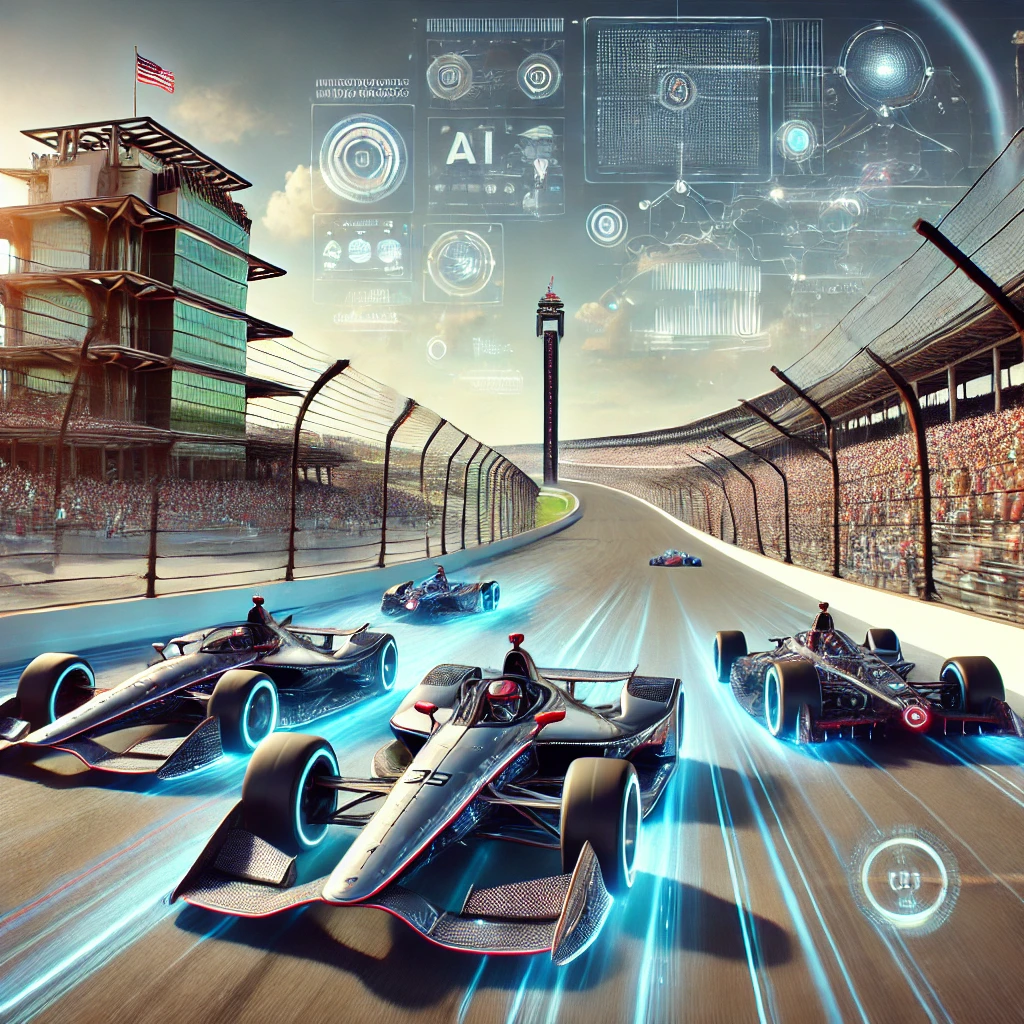
In a city synonymous with motorsports, where the roar of engines has long echoed through the streets and stands of the iconic Indianapolis Motor Speedway, a new kind of race is emerging. This race, however, doesn’t involve human drivers gripping the wheel—it’s fueled by algorithms, sensors, and autonomous systems. What began as a single-day attraction, designed to showcase the possibilities of autonomous vehicle technology, has rapidly evolved into a pioneering initiative that could reshape the future of artificial intelligence (AI) in physical environments.
From Attraction to Innovation: The Birth of AI Racing
Originally conceived as a high-tech spectacle, the Indianapolis AI racing event was intended to captivate the public and demonstrate the power of AI in real-world scenarios. The goal was simple: showcase the capability of autonomous vehicles by having them race around the famed Indy 500 track without human intervention. The excitement of the event, blending cutting-edge technology with the adrenaline of racing, captured the attention of tech enthusiasts, racing fans, and researchers alike.
While the inaugural event was envisioned as a one-off attraction, it quickly became apparent that autonomous racing had much more potential. The success of the first race in Indianapolis sparked discussions among engineers, AI developers, and government officials about how this could be more than just a showcase. The AI-driven racecars were not just navigating a track—they were solving real-time challenges related to machine learning, decision-making under pressure, and the intersection of AI with physical environments. These challenges have broad implications for AI’s future across industries like transportation, manufacturing, and national security.
Indianapolis as the Training Ground for Physical AI
With the foundation laid by the inaugural AI race, Indianapolis is now positioning itself as a critical hub for the development and training of “physical AI.” This branch of AI focuses on how intelligent systems interact with and navigate the physical world, rather than existing solely in digital or simulated environments. The racing initiative has become the perfect proving ground for these technologies because it pushes the boundaries of AI’s capabilities in high-stakes, real-time scenarios.
Autonomous racing offers a unique set of challenges that demand rapid, precise decision-making from AI systems. On the track, vehicles must respond to shifting conditions, such as weather changes, competitor behavior, and unexpected obstacles—all without human intervention. The algorithms driving these cars are trained to not only make the optimal choices to achieve maximum speed but also to ensure safety and efficiency. These skills translate into broader applications, such as improving autonomous vehicle technology on public roads or enhancing the capabilities of robots in industrial settings.
The racing initiative is now attracting top talent in AI development, engineering, and robotics to Indianapolis. Companies that specialize in autonomous technology, alongside universities and research institutions, are collaborating to refine these systems. The collaborative environment has turned Indianapolis into an innovation hub for testing and iterating on AI solutions that can operate in dynamic and unpredictable physical spaces.
Shaping the Future of AI Training
The success of AI racing in Indianapolis has spurred a larger conversation about how autonomous systems are trained and tested. Unlike the vast majority of AI applications that are developed and deployed in digital realms—think software algorithms, data analytics, and cloud-based machine learning models—autonomous racing forces AI to perform in the physical world, where unpredictability reigns supreme. The ability to test AI under these conditions has already led to significant breakthroughs in how intelligent systems learn and adapt to physical environments.
Key advances emerging from the AI racing initiative include:
- Real-time Decision Making: The algorithms used in AI racing must make split-second decisions in real-world conditions, offering valuable insights into how AI can improve response times in critical situations like autonomous driving and drone navigation.
- Collaboration Between Machines and Humans: Autonomous racing demonstrates how humans and machines can collaborate more effectively. Engineers use real-time data from races to train AI systems to adapt, while human operators refine their understanding of how AI functions in physical settings.
- Safety and Ethics in AI: Racing AI must not only optimize for speed but also for safety. This challenge has helped develop new AI protocols that prioritize ethical decision-making, especially in situations where human lives may be impacted by autonomous systems.
- Multi-Agent Systems: The autonomous vehicles racing in Indianapolis are competing against each other, which involves interacting with multiple AI systems in real time. This has important implications for how AI will operate in environments where multiple intelligent agents, such as fleets of autonomous vehicles, need to collaborate or compete.
A National Effort: Indianapolis as a Model for Physical AI
What was once a localized event has now become a national initiative, with the federal government taking interest in the implications of Indianapolis’s AI racing model. The Department of Transportation, alongside the Department of Defense, is eyeing Indianapolis as a potential training ground for AI systems that will be crucial to the nation’s infrastructure and security in the coming decades. By continuing to develop autonomous technology in real-world environments, AI racing offers a practical and high-stakes environment for testing systems that could one day drive national defense vehicles, manage logistics networks, or assist in disaster response.
In the context of transportation, autonomous vehicles are poised to transform how Americans travel. The lessons learned on the Indianapolis track are being applied to self-driving cars, which face similar challenges in terms of navigation, obstacle avoidance, and route optimization. The ability to fine-tune these technologies in a controlled but high-pressure environment accelerates their readiness for public roads.
The military, too, sees potential in the AI racing initiative. Autonomous systems capable of making rapid decisions in unpredictable environments could enhance everything from reconnaissance missions to supply chain management. As AI-powered drones and vehicles become more integral to military operations, the lessons learned from the racetrack may guide future developments.
The Road Ahead: AI Racing as a Continuous Journey
What began as a single-day attraction in Indianapolis has quickly grown into something much more significant. AI racing is no longer just about which car crosses the finish line first—it’s about the development of AI systems capable of navigating complex, physical environments and making decisions in real time. The innovations born on the racetrack are helping to shape the future of autonomous technology, with applications extending far beyond motorsports.
As Indianapolis continues to be at the forefront of this evolving field, the city is cementing its role as a leader in AI development and training. The intersection of speed, technology, and real-world problem-solving offers a glimpse into what the future of AI will look like, both on the racetrack and in our everyday lives. This initiative represents the dawn of a new era, where machines are trained not just in virtual environments but in the high-stakes, fast-paced world of physical AI, starting right in the heart of Circle City.
