

Close Menu
    What's Hot
    Ethics & Society

    Hackers Used Autonomous AI Agents to Attack Taiwan — and Cyberwarfare May Have Just Changed

    By Art RyanAugust 14, 20260

    AI agents have been pitched as digital coworkers: software that can research, plan, use tools…

    IBM and OpenAI Partner to Push Secure Enterprise AI Into Core Business Operations

    August 14, 2026

    Google Launches Gemini 3.7 Flash With Faster Coding, Agents and Lower Introductory Pricing

    August 14, 2026

    AIREV’s OnDemand AI Is Coming to Qualcomm Hardware — and the Cloud Isn’t Required

    August 14, 2026
    Facebook X (Twitter) Instagram
    Facebook X (Twitter) Instagram
    Breaking AI News
    Friday, August 14
    • Home
    • Events
    • Videos
      • Machine Can Think Summit 2026
      • Step Dubai Conference 2026
    • Technology & Innovation

      Hackers Used Autonomous AI Agents to Attack Taiwan — and Cyberwarfare May Have Just Changed

      August 14, 2026

      IBM and OpenAI Partner to Push Secure Enterprise AI Into Core Business Operations

      August 14, 2026

      Google Launches Gemini 3.7 Flash With Faster Coding, Agents and Lower Introductory Pricing

      August 14, 2026

      AIREV’s OnDemand AI Is Coming to Qualcomm Hardware — and the Cloud Isn’t Required

      August 14, 2026

      OpenAI Brings Inference Residency to the UAE, Keeping AI Processing Inside the Country

      August 14, 2026
    • Business & Marketing

      Google DeepMind Hands More AI Power to Koray Kavukcuoglu as Gemini Race Intensifies

      August 13, 2026

      SpaceXAI Launches Grok Bot, an AI Teammate That Can Actually Do the Work

      August 13, 2026

      Upwork’s AI Shift Is Getting Real: Smaller Freelance Jobs Are Disappearing, but Bigger AI Work Is Growing

      August 11, 2026

      NVIDIA Taps Wall Street Giants to Unlock $500 Billion for AI Factories

      August 11, 2026

      Firebird Launches Massive NVIDIA AI Factory in Armenia With 70,000+ Blackwell and Rubin GPUs Planned

      August 10, 2026
    • Industry Applications

      AIREV’s OnDemand AI Is Coming to Qualcomm Hardware — and the Cloud Isn’t Required

      August 14, 2026

      OpenAI Brings Inference Residency to the UAE, Keeping AI Processing Inside the Country

      August 14, 2026

      Dubai Is Building an AI System That Could Approve Building Permits in Minutes

      August 12, 2026

      AI-Powered Wearable Could Warn Athletes Before a Dangerous ACL Injury

      August 12, 2026

      Jordan Turns to AI to Find Water Leaks Before More Supply Disappears

      August 11, 2026
    • Trends & Insights

      Google Launches Gemini 3.7 Flash With Faster Coding, Agents and Lower Introductory Pricing

      August 14, 2026

      NVIDIA Pushes Local AI Forward With Nemotron 3.5 Lightning and Open-Source Agent Tools

      August 13, 2026

      Tencent Takes Hy3 Global as Its Open-Source AI Push Moves Beyond China

      August 8, 2026

      ChatGPT Free Users Get Unlimited GPT-5.6 Luna Chats as OpenAI Expands Access

      August 8, 2026

      Google Expands Dreambeans to AI Pro Subscribers in the US

      August 7, 2026
    • AI in Travel

      Fliggy’s New Agentic AI Travel Assistant Can Book, Change and Manage Trips

      August 13, 2026

      Airlines Are Using AI to Rethink Ticket Prices — And Pricing Is Only the Beginning

      August 11, 2026

      SlickTrip Launches Flight Price Tracker App for Real-Time Fare Drop Alerts

      August 10, 2026

      Direct Travel Pushes Avenir Further Into AI-Powered Business Travel

      August 9, 2026

      Oversee Brings Conversational AI to AgentSee as Travel Tech Pushes Deeper Into Agentic AI

      August 9, 2026
    Breaking AI News
    Home » Nvidia Expands Its Role in AI Revolution by Designing AI-Optimized Data Centers
    Technology & Innovation

    Nvidia Expands Its Role in AI Revolution by Designing AI-Optimized Data Centers

    AdminBy AdminSeptember 3, 2024No Comments5 Mins Read
    Facebook Twitter Pinterest LinkedIn Tumblr Email
    Share
    Facebook Twitter LinkedIn Pinterest Email

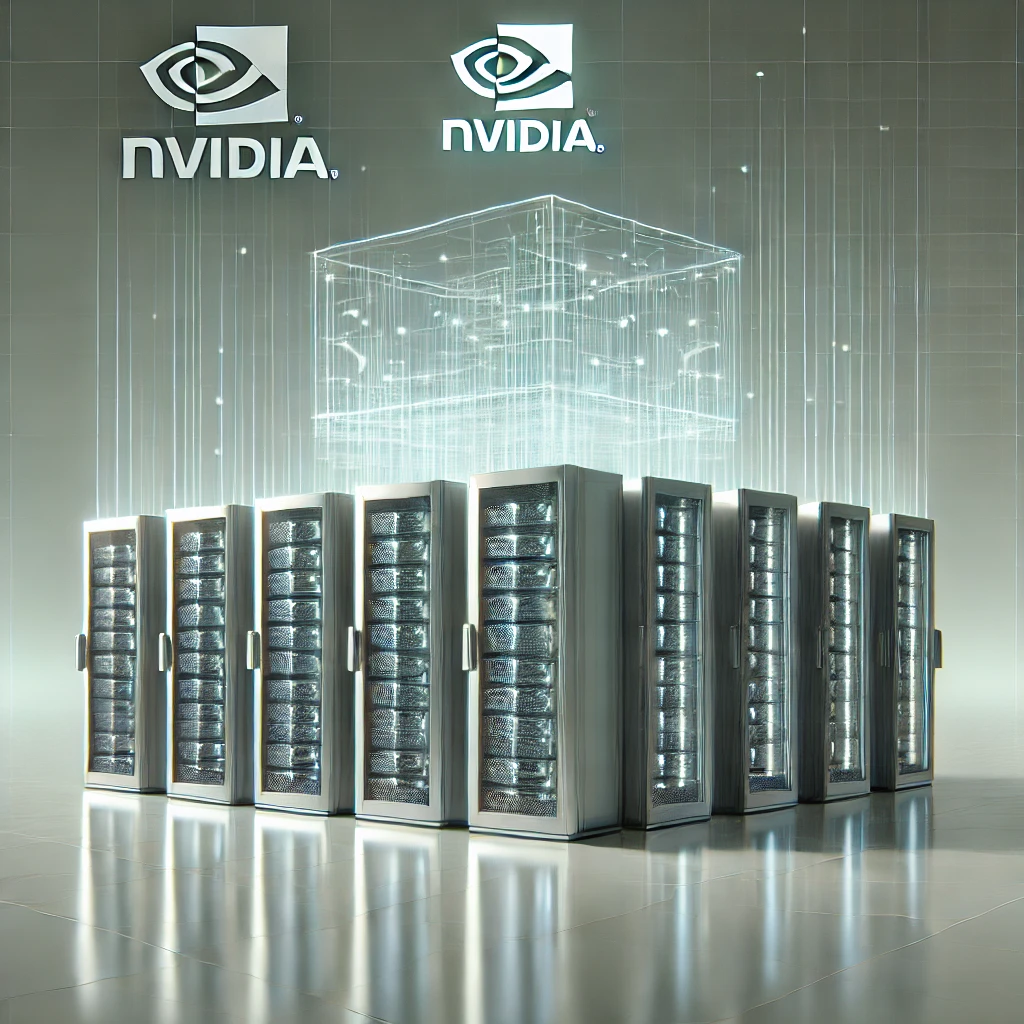
    Nvidia, widely recognized for its dominance in graphics processing units (GPUs) and AI hardware, is strategically expanding its footprint in the tech industry by stepping into the role of a data center designer. As the demand for artificial intelligence (AI) infrastructure skyrockets, Nvidia is leveraging its expertise to not only provide AI chips but also to design and build advanced data centers specifically optimized for AI workloads. This new direction marks a significant shift in Nvidia’s business model and highlights its ambition to become a more comprehensive solution provider in the AI ecosystem.

    From Leading GPU Maker to Data Center Architect

    Nvidia’s GPUs have been the cornerstone of AI development, providing the processing power needed for complex computations in deep learning, autonomous vehicles, and more. However, the explosive growth of AI applications—such as large language models and real-time data analytics—has created a new challenge: the need for specialized data centers that can handle massive computational loads efficiently.

    In response to this, Nvidia has broadened its scope beyond being just a hardware provider. The company now offers end-to-end data center solutions that integrate its powerful GPUs with optimized networking, storage, and cooling systems. By doing so, Nvidia aims to simplify the process of building AI-driven data centers for its clients, reducing complexity, and ensuring peak performance for AI workloads.

    The Importance of AI-Optimized Data Centers

    Traditional data centers, designed for general-purpose computing, often fall short when it comes to handling the unique demands of AI workloads. AI applications require intensive parallel processing, high-speed networking, and efficient cooling to manage the heat generated by dense computational tasks. Nvidia’s new approach to data center design specifically addresses these needs.

    By creating AI-optimized data centers, Nvidia is providing the infrastructure necessary for companies to train, deploy, and scale AI models more effectively. This includes incorporating its own high-performance GPUs, like the A100 and H100, which are specifically engineered for AI and deep learning tasks. Nvidia also integrates advanced networking technologies such as its NVIDIA Quantum InfiniBand, which facilitates ultra-fast data transfer speeds, and cooling systems that are designed to minimize energy consumption and operational costs.

    Key Features of Nvidia’s Data Center Design Strategy

    1. Integrated Hardware and Software: Nvidia’s data centers combine cutting-edge hardware with tailored software solutions to maximize AI performance. This includes its GPU-accelerated AI frameworks, libraries, and applications that ensure optimal compatibility and efficiency.
    2. Advanced Networking Solutions: High-speed networking is crucial for AI workloads that require rapid data exchange. Nvidia’s data center solutions feature advanced networking capabilities, such as high-bandwidth interconnects, to enhance data throughput and reduce latency.
    3. Efficient Cooling and Power Management: AI workloads generate significant heat, necessitating innovative cooling solutions. Nvidia is incorporating state-of-the-art cooling technologies to maintain optimal temperatures and reduce energy costs, making AI data centers more sustainable.
    4. Scalability and Flexibility: Nvidia’s approach allows for scalable and modular data center designs, enabling companies to easily expand their AI infrastructure as their needs grow. This flexibility is vital for businesses looking to adapt quickly to the evolving AI landscape.

    Why This Matters in the AI Era

    As AI continues to revolutionize industries from healthcare to finance, the demand for robust AI infrastructure is at an all-time high. Nvidia’s entry into data center design is a strategic move that positions the company at the forefront of this transformation. By offering comprehensive solutions that go beyond just hardware, Nvidia is addressing a crucial gap in the market: the need for AI-centric data centers that are easy to deploy, manage, and scale.

    The move also reflects Nvidia’s understanding that AI development is not just about powerful chips but about creating an ecosystem where hardware, software, and infrastructure work seamlessly together. This holistic approach could attract businesses looking for turnkey solutions to accelerate their AI capabilities without the complexity of piecing together disparate components from multiple vendors.

    Challenges and Opportunities

    While Nvidia’s expansion into data center design opens up new revenue streams, it also presents challenges. The company will need to compete with established players in the data center market, such as Dell, HP, and Cisco, who have long-standing relationships with enterprise clients. However, Nvidia’s unique advantage lies in its deep expertise in AI and machine learning, which could give it an edge in creating highly specialized solutions that traditional data center providers may lack.

    Moreover, Nvidia’s initiative aligns with the broader trend of AI companies seeking to control more of the AI stack—from hardware and software to infrastructure. This could enable Nvidia to set new standards in the industry, pushing competitors to innovate and adapt.

    Looking Ahead

    As Nvidia steps into the role of a data center designer, it is not only broadening its business model but also redefining what it means to be a leader in AI technology. By focusing on AI-optimized data centers, Nvidia is positioning itself as a key enabler of the next wave of AI advancements. As the AI landscape continues to evolve, Nvidia’s comprehensive approach could well set the stage for a new era of integrated AI infrastructure, driving innovation and growth across industries.

    Share. Facebook Twitter Pinterest LinkedIn Tumblr Email
    Admin

    Related Posts

    Hackers Used Autonomous AI Agents to Attack Taiwan — and Cyberwarfare May Have Just Changed

    August 14, 2026

    IBM and OpenAI Partner to Push Secure Enterprise AI Into Core Business Operations

    August 14, 2026

    Google Launches Gemini 3.7 Flash With Faster Coding, Agents and Lower Introductory Pricing

    August 14, 2026

    Comments are closed.

    Latest News

    Hackers Used Autonomous AI Agents to Attack Taiwan — and Cyberwarfare May Have Just Changed

    August 14, 2026

    IBM and OpenAI Partner to Push Secure Enterprise AI Into Core Business Operations

    August 14, 2026

    Google Launches Gemini 3.7 Flash With Faster Coding, Agents and Lower Introductory Pricing

    August 14, 2026

    AIREV’s OnDemand AI Is Coming to Qualcomm Hardware — and the Cloud Isn’t Required

    August 14, 2026
    Facebook X (Twitter) Pinterest Vimeo WhatsApp TikTok Instagram LinkedIn YouTube Spotify Reddit Snapchat Threads

    AI University

    • Global Universities
    • Universities in Africa
    • Universities in Asia
    • Universities in Europe
    • Universities in Latin America
    • Universities in Middle East
    • Universities in North America
    • Universities in Oceania

    AI Tools & Apps Directory

    • AI Productivity Tools
    • AI Coding Tools
    • AI Voice Tools
    • AI Video Tools
    • AI Image Generators
    • AI Writing Tools

    Info

    • Home
    • About Us
    • AI Organizations & Associations
    • Contact Us
    • Cookie Policy
    • Copyright Policy
    • Disclaimer
    • Editorial Policy
    • Terms and Conditions

    Subscribe to Updates

    Get the latest creative news from FooBar about art, design and business.

    © 2026 Breaking AI News.
    • Privacy Policy

    Type above and press Enter to search. Press Esc to cancel.

    Sign Up

    Want to stay ahead In Artificial Intelligence?

     Sign up now and get exclusive breaking AI news and special updates—FREE!