


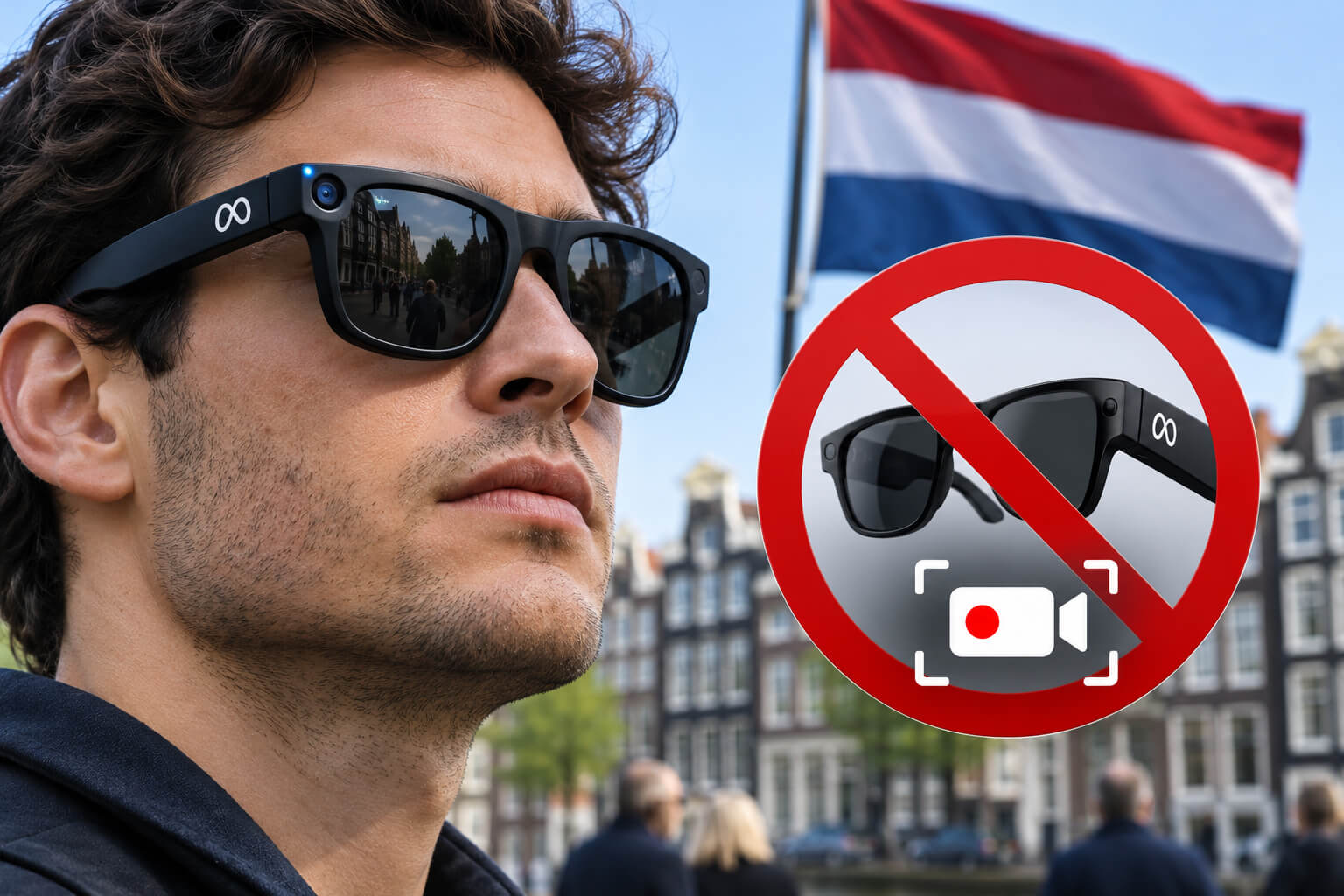
Meta’s AI-powered smart glasses are facing a legal challenge in the Netherlands. Consumer and digital rights organizations want a court to suspend sales over concerns about privacy and recording without consent.
The case, brought before an Amsterdam court on November 26, 2026, focuses on whether people can recognize when someone wearing the glasses is recording them. Privacy campaigners argue that the devices make filming too discreet. As a result, unsuspecting individuals may be exposed to unwanted surveillance.
The dispute comes as Meta expands its wearable AI technology, bringing cameras, microphones and artificial intelligence into everyday eyewear.
Dutch Privacy Groups Challenge Meta’s Smart Glasses
Dutch consumer association Consumentenbond, online safety organization Offlimits and digital rights group The Firewall are challenging Meta over the privacy implications of its smart glasses. The organizations argue that the devices allow users to record people in public without providing sufficiently clear notice. Consequently, individuals remain unaware that their images or conversations may be captured.
Unlike smartphones, which usually require users to visibly raise a device to take photographs or record videos, smart glasses integrate cameras directly into their frames. Privacy advocates believe this design makes recording harder to recognize, particularly in crowded public spaces. For this reason, the groups want sales suspended in the Netherlands until the alleged privacy concerns are addressed.
Meta Defends Recording Features and Privacy Safeguards
Meta maintains that its smart glasses include safeguards intended to inform people when recording takes place. The company points to a built-in indicator light that activates when users capture photographs or videos. Therefore, Meta argues that the feature provides a visible signal to nearby individuals.
The company also disputes the suggestion that manufacturers should be held responsible for every instance of product misuse. Its legal representatives argue that restricting sales would affect consumers who use the glasses responsibly without necessarily preventing unauthorized recording. EssilorLuxottica, Meta’s eyewear manufacturing partner, has also opposed the proposed restrictions.
AI Training and Personal Data Collection Raise Concerns
The legal challenge extends beyond recording in public. Privacy advocates are questioning how information captured through AI-powered eyewear might be processed, stored or used to develop artificial intelligence systems. Smart glasses can combine visual information, voice commands and software-based assistance. This combination creates new questions about how personal data moves between wearable devices and connected services.
One concern involves individuals who appear in recordings without knowing that their personal information has been collected. Meta disputes allegations that it unlawfully uses recordings from its glasses to train AI models. The disagreement highlights a growing challenge for wearable AI manufacturers. They must provide useful real-time assistance while protecting the privacy of people who have never agreed to interact with the technology.
European Privacy Authorities Examine AI Wearables
European privacy authorities have been paying closer attention to smart glasses as the technology becomes more widely available. Their concerns include transparency, data protection and whether individuals can reasonably identify when wearable devices are collecting information about them.
The European Union’s General Data Protection Regulation establishes requirements for handling personal data, although applying those rules to AI-enabled eyewear introduces practical challenges. A person wearing smart glasses may understand when recording begins. However, someone standing nearby might not recognize this. That difference is becoming central to discussions about how manufacturers should design recording indicators, privacy controls and data-processing systems.
Meta’s Growing Smart Glasses Business Faces Legal Pressure
Meta has invested heavily in wearable AI as part of its broader effort to make artificial intelligence accessible beyond smartphones and computers. Its partnership with EssilorLuxottica has helped bring smart glasses into mainstream eyewear retail. As a result, the technology is now positioned as a hands-free way to capture content, communicate and access AI assistance.
The Dutch lawsuit creates uncertainty around that expansion. Even if consumers find the technology convenient, public acceptance could become more difficult if people believe they are being recorded without their knowledge. Consequently, schools, workplaces, healthcare facilities and other privacy-sensitive environments may face increasing pressure to establish clearer rules for wearable cameras.
Dutch Court Case Could Influence Future AI Smart Glasses Rules
The Amsterdam proceedings could become an important test of how existing privacy protections apply to consumer AI wearables. A decision requiring stronger safeguards might influence future product designs. Conversely, restrictions on sales could encourage similar challenges elsewhere in Europe.
The case also exposes a tension within the smart glasses market. Manufacturers want wearable technology to feel natural and unobtrusive. However, those same qualities can make its recording capabilities less obvious to others.
As AI-powered eyewear becomes more common, companies may need to demonstrate that privacy protections work not only for device owners but also for everyone around them. The Dutch legal challenge places that responsibility at the center of the debate.
Sources
- Reuters – Dutch Groups Ask Court to Halt Meta Smart Glasses Sales Over Privacy Concerns — November 26, 2026.
