


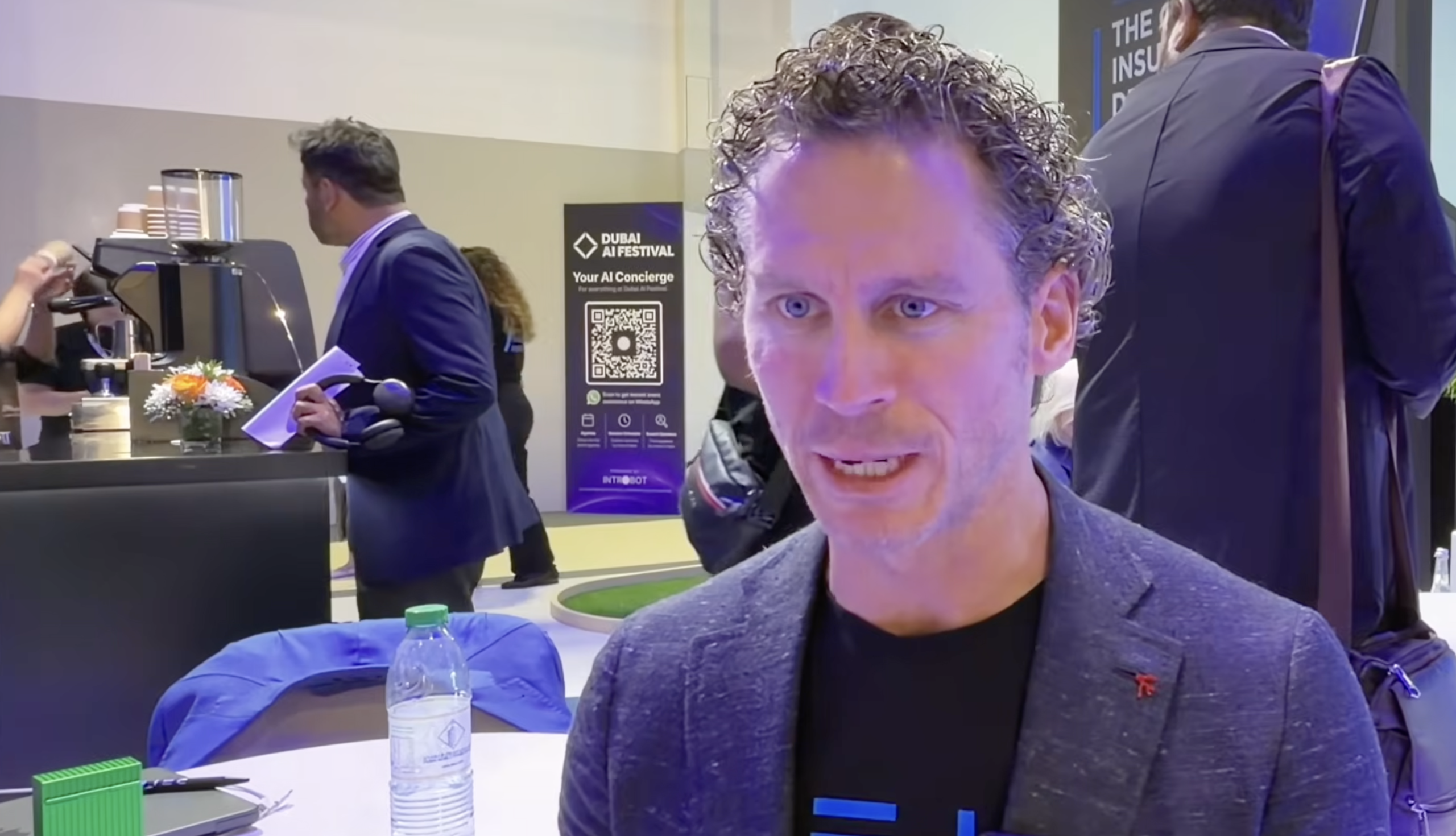
The artificial intelligence industry is moving quickly, but traditional insurance providers are struggling to keep pace with the risks associated with emerging technologies. One event highlighting new developments in this space is the Relm Insurance Dubai AI Festival 2026.
During Dubai AI Festival 2026, Joseph Ziolkowski, CEO and Founder of Relm Insurance, shared his perspective on why conventional insurance models often fall short when dealing with innovative businesses. He also discussed the importance of human expertise in underwriting, Dubai’s growing innovation ecosystem, and how insurance can help AI startups secure funding, establish partnerships and expand their operations.
For Relm Insurance, supporting innovation means understanding businesses that don’t necessarily fit into traditional risk categories. As more companies enter AI, fintech and digital assets, insurers face growing pressure to develop practical solutions for unfamiliar technologies.
Why Traditional Insurance Struggles to Keep Up With AI Innovation
The insurance industry has operated on largely the same principles for centuries, relying on historical information to understand risks and determine appropriate coverage. Ziolkowski explained that this approach works well for established businesses with predictable operations, but becomes increasingly difficult when companies introduce technologies and business models without extensive operating histories.
He pointed to the industry’s long-standing foundations, including Lloyd’s of London, as evidence of how insurance has traditionally used past experiences to anticipate future risks. While this model has helped businesses manage uncertainty for generations, emerging technologies challenge its effectiveness. AI startups often operate in unfamiliar markets, develop products without historical claims data and introduce risks that insurers have not previously encountered. “If you’re doing something new and innovative, the insurance industry is almost paralyzed,” Ziolkowski said, highlighting the difficulty innovative companies can face when seeking coverage.
Why Relm Insurance Doesn’t Depend Entirely on Artificial Intelligence
Despite serving technology-driven businesses, Relm Insurance continues to rely heavily on human expertise when assessing potential clients. Ziolkowski acknowledged that sophisticated machine learning systems could eventually improve underwriting efficiency, but explained that understanding emerging businesses requires more than automated risk calculations. Instead, the company examines financial statements, capitalization tables, leadership backgrounds and business strategies to determine whether a company represents an acceptable risk.
This detailed process allows Relm to evaluate businesses that traditional underwriting models might struggle to classify. Ziolkowski explained that the company has spent years gathering information through these assessments, gradually developing a historical dataset that can now support more technology-driven decision-making. After seven years of collecting underwriting insights, Relm is increasingly able to use technology to improve the speed and quality of its assessments. The approach reflects a practical balance between human judgment and data-driven tools rather than relying entirely on artificial intelligence.
Human Expertise Remains Essential in the Growing AI Economy
As investment continues flowing into artificial intelligence, much of the attention has centered on technical capabilities, advanced algorithms and the infrastructure needed to support AI development. Ziolkowski suggested that human expertise remains equally important, particularly when companies must navigate complex commercial relationships, regulatory expectations and unfamiliar business risks.
For insurance providers, understanding an emerging technology involves examining the people and organizations developing it, not simply evaluating the technology itself. Experienced underwriters can assess leadership decisions, financial stability and commercial opportunities in ways that may be difficult to capture through automated systems alone. Relm’s experience demonstrates how accumulated industry knowledge can complement technological improvements, allowing insurers to make informed decisions while gradually building more sophisticated analytical capabilities.
Why Dubai Stands Out as a Global Innovation Ecosystem
Dubai has developed an environment where technology startups, investors, regulators and financial institutions can engage closely with one another. Ziolkowski explained that this combination makes the emirate particularly attractive for businesses developing emerging technologies. With Relm Insurance serving companies across 40 countries and operating under four regulatory authorities, he described Dubai as a market where several important elements of innovation are closely connected.
According to Ziolkowski, startup activity, investment capital, regulatory initiatives and risk awareness form the foundation of a sustainable innovation ecosystem. Dubai brings these components together, creating opportunities for businesses to access funding, develop partnerships and address regulatory requirements while pursuing new technologies. This interconnected environment is particularly valuable for AI, fintech and digital asset companies, where innovation often develops faster than established commercial frameworks.
How Relm Insurance Helps Enable Innovation Beyond Traditional Coverage
Relm Insurance views its role as more than providing financial protection against potential losses. Ziolkowski explained that the company’s broader objective is to support innovative businesses as they develop products, pursue commercial opportunities and seek regulatory authorization. Rather than treating emerging technologies as risks to avoid, Relm works directly with companies to understand their operations and identify insurance solutions that can support their business objectives.
This approach becomes particularly important when startups encounter requirements that established companies already understand. A technology business may need insurance before entering a major commercial agreement, launching a product or satisfying regulatory conditions. Without appropriate coverage, these activities can become difficult to complete, regardless of how promising the underlying technology may be. By engaging with businesses early, Relm aims to make insurance a practical tool for growth rather than an obstacle to innovation.
Why Insurance Is Important for AI Startups Looking to Scale
Building an innovative product does not automatically guarantee commercial success. Ziolkowski emphasized that startups still need to raise capital, establish contractual relationships and, in many cases, secure regulatory approval before expanding their operations. Insurance frequently plays a role in these activities, particularly when investors, commercial partners or regulators require businesses to demonstrate that appropriate risk protections are in place.
For many emerging technology companies, the immediate challenge is not obtaining highly specialized insurance products but gaining access to relatively traditional coverage. Policies that support commercial agreements, protect business operations and address professional liabilities can help startups meet essential business requirements. Ziolkowski explained that Relm begins by identifying these fundamental needs, allowing companies to focus on developing their technologies while maintaining the financial and operational protections necessary for sustainable growth.
Relm Insurance Highlights Geospatial Accelerator and Startup Initiatives
Relm Insurance’s participation in Dubai AI Festival 2026 also provided opportunities to engage with regulators, investors and emerging technology companies. Ziolkowski discussed the company’s involvement in initiatives designed to support startups operating in innovative sectors, including the announcement of 10 finalists for a geospatial accelerator associated with the Mohammed Bin Rashid Space Centre and DIFC Innovation Hub.
The company also highlighted its fourth emerging-business gathering, which brought together participants through DIFC Innovation Hub and approximately 25 UAE-based companies working across fintech, artificial intelligence and digital assets. These engagements allow Relm to develop relationships with businesses operating in rapidly evolving industries while gaining a deeper understanding of their commercial and insurance requirements. For startups, such initiatives can provide opportunities to connect with industry specialists, potential partners and organizations familiar with the challenges of bringing emerging technologies to market.
The Future of Insurance in an AI-Driven Economy
Artificial intelligence is changing how businesses operate, but its growing adoption also creates questions about responsibility, financial exposure and the management of unfamiliar risks. Ziolkowski’s comments at Dubai AI Festival 2026 suggest that insurers will need to become more adaptable as emerging technology companies introduce products and services that traditional underwriting frameworks were not designed to evaluate.
Relm Insurance is pursuing an approach that combines detailed business assessments, human expertise and accumulated historical data to support companies operating in these sectors. As the AI economy develops, insurers capable of understanding new business models may become increasingly important partners for startups seeking investment, regulatory approval and commercial expansion. For Ziolkowski, the priority remains enabling innovation by ensuring businesses have access to the insurance protection they need to move forward.
