


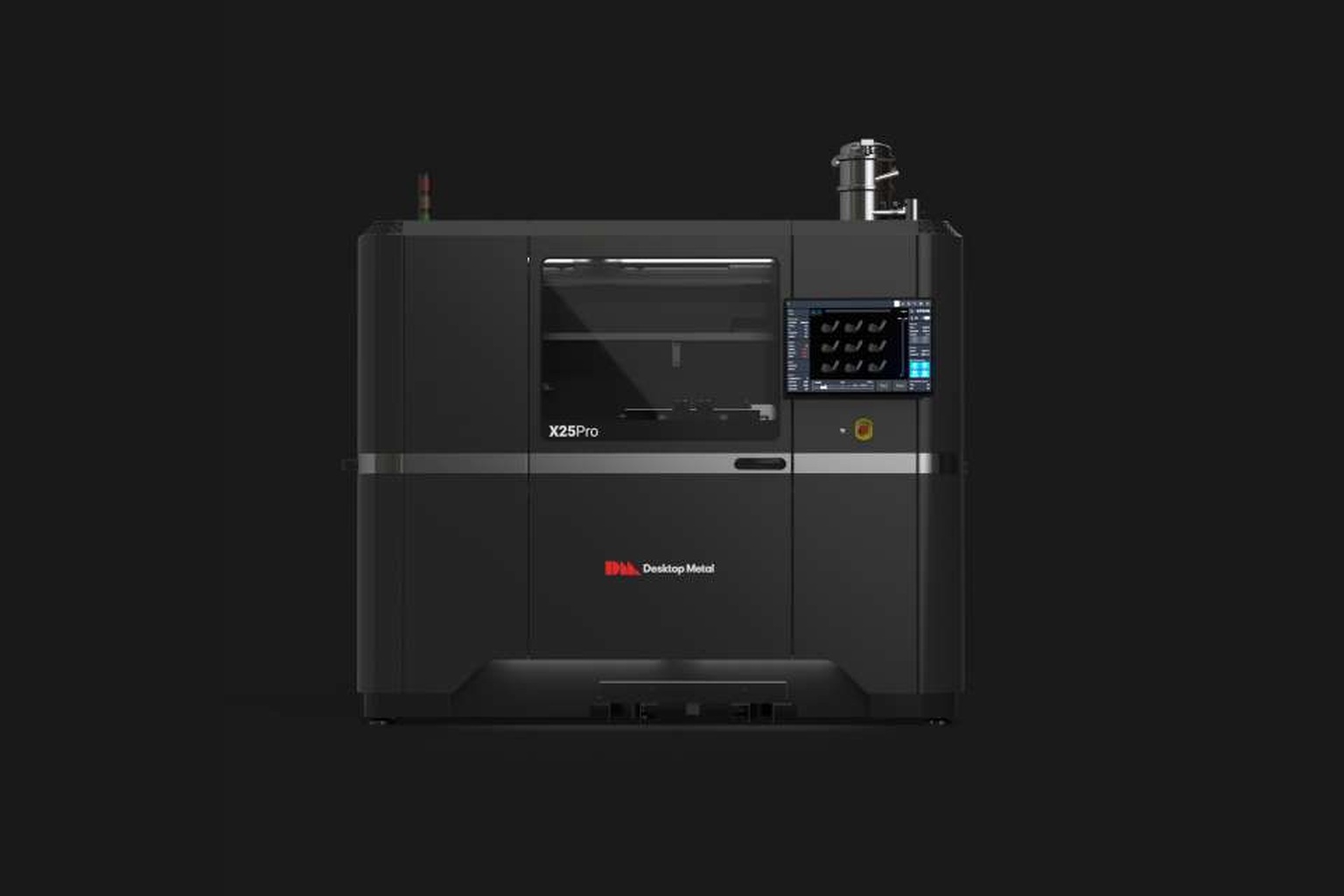
Desktop Metal has been nominated for the 2026 World AI Awards in the 3D Printing category, recognising its contributions to industrial additive manufacturing, advanced simulation and software-driven production technologies.
The nomination highlights an area of manufacturing where digital intelligence is helping engineers address persistent challenges. Producing a complex metal component is one thing. Making it accurately, repeatedly and economically is another.
The World AI Awards recognises organisations, individuals, products and technologies contributing to the development and real-world application of artificial intelligence across industries.
Desktop Metal developed industrial 3D printing systems that combine specialised hardware, materials and manufacturing software. Its portfolio includes the Studio System, Shop System, X-Series printers and Live Suite software.
The company’s corporate position has changed significantly. After Nano Dimension acquired Desktop Metal in April 2025, Desktop Metal filed for Chapter 11 bankruptcy protection in July 2025. Its income-producing assets were subsequently sold. The nomination therefore recognises technology developed under the Desktop Metal name rather than establishing the current operating status of the original company.
Tackling one of metal 3D printing’s toughest problems
Metal 3D printing does not end when a component leaves the printer.
In binder jetting, a liquid binder joins metal powder into a preliminary shape. The component then enters a furnace, where heat bonds the metal particles together.
During this process, known as sintering, components shrink and can deform. Gravity, friction and uneven material density may cause warping or cracking.
Desktop Metal developed Live Sinter to address this problem.
The software uses multiphysics simulation to predict how a printed component will behave inside the furnace. Engineers can then adjust its original geometry to compensate for expected distortion.
Instead of printing a perfectly straight component and hoping it stays straight, manufacturers can print a deliberately adjusted shape designed to reach the intended dimensions after sintering.
This approach aims to reduce trial-and-error production, unnecessary supports and material waste.
Bringing digital intelligence into manufacturing workflows
Desktop Metal also developed Live Suite, a software platform connecting different stages of additive manufacturing.
The suite includes tools for preparing digital models, managing printing operations, simulating sintering and inspecting finished components.
Live Studio, for example, automatically analyses part geometry, determines printing orientation and generates support structures.
Live Inspect supports dimensional analysis and scan-based adjustments, while Live Monitor provides equipment information to help manufacturers track production.
These technologies demonstrate the growing importance of computational intelligence in industrial production. However, Desktop Metal primarily documents them as automation, analytics and physics-based simulation tools, rather than establishing that every application uses artificial intelligence or machine learning.
From prototypes to production-ready components
Desktop Metal’s technology has also reached manufacturing environments beyond research laboratories.
Michigan-based Azoth has used Desktop Metal’s Studio System for precision metal components and its Shop System for binder-jet production.
Meanwhile, DSB Technologies adopted Desktop Metal’s X-Series systems in Wisconsin, developing and producing metal components using materials including stainless steel and tool steel.
These examples show how digital manufacturing tools can support practical production requirements, from short-run components to more repeatable industrial workflows.
For manufacturers, the challenge is no longer simply whether a metal part can be printed. Accuracy, repeatability and production economics increasingly determine whether additive manufacturing makes commercial sense.
World AI Awards recognises innovation in industrial manufacturing
Graham Cooke, President of the World AI Awards, said:
“Desktop Metal’s nomination highlights the growing importance of intelligent manufacturing technologies in industrial 3D printing, where precision, efficiency and production reliability remain critical challenges.
“From advanced sintering simulation and software-driven production to metal additive manufacturing, Desktop Metal demonstrates how digital engineering can help manufacturers improve processes and address complex production requirements. We congratulate the Desktop Metal team on its 2026 World AI Awards nomination and look forward to following the continued development of these technologies.”
Desktop Metal’s nomination reflects the growing intersection of digital engineering, automation and advanced manufacturing.
The 2026 World AI Awards recognises organisations, individuals and technologies contributing to artificial intelligence across industries, including manufacturing, healthcare, aerospace, finance and robotics.
As industrial 3D printing develops, software capable of predicting production outcomes and reducing manufacturing uncertainty will remain important to its wider adoption.
Learn more about Desktop Metal’s technology at https://www.desktopmetal.com/.
Discover the World AI Awards 2026 and explore the nominees at https://www.worldawards.ai/.
