


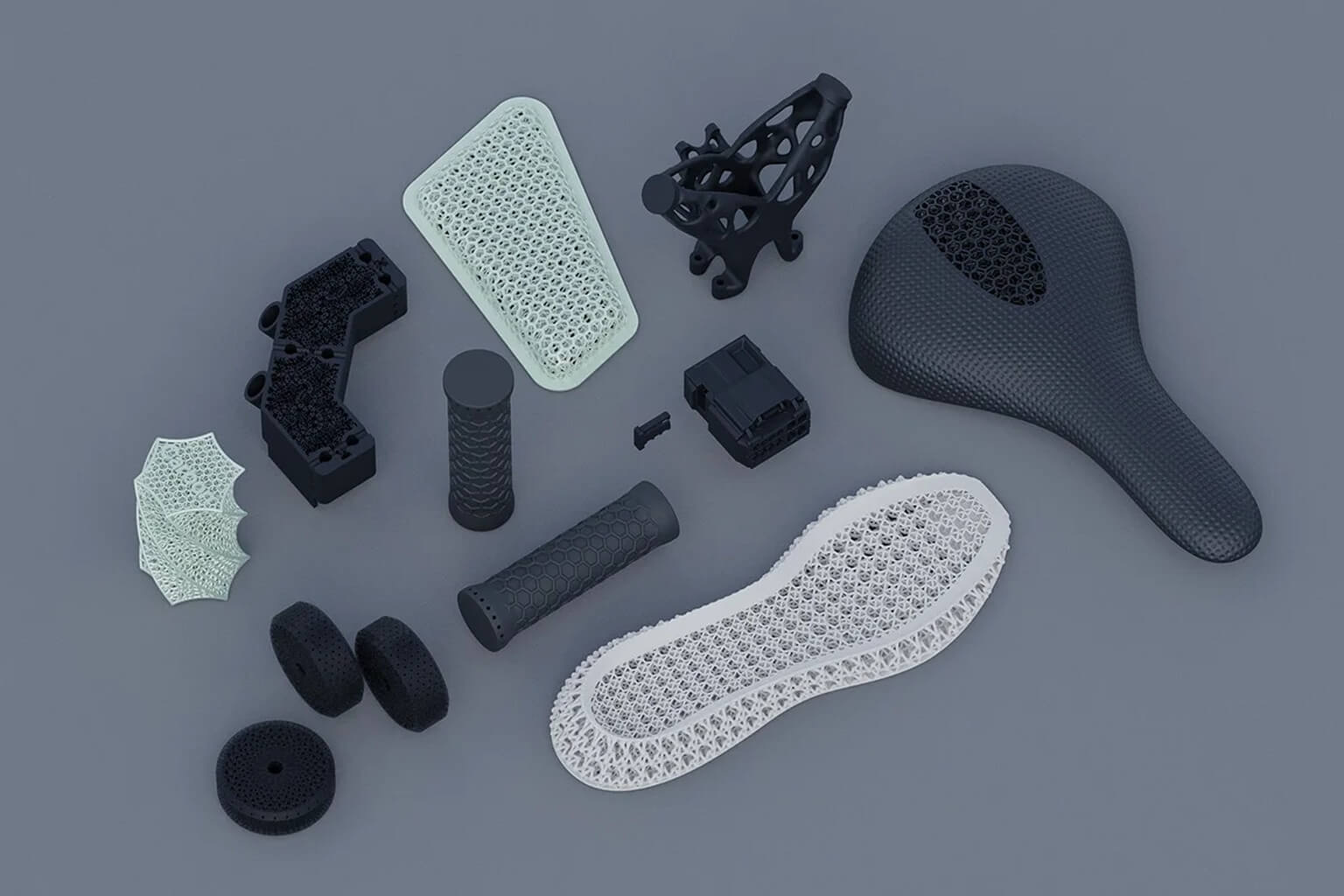
Carbon has been nominated for the 2026 World AI Awards in the 3D Printing category, recognising the company’s work in advanced additive manufacturing, computational design and software-driven production technologies.
The nomination comes as 3D printing moves beyond prototypes and into the production of finished consumer and industrial products. Carbon has helped accelerate that transition through its Digital Light Synthesis technology, manufacturing software and engineering materials.
The World AI Awards recognises organisations, individuals, products and technologies contributing to the development and real-world application of artificial intelligence across industries.
For Carbon, the opportunity lies in connecting digital design with physical manufacturing. Its technology allows companies to develop complex products, refine their performance and manufacture components that would be difficult or expensive to produce using conventional methods.
3D printing moves beyond the prototype
Carbon’s manufacturing platform centres on Digital Light Synthesis (DLS), a technology that combines digital light projection, oxygen-permeable optics and programmable liquid resins to produce polymer components.
Unlike conventional manufacturing processes that depend heavily on moulds and tooling, DLS allows engineers to manufacture intricate structures directly from digital designs.
That flexibility matters when developing products with unusual geometries or demanding mechanical requirements.
Carbon’s platform combines industrial 3D printers, software and specialised materials. Its Design Engine software allows engineers to create lattice structures with carefully controlled properties, including flexibility, cushioning and impact absorption.
The technology is particularly useful for products where different sections must perform different functions.
Carbon also applies machine learning to aspects of its printing software. A software update introduced an ML model to improve print-time predictions on L1 printers using Force Feedback, helping manufacturers estimate production costs and schedule work more accurately.
Software
Adidas brings digital manufacturing into footwear
One of Carbon’s most recognisable commercial applications comes from its partnership with adidas.
The companies developed the Futurecraft 4D footwear platform using Carbon’s Digital Light Synthesis technology to manufacture midsoles with intricate lattice structures.
Traditional foam midsoles generally rely on moulding processes. Carbon’s approach allows designers to adjust lattice geometries across different regions of the midsole, creating distinct cushioning and support characteristics within a single component.
During development, Carbon and adidas explored more than 50 design iterations and nearly 150 resin formulations, according to Carbon’s published technical material.
The collaboration produced a commercially released footwear product rather than simply a laboratory demonstration.
For the wider manufacturing industry, the significance extends beyond athletic shoes. It shows how digital production can create complex, functional components without requiring manufacturers to build new moulds for every design change.
From protective helmets to customised products
Carbon’s technology has also reached protective equipment and cycling products.
The company partnered with Riddell to develop a digitally manufactured liner for the SpeedFlex Precision Diamond football helmet.
The liner uses a 3D-printed lattice structure designed around individual head measurements collected through Riddell’s Precision-Fit scanning process.
Instead of relying exclusively on conventional padding shapes, the system allows the liner geometry to be tailored to the athlete’s head.
Carbon’s technology has also supported the production of Specialized bicycle saddles featuring lattice structures intended to manage pressure and improve rider comfort.
These applications demonstrate how digital manufacturing can connect individual measurements with physical product design. They also show why computational tools matter: engineers can adjust thousands of interconnected geometric features without manually redesigning every element.
Software and automation reshape the production process
Carbon is also developing software to make digital manufacturing easier to scale.
Its Custom Production Software can turn information from scans, pressure maps and other data sources into personalised designs. The software automatically prepares parts for printing, reducing repetitive work involved in creating customised products.
Carbon’s Printer OS supports production scheduling, printer monitoring and manufacturing workflows across multiple machines.
These capabilities do not make every Carbon product an artificial intelligence application. Much of the platform relies on computational design, process automation and materials engineering. Its documented machine-learning features add another layer to that software-driven manufacturing system.
For manufacturers, the practical opportunity is straightforward: move from a digital design to a finished component with fewer manual steps, while retaining greater flexibility over geometry and production.
Graham Cooke, President of the World AI Awards, proposed statement:
“Carbon’s nomination highlights how advanced software, computational design and digital manufacturing are changing the way physical products are developed and produced.
“From customised athletic footwear and protective equipment to software that supports more efficient manufacturing, Carbon demonstrates the opportunities created when digital technologies work alongside materials science and engineering. We congratulate the Carbon team on its 2026 World AI Awards nomination in the 3D Printing category and look forward to following its continued progress.”
Carbon joins organisations, researchers, entrepreneurs and technology developers being recognised through the 2026 World AI Awards.
The programme celebrates contributions to artificial intelligence across industries, including technologies that connect digital systems with manufacturing, engineering and other physical processes.
Carbon’s nomination reflects the growing importance of software-driven production. Its commercial work with adidas, Riddell and other manufacturers demonstrates how additive manufacturing can move beyond experimental applications and into finished products.
As computational design, machine learning and manufacturing automation continue to develop, companies such as Carbon are exploring new ways to make production more adaptable without abandoning the engineering requirements of physical products.
Learn more about Carbon and its digital manufacturing technology at carbon3d.com.
Discover the World AI Awards 2026, explore the nominees and learn more about the awards at worldawards.ai
