


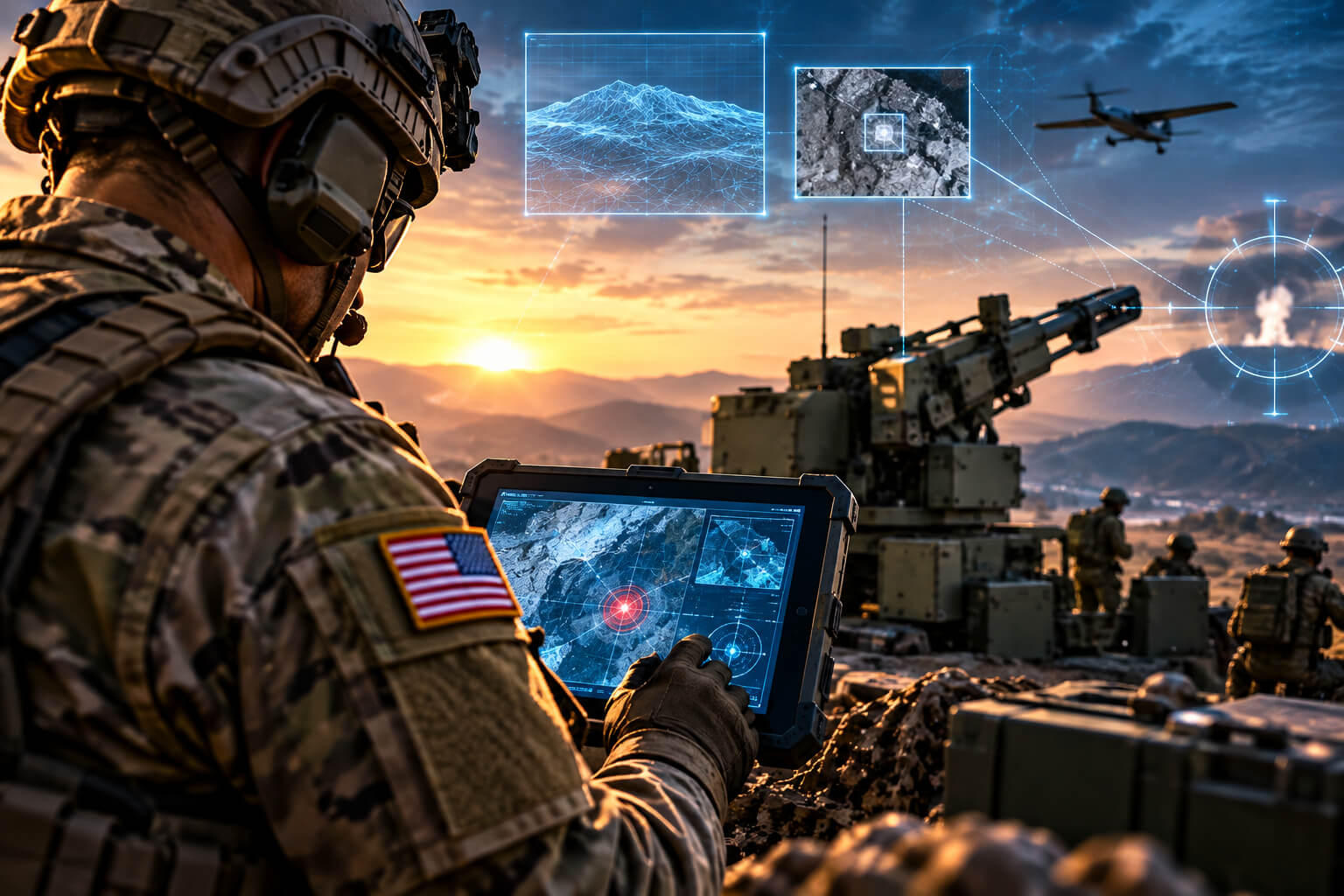
Thread AI has entered a research agreement with the US Army DEVCOM Armaments Center to explore how artificial intelligence can help researchers work through the enormous volume of technical material involved in fire control systems.
The Cooperative Research and Development Agreement (CRADA), announced on October 8, 2026, will see defence personnel evaluate Thread AI’s Lemma orchestration platform against dense and highly specialised technical documentation.
The project puts AI in a very specific role. Rather than presenting a general-purpose chatbot as a military decision-maker, Thread AI is providing infrastructure designed to help researchers find, connect and reason across complex technical sources.
That distinction matters in defence research, where an answer without a reliable source trail can be nearly as problematic as having no answer at all.
Thread AI Brings Lemma Into US Army Fire Control Research
The US Army’s DEVCOM Armaments Center will use Lemma as part of an effort to examine extensive archives and technical documentation associated with fire control systems. These records contain specialised knowledge accumulated over decades, making them difficult to analyse quickly using conventional research methods.
Thread AI says the challenge is not simply choosing a more capable AI model. The company argues that researchers also need an orchestration layer capable of coordinating information from multiple sources while maintaining traceability.
That is where Lemma enters the picture. The platform is designed as composable infrastructure for enterprise workflows, allowing data pipelines and software agents to work together within a governed environment.
Why Specialised Military Documentation Is Difficult for AI
General-purpose AI systems can process enormous quantities of information, but defence research presents a different problem. Fire control research depends on highly specialised documentation that commercial AI models were not necessarily trained to understand in the context required by military scientists.
Researchers have traditionally had to work through historical weapons literature and technical records manually. That process can consume significant amounts of time, particularly when information is distributed across large collections of documents.
Thread AI is approaching the problem from the infrastructure side. Instead of suggesting that an AI model should independently replace researchers, the company is building a system intended to help them navigate and synthesise the underlying material.
Lemma Is Designed to Trace AI Answers Back to Their Sources
One of the most important elements of the project is traceability. Thread AI’s Colin Bell, who leads AI Strategy at the company, said fire control research involves decades of highly specialised technical work and that researchers need a way to reason across those sources while tracing answers back to their origins.
That requirement addresses one of the persistent problems with generative AI: a system may produce a convincing response without giving researchers enough confidence about where the information came from.
For a technical research environment, source visibility becomes much more important. Researchers need to understand the evidence behind an output before using it as part of further analysis.
AI Agents Will Work Alongside Data Pipelines
The Lemma deployment combines data pipelines with autonomous software agents, creating an infrastructure layer for more complex AI workflows.
In practical terms, the system is intended to help organise and process specialised documentation before AI agents operate across that information. Thread AI describes this architecture as a foundation for agentic processes that can operate at scale while remaining subject to governance and reliability requirements.
The arrangement reflects a broader shift in enterprise AI. Increasingly, the focus is moving away from simply asking which model is smartest and towards the systems required to make AI useful inside complicated organisations.
Thread AI Sees AI Infrastructure as the Bigger Bottleneck
Thread AI co-founder and CEO Angela McNeal said the company believes production-ready AI is no longer the main constraint for critical operations. Instead, she pointed to the infrastructure surrounding AI systems as the more significant challenge.
That argument is particularly relevant in defence environments. Military research organisations may have access to increasingly capable AI models, but deploying those models against sensitive, specialised and fragmented information requires additional layers for data handling, orchestration, governance and reliability.
The US Army project gives Thread AI an opportunity to test that infrastructure in one of the more demanding technical research environments available.
The US Army Is Expanding Its Use of Commercial AI
The Thread AI agreement comes during a broader expansion of AI adoption across the US defence sector. The Pentagon has been working with multiple commercial AI companies rather than relying on a single provider.
In 2025, the Department of Defense awarded contracts worth up to $200 million each to Google, OpenAI, Anthropic and xAI for a range of military AI applications. The strategy reflected growing interest in bringing commercially developed AI into defence operations while maintaining competition among suppliers.
More recently, the US government expanded its AI supplier base to include companies such as Microsoft, Reflection AI, Amazon and Nvidia for classified operations. That broader supplier strategy shows how quickly AI has moved from experimentation into government and defence technology programmes.
Fire Control Research Shows Where AI Could Have a More Practical Role
The Thread AI agreement is notable because it focuses on research infrastructure rather than presenting AI as an autonomous replacement for military personnel.
The immediate objective is to help scientists work through technical material related to fire control systems. That could mean faster access to historical information, improved synthesis of documents and better connections between different pieces of specialised research.
It also demonstrates a more grounded use of AI in defence. Instead of focusing entirely on autonomous weapons or battlefield decision-making, the technology can be applied to the less visible research work that supports military engineering and development.
Defence AI Is Moving Beyond the Model Itself
The project highlights a growing reality in enterprise and government AI: the underlying model is only one part of the system.
Data quality, retrieval, orchestration, governance and source traceability can determine whether an AI application works in a real operational environment. Those requirements become even more demanding when researchers are working with specialised defence documentation.
Thread AI’s work with the US Army therefore represents a test of something broader than Lemma itself. It is a test of whether AI infrastructure can turn large, difficult technical archives into something researchers can actually use.
For the defence sector, that may prove just as important as the next jump in model capability.
Sources
- Artificial Intelligence News — Thread AI partners with US Army on Fire Control Systems
Read the original report - US Department of Defense / AI and defence developments
U.S. Department of Defense - Thread AI
Thread AI
