


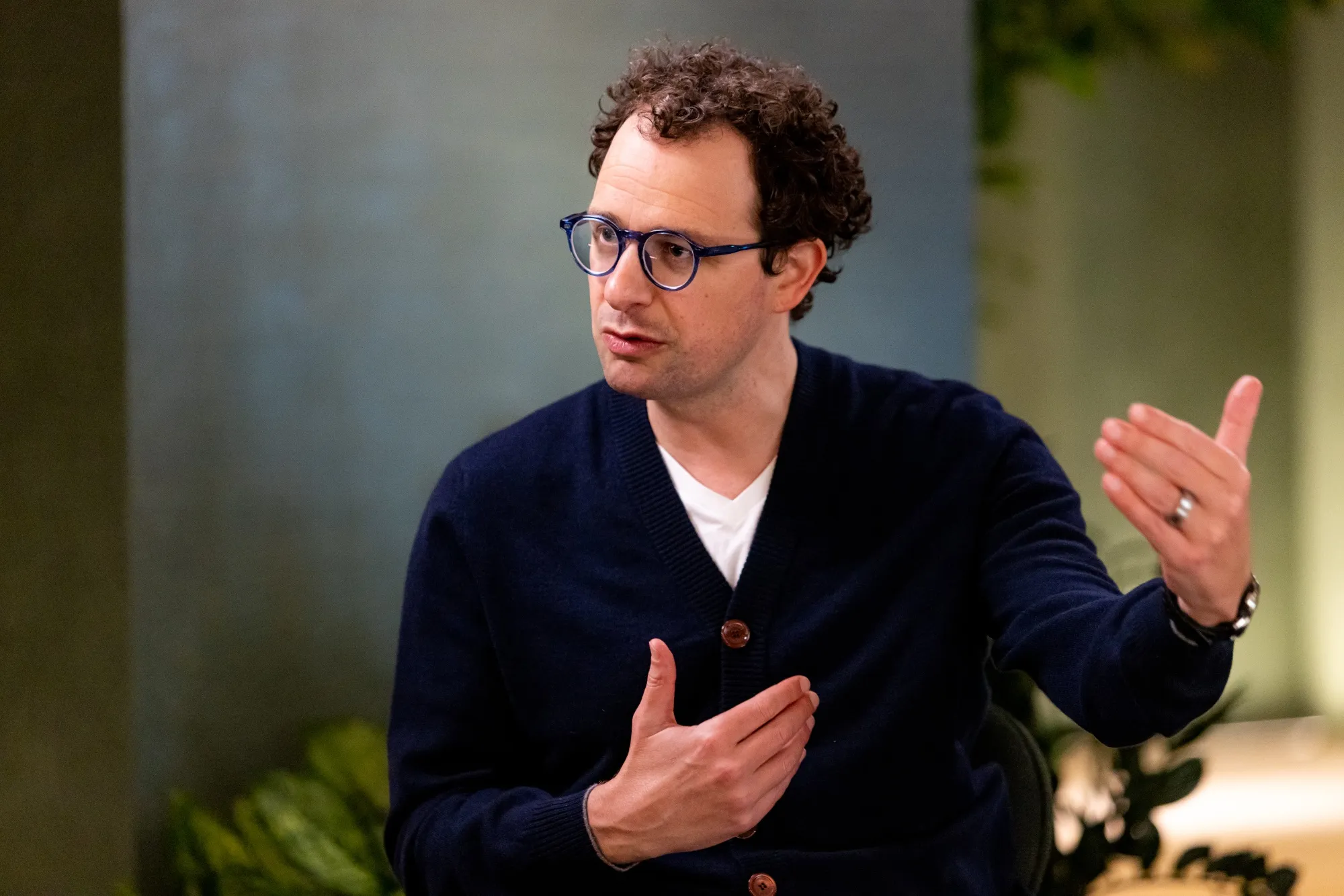
Anthropic CEO Dario Amodei is set to meet US President Donald Trump for a private dinner at the White House, bringing one of the AI industry’s most prominent voices on safety into a direct conversation with an administration focused heavily on accelerating American AI development.
The meeting comes as the debate around frontier AI is getting harder to separate from national policy. AI companies are building increasingly capable models, governments are trying to decide what oversight should look like, and Washington is simultaneously treating artificial intelligence as an economic and national-security priority.
For Amodei, those questions have been central for years. The Anthropic CEO has repeatedly argued that increasingly capable AI systems could create serious risks if safeguards fail to keep pace with development.
Amodei and Trump Head Into a Private Meeting
The September 27 meeting is expected to give Trump and Amodei an opportunity to discuss artificial intelligence away from the larger industry gatherings that have increasingly become part of Washington’s AI agenda. Reports indicate that Trump personally invited Amodei after the Anthropic chief was unable to attend an earlier event because of a scheduling conflict.
Neither the White House nor Anthropic has publicly provided a detailed agenda for the conversation. Still, the timing puts several difficult issues on the table: frontier-model safety, American technological leadership, national security, regulation and the increasingly intense competition surrounding advanced AI.
The meeting also puts two noticeably different approaches to AI development in the same room. Amodei has spent considerable time warning about risks from increasingly powerful systems, while Trump has emphasized the importance of keeping the United States moving quickly in the global AI race.
AI Safety Is Becoming Harder for Washington to Ignore
Amodei’s warnings about advanced artificial intelligence are hardly new. What has changed is the capability of the systems being discussed.
Frontier AI companies are pushing models deeper into coding, scientific research, autonomous task completion and complex reasoning. That makes the safety debate less about hypothetical chatbots behaving badly and more about what happens when systems can perform increasingly consequential work with less direct human involvement.
Amodei has argued publicly that governments need to prepare before those capabilities become significantly more powerful. Anthropic itself has developed safety frameworks intended to increase safeguards as its models reach higher capability thresholds.
Other frontier AI companies have also backed various forms of model testing, evaluations and risk monitoring. The details remain contested. One unresolved question is how much responsibility AI developers themselves should have for deciding whether their systems are safe enough to deploy.
Trump Has Emphasized Speed and American AI Leadership
The Trump administration has approached artificial intelligence heavily through the lens of American technological and economic competitiveness.
Trump has publicly pushed back against proposals that he believes could unnecessarily restrict AI development. His administration has instead emphasized reducing barriers to innovation while maintaining the United States’ advantage against international competitors, particularly China.
That creates an obvious policy tension. Safety advocates argue that waiting until dangerous capabilities appear could leave governments scrambling to respond. Those concerned about excessive regulation argue that overly restrictive rules could slow American companies while competitors elsewhere continue developing advanced systems.
The disagreement isn’t really about whether AI matters anymore. Washington and Silicon Valley largely agree that it does. The fight is increasingly about how quickly frontier systems should advance and what safeguards should accompany them.
Anthropic Says AI Safety Does Not Require Abandoning Innovation
Anthropic has tried to avoid framing the argument as a choice between technological progress and safety.
The company has repeatedly supported continued American leadership in artificial intelligence while advocating additional safeguards for the most capable systems. Its position has focused particularly on frontier models whose capabilities could eventually create national-security or catastrophic risks.
Amodei has also argued that AI policy should not become a conventional partisan issue. Anthropic’s public policy work has instead focused on areas including model evaluations, transparency requirements, export controls and mechanisms for responding when systems cross certain capability thresholds.
The company has also pushed back against broader interpretations of its position. Amodei has said Anthropic does not support simply banning open-weight AI models, illustrating how messy the regulatory debate has become once specific technologies and deployment models enter the discussion.
The AI Safety Argument Is Moving Beyond Silicon Valley
What was once mostly an internal debate among researchers and technology companies has become a geopolitical issue.
Governments increasingly see advanced AI as infrastructure with implications for defense, cybersecurity, scientific discovery, intelligence, economic productivity and national competitiveness. That makes regulating frontier systems considerably more complicated than regulating a conventional consumer technology.
Restrictions introduced in one country may not exist somewhere else. Safety requirements could potentially slow deployment, while weak safeguards could create another set of risks entirely. Meanwhile, the enormous cost of training frontier models means only a relatively small group of companies currently operates at the edge of AI development.
That concentration gives conversations between government leaders and executives such as Amodei unusual importance. Decisions made now could influence how the next generation of powerful AI systems is developed, tested and released.
A White House Dinner With Much Bigger Questions Behind It
One private dinner is unlikely to resolve those disagreements.
It does show how quickly AI safety has moved from research papers and Silicon Valley conferences into conversations at the highest levels of government.
Trump wants the United States to remain aggressive in developing artificial intelligence. Amodei has argued that maintaining American leadership and taking advanced AI risks seriously do not have to be competing goals.
The difficult part comes when those priorities collide.
As frontier models become more capable, Washington will have to decide how much oversight is necessary without unnecessarily constraining innovation. AI companies, meanwhile, will face growing pressure to demonstrate that their safety commitments can keep pace with the technology they are racing to build.
That makes the Trump-Amodei meeting more than another encounter between Washington and a Silicon Valley CEO. It lands directly inside one of the industry’s biggest unresolved questions: how fast should advanced AI move when nobody knows exactly where the capability ceiling is?
Sources
Bloomberg: Anthropic’s Amodei to Meet Trump With AI Safety Concerns Rising
https://www.bloomberg.com/news/articles/2026-09-27/anthropic-s-amodei-to-meet-trump-with-ai-safety-concerns-rising
Axios: Reporting on Dario Amodei’s planned White House dinner with President Trump
https://www.axios.com/2026/09/27/anthropic-trump-dario-amodei-dinner-invite
Anthropic: Dario Amodei on American AI leadership
https://www.anthropic.com/news/statement-dario-amodei-american-ai-leadership
Anthropic: Position on open-weight AI models
https://www.anthropic.com/news/position-open-weights-models
Bloomberg: Reporting on Trump and international AI safeguards
https://www.bloomberg.com/news/articles/2026-09-22/trump-rejects-push-for-international-pact-to-manage-risks-of-ai
