


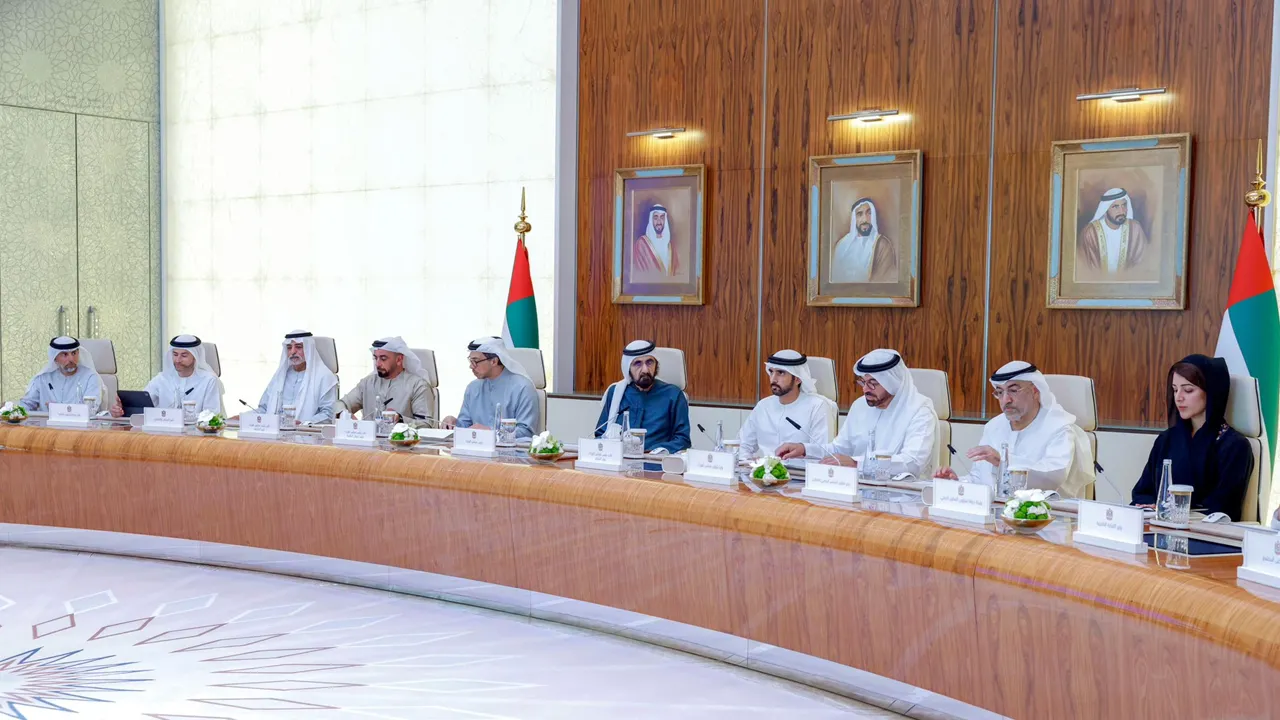
Artificial intelligence is moving into one of the UAE government’s highest levels of decision-making with the introduction of the UAE Cabinet AI Advisor System.
The UAE Cabinet has launched its new Cabinet AI Advisor System. It uses 32 specialised AI advisors to support ministers with policies, legislation, and government initiatives.
The system isn’t designed as a simple chatbot sitting on the side. It will operate around the clock alongside ministers. Its work includes analysing proposals, assessing their impact, and tracking how decisions are implemented.
The launch is part of a much bigger government shift toward agentic AI. Sheikh Mohammed bin Rashid Al Maktoum described it as the UAE’s largest transformation project for government services involving the technology.
UAE Cabinet Puts 32 Specialised AI Advisors to Work
The Cabinet AI Advisor System consists of 32 specialised AI advisors. Each can examine government programmes, policies, legislation, and other proposals. The system assesses possible financial, economic, social, and environmental effects. It can also compare proposals with international best practices. Recommendations are then produced using approved information sources. The aim is to give ministers another layer of analysis before decisions are made.
The AI Advisors Will Work With Ministers 24 Hours a Day
This isn’t limited to Cabinet meetings. The AI advisors are designed to support ministers around the clock. They can follow decisions after approval and monitor their implementation. That gives the system a continuing role in government work. Sheikh Mohammed said the goal is a more efficient government. He also wants decisions to become faster and more accurate.
Agentic AI Is Moving Beyond Government Research
Government agencies have used AI for analysis and automation before. The Cabinet system pushes the technology into a more active role. Agentic AI can examine information and perform connected tasks toward an objective. Here, it will help analyse proposals and follow government decisions. That makes the deployment more ambitious than a conventional AI assistant. AI is becoming part of the workflow itself.
The System Will Analyse Policies Before Decisions Are Made
Government policies can have effects far beyond the department introducing them. The new system is designed to examine those wider consequences. Its advisors can assess economic, financial, social, and environmental factors. They can also connect proposals with UAE national priorities. International practices provide another comparison point. This could help ministers identify issues earlier in the policy process.
Cybersecurity and Confidentiality Are Built Into the Model
Putting AI inside Cabinet workflows raises obvious questions about sensitive information. The UAE says confidentiality is one of the system’s core principles. The platform must also meet the country’s adopted cybersecurity standards. Recommendations come from approved inputs and sources rather than unrestricted information. These controls matter when AI is handling policies and government initiatives before they become public.
AI Will Also Support the Issuing of Cabinet Decisions
The Cabinet approved another system connected to the initiative. Agentic AI will support the process used to issue Cabinet decisions. The technology will operate within a governed framework alongside the AI Advisor System. The aim is to maintain continuity and accelerate decision-making. This takes AI beyond policy analysis. It places the technology closer to the administrative processes that follow a Cabinet decision.
The Project Builds on Earlier UAE Regulatory AI Work
The Cabinet AI Advisor System did not appear overnight. The UAE had already begun integrating AI into regulatory and legislative work. A regulatory intelligence initiative announced in 2025 aimed to connect legislation, judicial rulings, procedures, and public services. Middle East AI News reports that earlier work targeted legislative processes that could be up to 70% faster. The latest Cabinet deployment takes that approach further into executive decision-making.
The UAE Is Making Agentic AI a Government-Wide Project
The Cabinet launch sits inside a broader transformation of federal government services. Sheikh Mohammed called the agentic AI initiative strategic, national, and forward-looking. Government teams are being encouraged to participate in the transformation. This suggests AI agents won’t remain confined to one department or experimental programme. The UAE is treating them as part of a new government operating model.
UAE Government Recorded 308 Million Digital Transactions
The scale of the country’s existing digital government infrastructure provides some context. Federal entities completed more than 308 million digital transactions during 2025. Those transactions covered 1,633 digital services. Government apps recorded 15.8 million downloads. Customer satisfaction with priority services reached 92%. Federal entities also completed 471 digital transformation projects during the year.
AI Is Also Moving Deeper Into UAE Education
The Cabinet meeting went beyond the new advisor system. It also reviewed plans to train 22,000 teachers and educators in AI tools. Teachers will learn to use AI for assessment and lesson planning. Curriculum analysis is another part of the programme. The UAE has also approved an AI curriculum across public and private schools. It plans to make parts of that experience available internationally.
Autonomous Vehicles and Cloud Infrastructure Are Part of the Same Digital Push
Several other technology initiatives were approved during the meeting. The Cabinet introduced a regulatory framework covering autonomous vehicles. It includes rules for testing, inspection, registration, and licensing. Federal financial and human resources systems will also move toward advanced cloud infrastructure. Intelligent data analytics will form part of that migration. Together, these projects show how broadly the UAE is applying its digital strategy.
AI Is Getting Much Closer to the Center of Government
The interesting part isn’t simply that the UAE Cabinet now has AI assistants. Governments around the world already use AI for research, automation, and public services.
What changes here is where the technology sits.
Thirty-two AI advisors will operate alongside ministers. They can examine proposals, compare international practices, assess impacts, and follow implementation. AI therefore becomes part of an ongoing decision-making process.
Human ministers still make government decisions. The technology supports that work rather than replacing political authority.
Still, this is a significant test of agentic AI inside government. If the model works, the bigger story may be what comes next. AI agents could become increasingly normal across federal entities, boards, and public services.
For the UAE, that transition has already started.
Sources
Middle East AI News — UAE Cabinet adopts AI Advisor System for decision-making
https://www.middleeastainews.com/p/uae-cabinet-adopts-ai-advisor-system
UAE Government Media Office — Mohammed bin Rashid chairs UAE Cabinet meeting, outlines three priorities for government
https://prod.mediaoffice.ae/en/news/2026/september/02-09/mohammed-bin-rashid-chairs-uae-cabinet-meeting
