


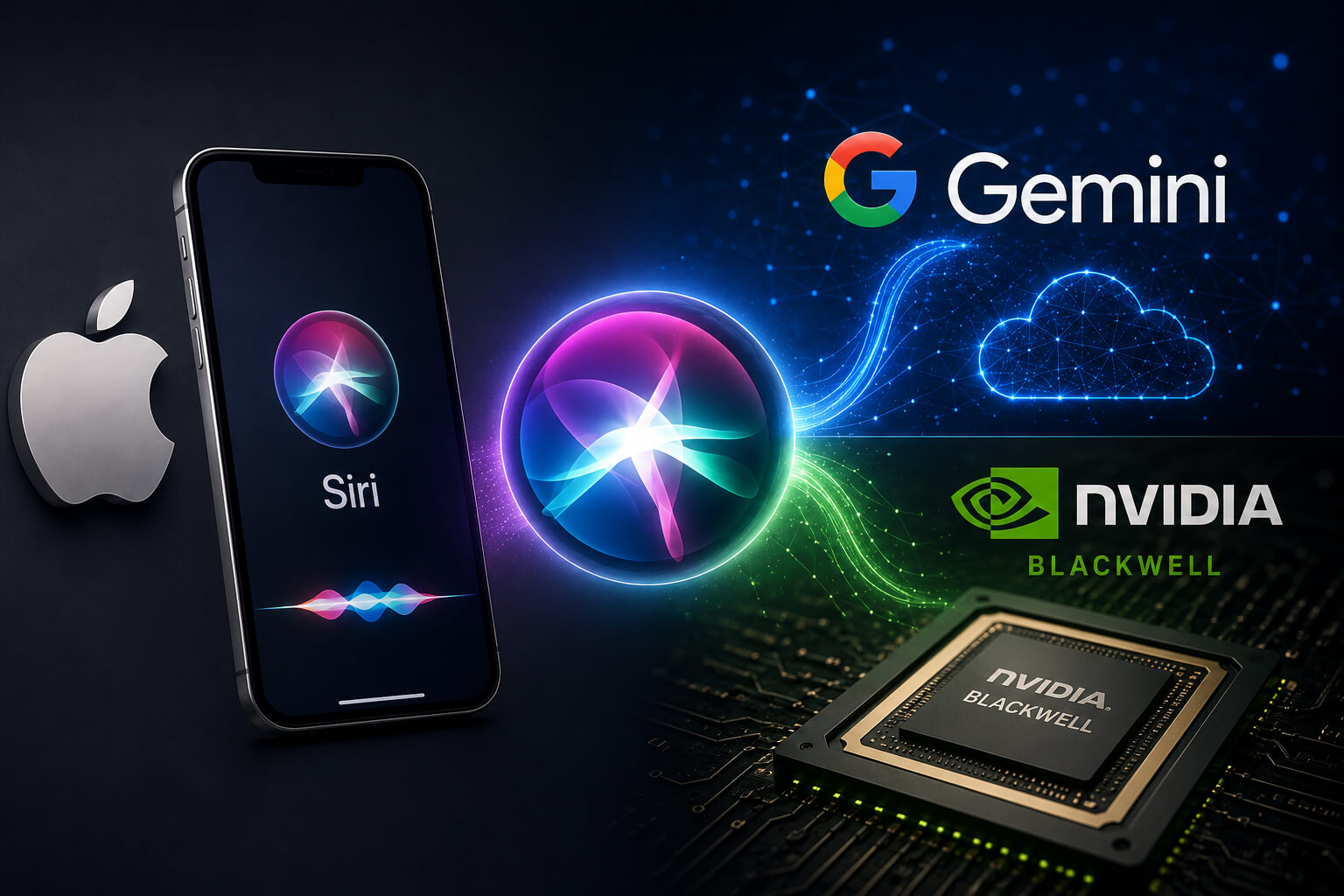
Apple’s long-awaited Siri AI overhaul may finally arrive with iOS 27. This update could bring the company’s voice assistant closer to modern chatbot-style AI systems.
According to reports, Apple is preparing a major upgrade to Siri that could launch in September 2026. The new version will presumably combine AI processing on the device with cloud-based systems for more advanced requests.
The move could be one of the biggest changes to Siri since Apple launched the assistant more than a decade ago. For years, Siri has lagged behind newer AI assistants in natural conversation, context awareness and multi-step reasoning. Now, Apple appears to be working on a hybrid AI system. This system could make Siri faster, smarter and more useful across iPhone, iPad, Mac and other Apple devices.
Apple’s Siri AI overhaul could arrive with iOS 27
The upgraded Siri is reportedly being developed for iOS 27, which will be released in September 2026. Apple is also expected to bring the improved AI assistant to iPadOS 27 and macOS 27. Additionally, the upgrade may come to other parts of its device ecosystem.
The idea is to turn Siri into a more powerful AI tool, not just a simple voice assistant. The new Siri might better understand context and handle more complicated requests. It may also integrate more deeply with apps and device functions, instead of just responding to short commands or sending users to web results.
This would put Apple into closer competition with AI assistants and chatbots from OpenAI, Google, Anthropic, Microsoft and Amazon.
Google Gemini Might Power Complex Siri Tasks
One of the most significant reported changes is Apple using Google Gemini AI models to power more complex Siri requests.
The new system is expected to handle simpler requests on-device, so Siri can respond quickly and keep things private. But more complex questions could be sent to cloud-based systems powered by Gemini.
The hybrid approach might enable Apple to strike a balance of privacy, speed, and AI performance. On-device processing could take care of the routine stuff. Meanwhile, cloud-based AI could handle the heavy lifting needed for deeper reasoning or language understanding.
For Apple, relying on Google Gemini would represent a major shift. The company is known for controlling much of its hardware and software stack. However, generative AI has created new pressure for Apple to move faster.
Nvidia Blackwell Chips May Power the Cloud Layer
The cloud infrastructure behind the upgraded Siri could reportedly run on Nvidia Blackwell B200 data center GPUs through Google’s infrastructure.
Nvidia’s Blackwell chips are designed for large-scale AI workloads. They are built to support faster AI inference, higher memory bandwidth, and more efficient processing for advanced models.
Why does this matter? Because generative AI systems are very compute-intensive, especially when it comes to responding to complex user requests in real time. If Siri is going to be more conversational and context-aware, Apple will need access to powerful AI infrastructure.
Apple might be able to use Nvidia chips on Google Cloud. This could provide more sophisticated Siri features without relying solely on its own servers.
Apple Still Wants to Safeguard Privacy
Privacy is still a critical component of Apple’s AI strategy. While some requests to Siri may be handled through external cloud infrastructure, Apple will likely still stress privacy protections.
The reported use of confidential computing technology could help to encrypt user data while it is being processed. This would be important for Apple as it attempts to maintain trust while using third-party AI systems.
Apple’s challenge is to make Siri more powerful without weakening the privacy message that has become a core part of its brand.
Siri Has Faced Years of AI Delays
Apple first teased major AI improvements to Siri in 2024, but the rollout has faced repeated delays. Meanwhile, competitors have been quick to roll out AI assistants, multimodal models and chatbot-powered tools.
The delay has upped the ante for Apple to show that Apple Intelligence can stand toe-to-toe with generative AI.
If the iOS 27 Siri upgrade works out, it could help Apple regain momentum. On the other hand, if the new Siri doesn’t deliver, Apple risks falling further behind rivals that are already building AI deep into their platforms.
A Big Test for Apple Intelligence
The Siri AI overhaul might be a defining moment for Apple Intelligence.
Apple’s big advantage is its hardware ecosystem. If Siri gets considerably better, it can instantly reach hundreds of millions of users. These users are spread across iPhones, iPads, Macs, Apple Watches and more.
But Apple also has a difficult balancing act. It has to deliver sophisticated AI features, protect user privacy, and keep the system running well. In addition, it must make sure Siri doesn’t feel like it’s not part of the Apple experience.
This situation also shows the difficulty any one company has to compete in AI without significant infrastructure partnerships. Leveraging Google Gemini and Nvidia Blackwell chips could potentially help Apple speed up closing the AI performance gap.
Why It Matters
This Siri AI overhaul by Apple matters because it could change the way millions of people interact with AI on a daily basis.
If Apple is able to make Siri a more intelligent and context-aware assistant, AI could become a more integrated part of the everyday iPhone experience. As a result, users could be able to ask more complex questions, accomplish tasks across apps, and rely on Siri for more than just basic commands.
The move also underscores the broader shift taking place in the AI industry. Even Apple, one of the world’s most powerful technology companies, may have to rely on Google’s AI models and Nvidia’s chips to compete at the very top.
Consumers could benefit from a smarter Siri experience. Meanwhile, the AI industry may enter a new phase of competition. Success could depend not only on software but also on strategic partnerships, cloud infrastructure, and access to advanced AI hardware.
For more Breaking AI news, visit: https://breakingai.news
