


Hong Kong Researchers Develop AI-Powered Road Safety Tool
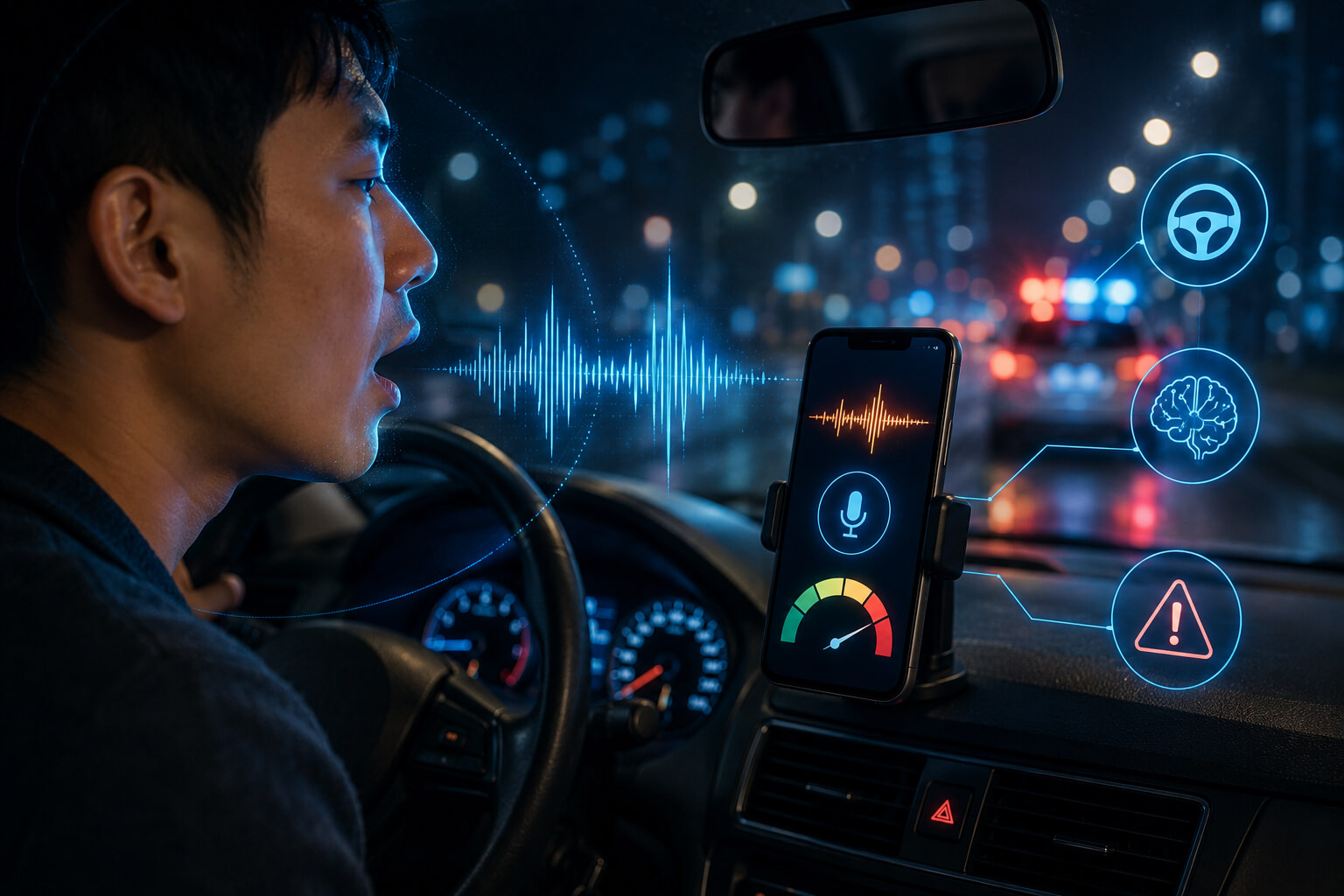
Researchers in Hong Kong are developing an innovative AI-powered application capable of detecting drunk drivers through real-time Cantonese speech analysis. This project aims to create an AI app to detect drunk drivers and could potentially transform road safety and intoxication detection worldwide.
The project, led by Hong Kong Metropolitan University, aims to create what researchers describe as the world’s first artificial intelligence system specifically designed to identify alcohol impairment through spoken Cantonese. Moreover, the AI-driven app could allow users to instantly determine whether they are fit to drive after consuming alcohol.
How the AI Detection System Works
The upcoming AI app will analyze speech patterns, pronunciation, pauses, vocal stability, and grammatical structure to determine whether a person may be intoxicated. Furthermore, researchers say alcohol consumption often causes subtle but measurable changes in speech behavior. This makes voice analysis a promising alternative to traditional breathalyzer tests.
To train the system, the HKMU research team plans to collect more than 1,000 minutes of Cantonese speech recordings from around 100 participants between the ages of 18 and 60. This data will help create a post-drinking speech database. The database will enable the AI model to recognize signs of intoxication.
The system will compare a user’s speech before and after alcohol consumption to detect cognitive and linguistic changes associated with impairment. The app is expected to deliver real-time self-assessment results. These results may help prevent drunk driving incidents before they happen.
AI and Speech Recognition Are Expanding Road Safety Innovation
Speech analysis is becoming an increasingly powerful application of AI in transportation safety. Recent studies show that machine learning models can successfully identify intoxication through speech characteristics and behavioral patterns.
Researchers worldwide are testing multiple AI-driven approaches to impaired driving detection. For example, some systems use in-car cameras to monitor facial expressions and eye movements. Others focus on speech recognition and behavioral monitoring technologies.
A recent machine learning study demonstrated that AI models could identify intoxicated speech with high accuracy using acoustic analysis and speech recognition technologies. Meanwhile, Australian researchers have developed AI systems capable of detecting drunk drivers using computer vision and facial analysis. These systems achieve accuracy rates approaching 90%.
Cantonese Speech Recognition Presents Unique Challenges
Building AI systems for Cantonese speech recognition is more difficult than for languages such as English or Mandarin. This is because of limited datasets and significant dialect variations.
Cantonese includes complex tonal structures and regional pronunciation differences that require advanced speech recognition and natural language processing models. Researchers believe improving Cantonese AI capabilities is an important step forward for multilingual AI development.
The HKMU project also reflects the growing importance of localized AI systems designed specifically for regional languages and communication styles.
Future Applications Could Extend Beyond Drunk Driving
Researchers believe the same AI speech analysis technology could eventually be used for much more than alcohol detection. Similar systems may help identify fatigue, medication side effects, neurological disorders, or cognitive impairments that influence speech patterns.
Future versions could potentially integrate into smartphones, connected vehicles, fleet monitoring systems, or roadside infrastructure to strengthen public safety measures.
Automotive companies and transportation safety organizations are already exploring AI-powered driver monitoring technologies as part of next-generation vehicle safety systems.
AI Is Transforming Transportation Safety
Artificial intelligence is rapidly becoming central to modern transportation safety innovation. For example, autonomous driving systems and predictive traffic management are increasingly common. In addition, driver monitoring and impairment detection show how AI is reshaping how governments and companies approach road safety.
The Hong Kong project demonstrates how AI-powered speech analysis could become a practical and non-invasive tool for reducing drunk driving incidents. It also could improve public safety worldwide.
If successful, the app could represent a major breakthrough in voice-based intoxication detection. It could also open new opportunities for AI-powered safety technologies in the future.
For more Breaking AI news visit: https://breakingai.news
