


The UAE is moving into its next federal budget cycle with artificial intelligence, financial data and long-term economic planning playing a bigger role. These areas are increasingly important in how government resources are managed.
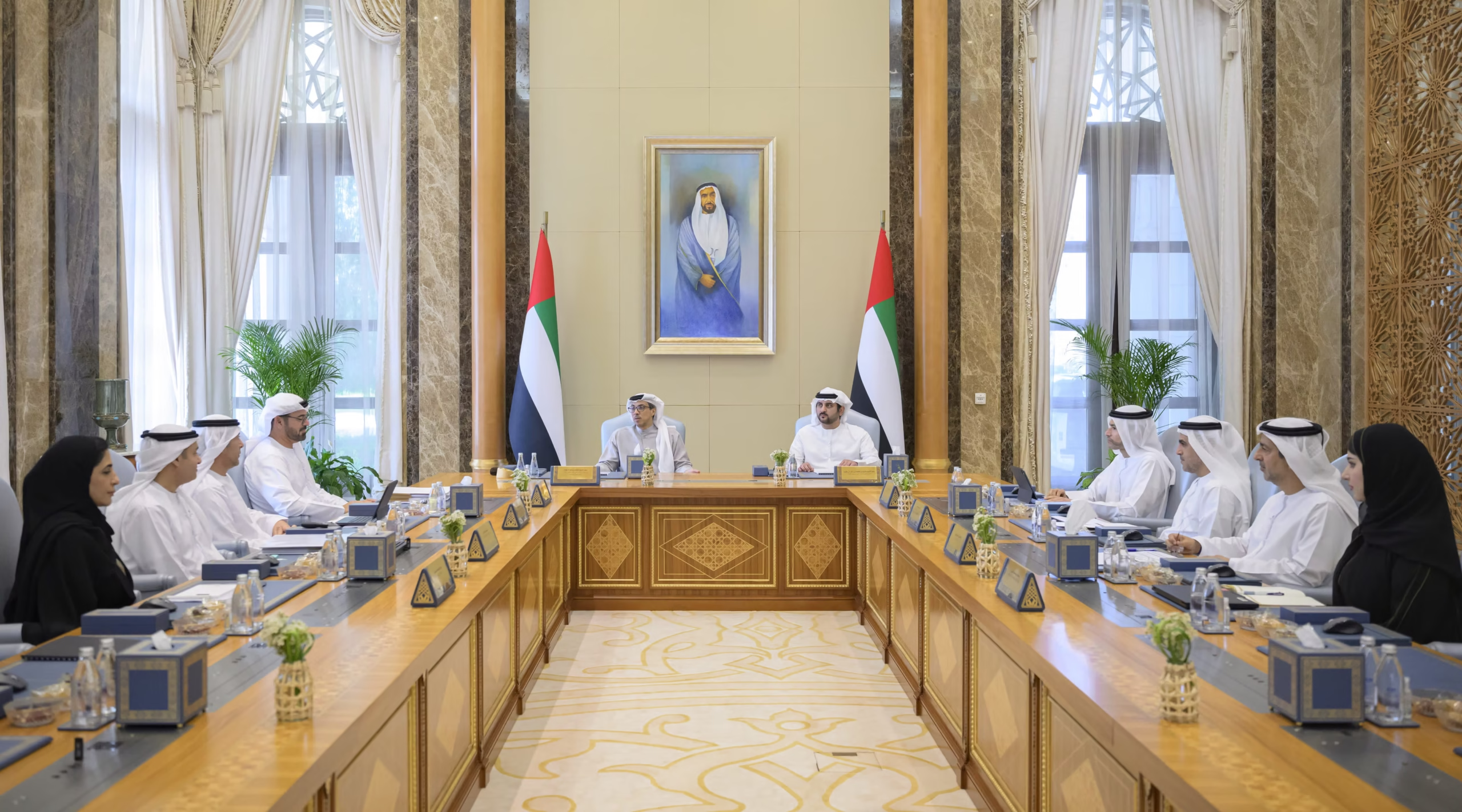
The UAE General Budget Committee held its 15th meeting at Qasr Al Watan to review preparations for the 2027 federal budget and the 2027–2029 medium-term budget plan. Sheikh Mansour bin Zayed Al Nahyan and Sheikh Maktoum bin Mohammed bin Rashid Al Maktoum attended the meeting. Senior government and financial officials were also present.
The meeting provides an early look at the priorities being built into the UAE’s next three-year financial framework. For companies operating across the Emirates, federal spending priorities can have a wider economic impact. This is particularly true for those working with government entities or sectors tied to infrastructure and digital transformation.
UAE Begins Preparations for the 2027 Federal Budget
The preparation of the 2027 federal budget is part of a broader three-year financial planning process. This is not a standalone annual exercise. Federal entities are working with the Ministry of Finance to develop expenditure estimates, revenue projections, and funding requirements for the period from 2027 through 2029.
The UAE General Budget Committee reviewed the preliminary financial estimates and discussed the procedures required to prepare the draft federal budget. The process is being conducted under the country’s public finance legislation. It also takes into account updates to tax-related legislation.
This longer planning period gives government entities greater visibility over expected resources. It also allows strategic projects to be considered beyond a single financial year.
Artificial Intelligence Enters the UAE’s Budget Planning Process
AI is becoming a more visible part of the UAE’s public finance strategy. For the 2027–2029 budget cycle, the Ministry of Finance plans to use artificial intelligence in financial planning and data analysis. It will also use technology to simplify procedures and improve efficiency across federal government entities.
The move reflects a broader change in how governments can process increasingly large volumes of financial information. Instead of relying only on historical figures and conventional reporting, AI-supported systems can be used to analyse financial data. These systems can also help model different scenarios.
The Ministry of Finance has described the new budget cycle as part of an effort to make financial planning more flexible, data-driven and aligned with the UAE’s longer-term development priorities.
2026 Financial Performance Also Comes Under Review
While the committee looked ahead to 2027 and beyond, it also reviewed the UAE federal government’s financial position during 2026. The review covered actual revenue and expenditure recorded during the year. It provided the committee with a current picture of federal finances before the next budget cycle moves forward.
The committee also examined funding requests submitted by federal entities for new strategic projects. Completed capital and development projects during 2026 were reviewed as part of the wider assessment.
For the private sector, these decisions can extend beyond government accounts. Strategic public spending can create activity for companies involved in construction, infrastructure, technology, professional services, logistics and other business sectors.
UAE Maintains a Balanced Federal Budget Framework
The UAE has continued to emphasise balance between federal revenues and expenditure as part of its public finance approach. The 2026 federal budget was approved with estimated revenues and expenditures of AED 92.4 billion each, according to the Ministry of Finance.
The 2026 allocation covered areas including social development and pensions, government affairs, financial investments, infrastructure and economic resources. These allocations provide the financial baseline from which the government is now developing the next medium-term framework.
Maintaining a balanced federal budget also gives the UAE a defined structure for planning government expenditure. The country can continue to direct resources toward strategic national priorities.
Financial Data Is Becoming More Important to Government Decisions
The UAE’s approach to public finance increasingly depends on the availability of accurate and consolidated financial information. The Ministry of Finance has been developing financial systems designed to improve reporting and strengthen data quality. As a result, government decision-makers gain a clearer picture of public resources.
The next budget cycle takes that approach further by incorporating AI into financial analysis and planning. The technology is expected to support the processing of financial information and help government entities assess different financial scenarios.
For businesses, the development is another indication of how quickly data-driven systems are becoming embedded in UAE government operations.
What the New Budget Cycle Could Mean for UAE Businesses
Federal budget decisions can have a direct and indirect effect on the country’s business environment. Government-funded infrastructure, digital programmes and strategic projects can generate demand across multiple industries. At the same time, changes in government priorities can create new areas of opportunity for companies operating in the UAE.
The 2027–2029 framework places particular attention on sustainability, efficiency, technology and long-term economic planning. Companies working in AI, cloud computing, financial technology, consulting, infrastructure and other technology-driven sectors will be watching these priorities. They will be interested in how those priorities translate into actual government programmes and procurement.
For free zone companies, the broader direction is relevant as well. Businesses established in UAE free zones depend on an economic environment supported by infrastructure investment, international connectivity, government services and continued digitalisation.
AI and Public Finance Are Moving Closer Together
The use of AI in the UAE’s budget process is part of a much wider push to integrate artificial intelligence into government operations. Financial management is one area where large volumes of structured data make AI-based analysis particularly relevant.
The Ministry of Finance has positioned the 2027–2029 budget cycle around greater use of advanced analytical tools, data-driven decision-making and predictive financial scenarios. The objective is not simply to digitise existing processes. It is to give government entities additional tools for planning and managing resources.
That shift could eventually influence how government programmes are assessed, funded and measured.
The UAE Takes a Longer View of Federal Spending
The latest General Budget Committee meeting marks another step toward the UAE’s 2027–2029 federal financial framework. The process will continue as federal entities and the Ministry of Finance develop the draft budget. They will determine funding requirements for the coming three-year period.
For the business community, the important details will emerge as individual allocations, strategic projects and government programmes become clearer.
The direction, however, is already visible. The UAE is combining conventional fiscal planning with artificial intelligence, financial data analysis and longer-term economic strategy. This approach will help as it prepares its next federal budget cycle.
