


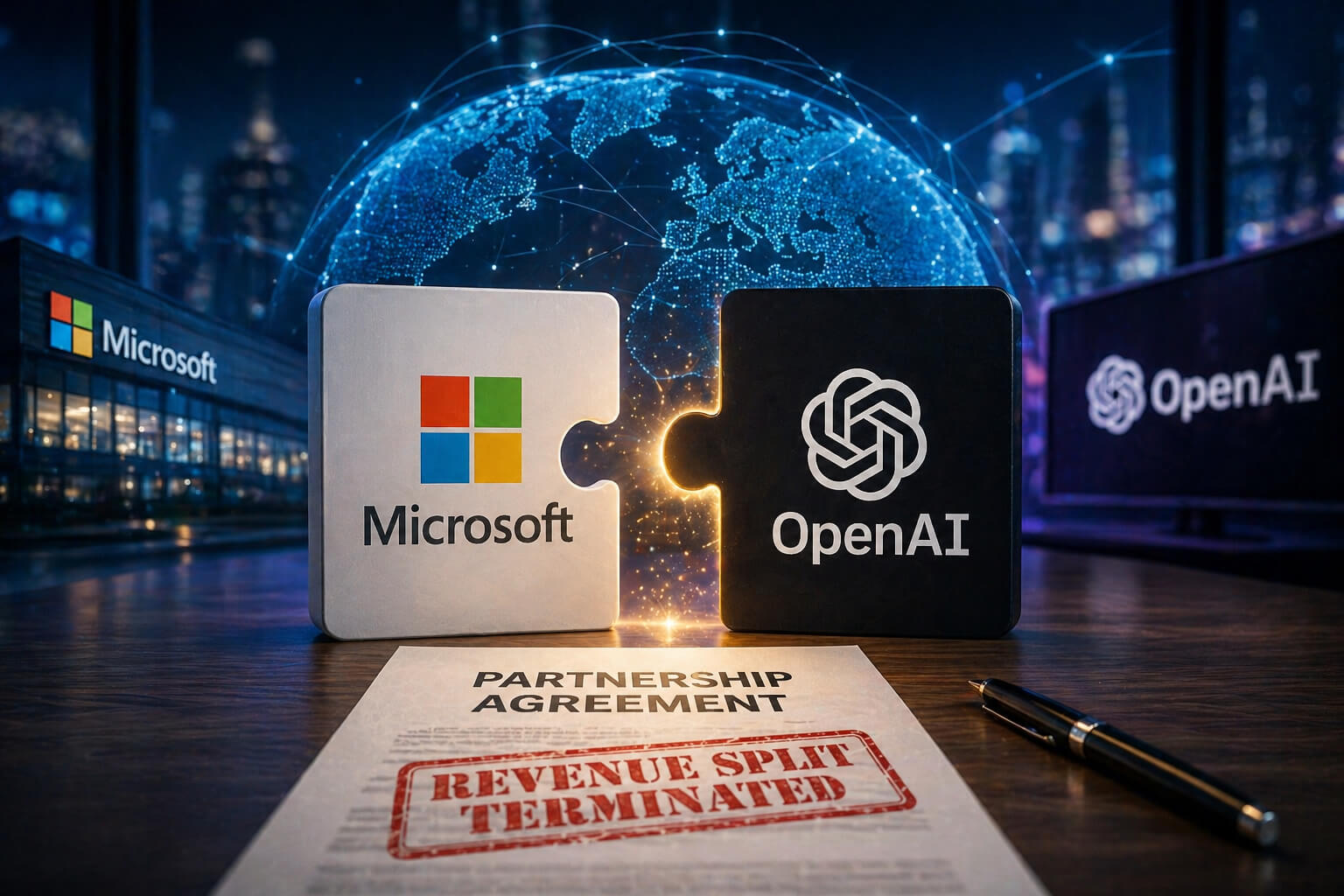
Microsoft takes a drastic measure in terms of changing its partnership status with OpenAI.
Microsoft Stops Receiving Part of Its Revenue From OpenAI
From now on, Microsoft will stop receiving a cut of OpenAI’s profits, which marks a landmark moment for the tech giant. This does not mean that the companies’ partnership will be discontinued, only restructured to accommodate new business needs and plans.
According to the previous agreement, Microsoft received a percentage of revenue that OpenAI made. Now the terms are changing. Although Microsoft’s share will decrease dramatically, OpenAI will still make certain payments to the company capped at $1 billion by 2030.
End of Exclusivity in AI Partnership
The new deal also eliminates exclusivity clauses. Specifically, OpenAI will have the ability to deploy its models on various cloud platforms instead of limiting itself to Microsoft Azure.
Also, OpenAI will give Microsoft access to its tools on a non-exclusive basis until 2032, meaning that Microsoft will be able to cooperate not only with OpenAI but with other parties as well.
The bottom line is that the companies will continue to cooperate but in a less binding manner.
Why Are They Doing It?
The new terms of cooperation reflect different interests pursued by Microsoft and OpenAI:
- While OpenAI is growing fast, it is considering going public. To achieve its goals, it requires greater independence from any other companies. Learn more about IPO process.
- On Microsoft’s side, it is developing other strategies for working with AI technologies, such as cooperating with different AI vendors and creating its own models. Explore Microsoft AI initiatives.
As such, removing exclusivity helps to accelerate development in a competitive market.
How Does it Change the AI Sector?
This move marks a significant step in the history of the AI industry, as the following trends become visible:
The nature of Big Tech partnerships within the AI sector is changing from exclusivity to a wider network of collaborations.
Some of the key outcomes are:
- More competition between cloud providers such as Amazon Web Services (AWS), Google Cloud Platform, and Microsoft Azure
- Broader availability of tools provided by the companies
- Accelerated growth of innovative solutions through collaboration
According to experts, the move is mutually beneficial for both companies. Learn more about AI industry trends.
What Does it Mean for the Future?
It should be noted that the partnership is far from over, and Microsoft retains its leading position as the biggest investor and cloud provider of OpenAI.
At the same time, however, the end of exclusivity opens doors for the future.
The future will belong to a more flexible AI ecosystem, where partners become competitors as well.
For more Breaking AI news visit: https://breakingai.news
