


Close Menu
    • Home
    • Events
      • Upcoming Events
      • Videos
        • Machine Can Think Summit 2026
        • Step Dubai Conference 2026
    • Technology & Innovation
    • Business & Marketing
    • Trends & Insights
    • Industry Applications
    • Tutorials & Guides
    What's Hot
    Technology & Innovation

    SAS Puts AI Governance at the Core of Its Agent Strategy

    By Art RyanApril 29, 20260

    As it moves deeper into the era of agentic AI, SAS is making governance a…

    Big Tech AI Spending 2026: Investment Trends Revealed

    April 29, 2026

    Amazon AI Hiring Software Enhances Recruitment Efficiency

    April 29, 2026

    Oracle & CoreWeave Shares Fall on OpenAI Growth Miss

    April 29, 2026
    Facebook X (Twitter) Instagram
    Facebook X (Twitter) Instagram
    Breaking AI News
    Wednesday, April 29
    • Home
    • Events
      • Upcoming Events
      • Videos
        • Machine Can Think Summit 2026
        • Step Dubai Conference 2026
    • Technology & Innovation

      SAS Puts AI Governance at the Core of Its Agent Strategy

      April 29, 2026

      Amazon AI Hiring Software Enhances Recruitment Efficiency

      April 29, 2026

      AI Drug Development Johnson & Johnson Impact on Healthcare

      April 28, 2026

      Qualcomm OpenAI AI Smartphone Processors Partnership News

      April 28, 2026

      Google AI Campus South Korea and Its Development Plans

      April 28, 2026
    • Business & Marketing

      Big Tech AI Spending 2026: Investment Trends Revealed

      April 29, 2026

      Oracle & CoreWeave Shares Fall on OpenAI Growth Miss

      April 29, 2026

      Authentic Brands Group Could Hit $50 Billion in Retail Sales by 2026, CEO Says

      April 29, 2026

      UK AI Startup Ineffable Secures $1.1B in Europe’s Largest Seed Round

      April 28, 2026

      Meta Manus AI Acquisition Blocked Over Strategic Concerns

      April 28, 2026
    • Trends & Insights

      SAS Puts AI Governance at the Core of Its Agent Strategy

      April 29, 2026

      Big Tech AI Spending 2026: Investment Trends Revealed

      April 29, 2026

      Oracle & CoreWeave Shares Fall on OpenAI Growth Miss

      April 29, 2026

      Google AI Campus South Korea and Its Development Plans

      April 28, 2026

      Meta Manus AI Acquisition Blocked Over Strategic Concerns

      April 28, 2026
    • Industry Applications

      Amazon AI Hiring Software Enhances Recruitment Efficiency

      April 29, 2026

      AI Drug Development Johnson & Johnson Impact on Healthcare

      April 28, 2026

      Accenture Copilot Rollout Enhances Employee Productivity

      April 28, 2026

      HomeLight AI Real Estate Closings Transforming the Market

      April 27, 2026

      UiPath & Databricks Partner to Transform Enterprise Operations through Automation and Data Intelligence

      April 27, 2026
    • Tutorials & Guides

      How AI Is Revolutionizing the Future of Travel 2026 with Wellness and Sustainability

      April 19, 2026

      University of Wollongong in Dubai AI initiative boosts future-ready education

      March 31, 2026

      Microsoft AI upgrades Copilot Cowork unveiled for early access users

      March 31, 2026

      Starcloud $11 billion valuation signals AI space race surge

      March 31, 2026

      Flexible AI Factories Power the Future of Energy Grids

      March 30, 2026
    Breaking AI News
    Home » Is Meta Placing an Unrealistic Bet on AI?
    Technology & Innovation

    Is Meta Placing an Unrealistic Bet on AI?

    Art RyanBy Art RyanNovember 1, 2025No Comments4 Mins Read
    Facebook Twitter Pinterest LinkedIn Tumblr Email
    Share
    Facebook Twitter LinkedIn Pinterest Email

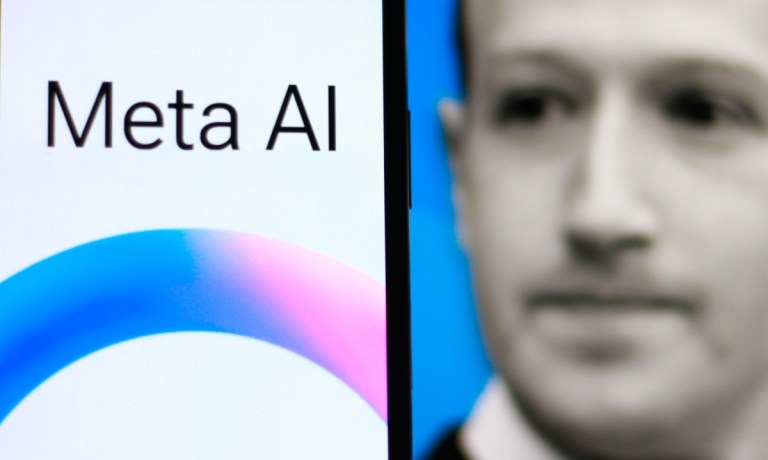
    Meta is pouring billions into its biggest artificial intelligence (AI) bet yet. CEO Mark Zuckerberg told analysts in the company’s Q3 earnings call that he is “very focused on establishing Meta as the leading frontier AI lab” and on “building personal superintelligence for everyone.” It’s a moonshot goal backed by massive spending but without a clear plan for returns.

    CFO Susan Li said Meta expects capital expenditures to be “notably larger in 2026 than in 2025,” with total expenses rising at a “significantly faster rate.” The main costs are data centers, cloud contracts and AI talent. “We expect further upward pressure on capex as we expand compute capacity to support our AI roadmap,” she said.

    The centerpiece of that spending is what Zuckerberg calls “personal superintelligence.” Merriam-Webster defines superintelligence as “an entity that surpasses humans in overall intelligence,” a concept still debated among researchers. As Bloomberg reported, experts disagree on whether it’s achievable or merely theoretical.

    Meta’s framing of “personal superintelligence” suggests something between a digital assistant and a personalized operating system, a model that learns from user behavior across Facebook, Instagram, WhatsApp and Quest devices.

    But in today’s market, Meta’s own models lag frontier leaders. Its Llama 3 model trails OpenAI’s GPT-4, Anthropic’s Claude and Google’s Gemini on reasoning and multimodal benchmarks. While rivals license their foundation models to developers and enterprises, Meta releases its models open source and earns no direct revenue from them.

    Zuckerberg told analysts Meta is “aggressively front-loading building capacity so that we’re prepared for the most optimistic cases.” He added, “Some people think that we’ll get there in a few years, others think it’ll be five, seven years, or longer. I think it’s the right strategy to aggressively front-load building capacity so that way we’re prepared for the most optimistic cases.”

    Advertisement: Scroll to Continue

    Building infrastructure without a clear definition of what success looks like leaves Meta exposed to the same pattern that has potentially derailed its “Metaverse.” Reality Labs’ operating losses still exceed $4 billion a quarter, according to Reuters. Its total metaverse burn has now pushed past $60 billion since 2020, underscoring the risk of chasing visions that lack commercial validation.

    This new AI vision risks the same fate. Unlike Microsoft, Google or Amazon, which have paired AI investments with clear revenue pathways, Meta continues to build for internal use. Microsoft monetizes OpenAI’s models through Azure and Copilot subscriptions. Google sells Gemini and Vertex AI access via its cloud division, and also has a growing TPU business. Amazon’s Bedrock and SageMaker platforms turn infrastructure into recurring enterprise revenue. Meta, by contrast, uses its AI for engagement, recommendation engines, ad ranking, and tools like Meta AI and Reels. Those may improve user metrics, but it’s not clear how they will contribute to the bottom line.

    Zuckerberg described Meta’s apps and ads business as “compute-starved,” saying, “We really are taking a lot of the resources and using them to advance future things that we’re doing.” He acknowledged a “very high demand for additional compute both internally and externally,” yet stopped short of saying Meta would sell capacity. “In the worst case,” he said, “we would just slow building new infrastructure for some period while we grow into what we build.”

    The company’s workforce strategy reflects the same imbalance. Earlier this year, Meta acquired Scale AI and named its founder, Alexandr Wang, to lead Meta Superintelligence Labs. It also hired engineers and executives from Apple, OpenAI, and Thinking Machines, even as it laid off about 600 people in its AI division, including researchers from its FAIR unit.

    Zuckerberg continues to defend the pace of investment. “We keep on seeing this pattern where we build some amount of infrastructure to what we think is an aggressive assumption, and then we keep on having more demand to be able to use more compute,” he said. “So, I think that suggests that being able to make a significantly larger investment here is very likely to be a profitable thing over some period.”

    That “some period,” however, remains undefined. Li said there is “no specific timeline for when capex will normalize,” adding that Meta continues to “see opportunities to invest behind our long-term AI priorities.”

    Source: https://www.pymnts.com/
    Share. Facebook Twitter Pinterest LinkedIn Tumblr Email
    Art Ryan

    Related Posts

    SAS Puts AI Governance at the Core of Its Agent Strategy

    April 29, 2026

    Amazon AI Hiring Software Enhances Recruitment Efficiency

    April 29, 2026

    AI Drug Development Johnson & Johnson Impact on Healthcare

    April 28, 2026

    Comments are closed.

    Latest News

    SAS Puts AI Governance at the Core of Its Agent Strategy

    April 29, 2026

    Big Tech AI Spending 2026: Investment Trends Revealed

    April 29, 2026

    Amazon AI Hiring Software Enhances Recruitment Efficiency

    April 29, 2026

    Oracle & CoreWeave Shares Fall on OpenAI Growth Miss

    April 29, 2026
    Facebook X (Twitter) Pinterest Vimeo WhatsApp TikTok Instagram LinkedIn YouTube Spotify Reddit Snapchat Threads

    AI University

    • Global Universities
    • Universities in Africa
    • Universities in Asia
    • Universities in Europe
    • Universities in Latin America
    • Universities in Middle East
    • Universities in North America
    • Universities in Oceania

    AI Tools & Apps Directory

    • AI Productivity Tools
    • AI Coding Tools
    • AI Voice Tools
    • AI Video Tools
    • AI Image Generators
    • AI Writing Tools

    Info

    • Home
    • About Us
    • AI Organizations & Associations
    • Contact Us

    Subscribe to Updates

    Get the latest creative news from FooBar about art, design and business.

    © 2026 Breaking AI News.
    • Privacy Policy

    Type above and press Enter to search. Press Esc to cancel.