


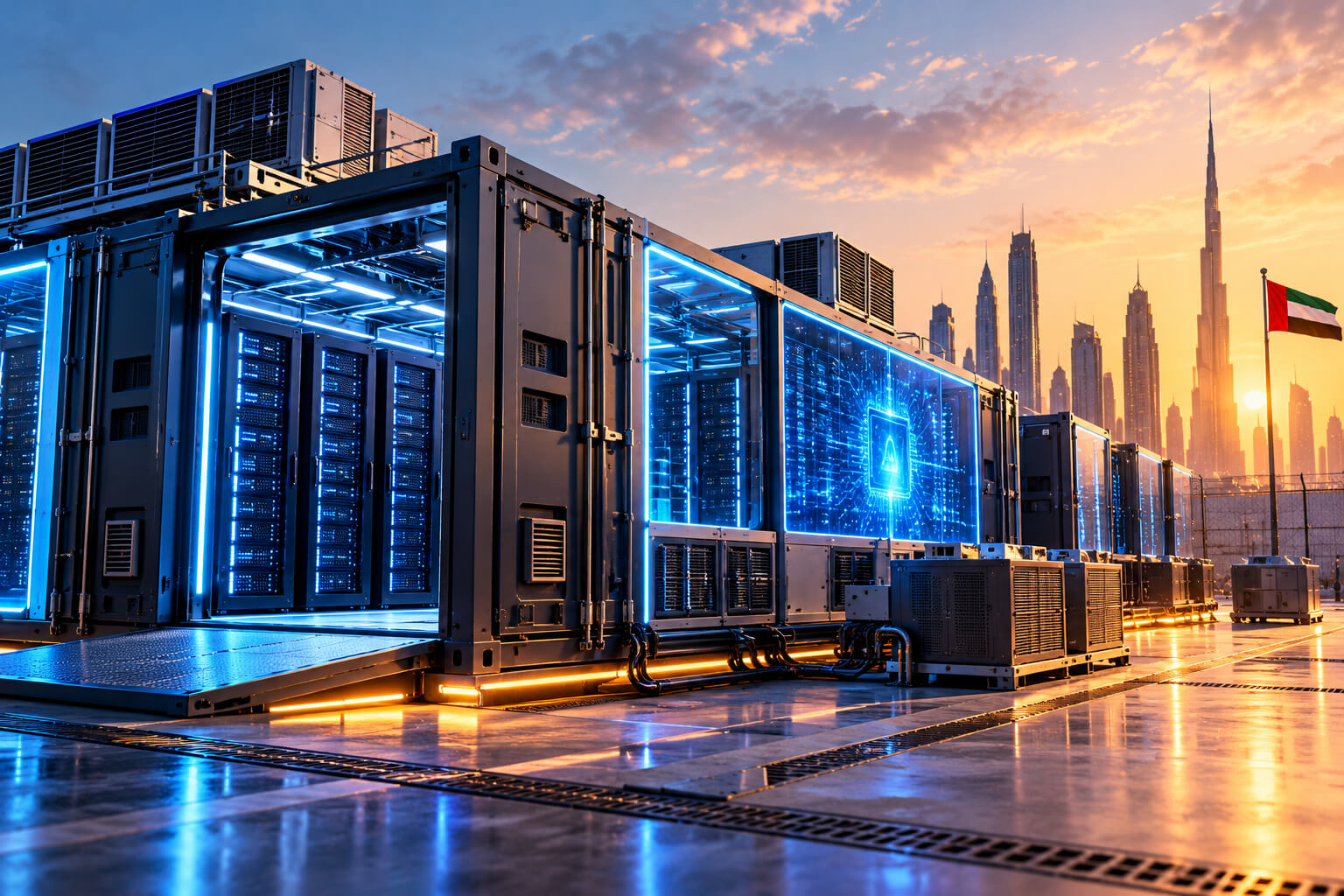
Abu Dhabi-based Hyperfusion has partnered with VAST Data to introduce Sentinel, a containerised AI data centre designed to bring artificial intelligence infrastructure online in weeks rather than years.
Announced on October 21, 2026, the offering combines Hyperfusion’s modular computing infrastructure with plans to integrate the VAST AI Operating System. The companies aim to help governments and enterprises deploy AI systems without waiting for conventional data centre construction.
Sentinel packs AI infrastructure into a transportable 45-foot container, complete with computing hardware, data storage and supporting systems. Hyperfusion commissions the equipment in a factory before delivering it to the customer’s site.
The concept addresses a growing problem in the AI industry. Companies may have the budget for powerful GPUs, but finding the electricity, cooling capacity and physical space to operate them can take considerably longer.
Hyperfusion believes modular infrastructure could shorten that wait.
Hyperfusion Introduces Sentinel as a Portable AI Data Centre
Traditional data centres require extensive planning, construction and infrastructure preparation. Large projects can take years before customers gain access to operational computing capacity.
Hyperfusion wants to change that timeline with Sentinel, a factory-commissioned AI data centre housed inside a 45-foot ISO High Cube container. Its reference configuration supports 96 GPUs and approximately two to three petabytes of data capacity.
Instead of constructing an entirely new facility, organisations can deploy the modular system at locations with suitable power and supporting infrastructure. Hyperfusion is targeting government agencies, telecommunications providers, energy companies and enterprises that need AI computing capacity without lengthy construction projects.
Customers can purchase Sentinel as their own infrastructure or use a managed service operated by Hyperfusion. The company has not disclosed specific pricing or guaranteed delivery schedules.
VAST Data Partnership Brings Unified AI Storage and Data Management
Computing power is only one part of the AI infrastructure challenge. Organisations also need fast and reliable access to enormous amounts of information, particularly when running demanding AI applications.
That is where VAST Data enters the picture.
Hyperfusion plans to integrate the VAST AI Operating System into Sentinel as its preferred data platform. The technology brings together data storage and management capabilities designed to support AI workloads across distributed computing environments.
One important feature is the planned ability to connect multiple Sentinel installations through a shared data architecture. Rather than maintaining separate storage environments whenever an organisation adds another modular data centre, the integration would allow deployments to share a single global namespace.
This could make it easier for companies to expand their AI infrastructure across multiple locations without creating isolated data systems. However, the companies are still completing technical validation of the integration.
Sovereign AI and Confidential Computing Take Centre Stage
Data sovereignty has become a major consideration for governments and businesses investing in artificial intelligence. Some organisations cannot transfer sensitive information to overseas cloud infrastructure because of regulatory requirements, security policies or operational restrictions.
Sentinel addresses these concerns by supporting on-premises and in-country deployment. The system can also operate in a fully air-gapped environment, allowing organisations to isolate their AI infrastructure from external networks when necessary.
Another important capability is confidential computing, which helps protect sensitive information and AI models while processors actively use them. This adds another layer of protection for organisations handling confidential workloads.
These features could appeal to government institutions, financial organisations and enterprises operating in highly regulated industries. For UAE organisations pursuing sovereign AI capabilities, Sentinel offers a potential route to keeping computing resources and sensitive information under local control.
HyperPod Expands Modular AI Infrastructure Beyond a Single Container
Sentinel is not Hyperfusion’s only modular infrastructure offering. The company has also developed HyperPod, a larger platform designed for organisations requiring substantially more computing and storage capacity.
HyperPod provides a modular 5-megawatt data centre architecture, with data capacity scaling to approximately 20 petabytes per pod. While Sentinel focuses on smaller deployments, HyperPod extends the same modular approach to multi-megawatt AI infrastructure.
Both platforms reflect Hyperfusion’s strategy of deploying computing resources where sufficient electricity is available, rather than depending entirely on conventional data centre development.
This approach could become increasingly relevant as AI applications move beyond text generation. Multimodal models, computer vision and physical AI systems often require significant computing resources alongside continuous access to large datasets.
For organisations operating these systems, having computing infrastructure closer to users, equipment and business data could help address latency and data movement requirements.
AI Infrastructure Demand Is Moving Beyond GPU Availability
The global race to develop AI infrastructure has largely focused on securing advanced processors. But GPUs alone cannot operate a data centre.
Electricity supply, cooling systems, networking and storage infrastructure all influence how quickly organisations can deploy production AI applications. Even businesses with substantial technology budgets can face lengthy delays when suitable data centre capacity is unavailable.
According to Hyperfusion CEO Quentin Reyes, some enterprises face waiting periods of 18 to 24 months for conventional data centre infrastructure.
Hyperfusion’s modular strategy aims to address that problem by completing much of the infrastructure preparation before delivery. Instead of waiting for an entirely new facility, customers could install a preconfigured system at a suitable location.
The partnership with VAST Data adds another element by addressing how organisations store, manage and access information across distributed AI environments.
For enterprises, the attraction is practical. They could potentially expand computing capacity without rebuilding their entire data infrastructure each time they open another location.
Hyperfusion and VAST Data Prepare for Joint Market Expansion
Hyperfusion and VAST Data are preparing joint commercial activities while completing technical validation of their integrated platforms. The companies intend to pursue opportunities among government agencies, telecommunications providers, energy companies and enterprises requiring sovereign AI infrastructure.
Their collaboration also includes plans to explore a common control plane for managing distributed Sentinel installations across multiple sites.
Such a capability could help organisations coordinate AI infrastructure operating in different locations while maintaining a more consistent approach to data management.
Hyperfusion is also showcasing its technology at NVIDIA GTC Berlin, taking place from October 20 to 22, 2026. The event provides an opportunity to introduce its modular infrastructure approach to companies developing and deploying advanced AI applications.
The partnership arrives as demand grows for infrastructure capable of supporting multimodal AI, computer vision and physical AI workloads. These applications often require substantial computing resources and increasingly complex data environments.
What the Hyperfusion and VAST Data Partnership Means for AI Infrastructure
The partnership reflects a shift in how organisations approach AI infrastructure development. Building powerful AI models remains important, but deploying those models where businesses actually need them is becoming a major challenge.
Sentinel offers a modular approach by combining GPU computing, substantial data capacity and security capabilities inside a transportable system.
The planned VAST Data integration could strengthen that approach by allowing multiple installations to operate through a shared data architecture rather than isolated storage environments.
Important questions remain, particularly around pricing, validated performance and actual deployment timelines. Hyperfusion has not yet provided enough public information to determine how quickly customers can deploy the systems under different operating conditions.
Still, the direction is clear. AI infrastructure is becoming more modular, distributed and focused on data sovereignty.
For organisations that cannot afford to wait years for conventional data centre capacity, containerised AI infrastructure could become an increasingly attractive alternative.
