

Close Menu
    What's Hot
    AI Events

    AI Summit Seoul 2026 Puts Agentic AI, Physical AI and Enterprise Transformation in the Spotlight

    By Art RyanAugust 16, 20260

    The AI conversation is getting less theoretical. That shift will be hard to miss at…

    Weekly AI News: Meta Opens Up, Nvidia Courts Wall Street, and AI Moves Deeper Into Everyday Life

    August 16, 2026

    Norwegian AI Data Center Proponent Walks Out After Oton Residents Oppose Iloilo Project

    August 16, 2026

    Singapore Criminalizes AI-Generated Intimate Images Without Consent

    August 16, 2026
    Facebook X (Twitter) Instagram
    Facebook X (Twitter) Instagram
    Breaking AI News
    Sunday, August 16
    • Home
    • Events
    • Videos
      • Machine Can Think Summit 2026
      • Step Dubai Conference 2026
    • Technology & Innovation

      AI Summit Seoul 2026 Puts Agentic AI, Physical AI and Enterprise Transformation in the Spotlight

      August 16, 2026

      Norwegian AI Data Center Proponent Walks Out After Oton Residents Oppose Iloilo Project

      August 16, 2026

      Singapore Criminalizes AI-Generated Intimate Images Without Consent

      August 16, 2026

      Mystery Bulk Book Orders Spark Suspicions of AI Training Data Hunt

      August 16, 2026

      Agentic AI and RCS Are Reshaping How UK Travel Brands Talk to Customers

      August 15, 2026
    • Business & Marketing

      Google DeepMind Hands More AI Power to Koray Kavukcuoglu as Gemini Race Intensifies

      August 13, 2026

      SpaceXAI Launches Grok Bot, an AI Teammate That Can Actually Do the Work

      August 13, 2026

      Upwork’s AI Shift Is Getting Real: Smaller Freelance Jobs Are Disappearing, but Bigger AI Work Is Growing

      August 11, 2026

      NVIDIA Taps Wall Street Giants to Unlock $500 Billion for AI Factories

      August 11, 2026

      Firebird Launches Massive NVIDIA AI Factory in Armenia With 70,000+ Blackwell and Rubin GPUs Planned

      August 10, 2026
    • Industry Applications

      AIREV’s OnDemand AI Is Coming to Qualcomm Hardware — and the Cloud Isn’t Required

      August 14, 2026

      OpenAI Brings Inference Residency to the UAE, Keeping AI Processing Inside the Country

      August 14, 2026

      Dubai Is Building an AI System That Could Approve Building Permits in Minutes

      August 12, 2026

      AI-Powered Wearable Could Warn Athletes Before a Dangerous ACL Injury

      August 12, 2026

      Jordan Turns to AI to Find Water Leaks Before More Supply Disappears

      August 11, 2026
    • Trends & Insights

      Oracle Says $165 Billion Project Jupiter AI Data Center Is Still on Schedule

      August 15, 2026

      Google’s Gemini 3.7 Flash Takes Aim at GPT-5.6 Terra and Claude Sonnet 5

      August 15, 2026

      Google Launches Gemini 3.7 Flash With Faster Coding, Agents and Lower Introductory Pricing

      August 14, 2026

      NVIDIA Pushes Local AI Forward With Nemotron 3.5 Lightning and Open-Source Agent Tools

      August 13, 2026

      Tencent Takes Hy3 Global as Its Open-Source AI Push Moves Beyond China

      August 8, 2026
    • AI in Travel

      Agentic AI and RCS Are Reshaping How UK Travel Brands Talk to Customers

      August 15, 2026

      Direct Travel Pushes Avenir Deeper Into AI-Powered Corporate Travel

      August 15, 2026

      Fliggy’s New Agentic AI Travel Assistant Can Book, Change and Manage Trips

      August 13, 2026

      Airlines Are Using AI to Rethink Ticket Prices — And Pricing Is Only the Beginning

      August 11, 2026

      SlickTrip Launches Flight Price Tracker App for Real-Time Fare Drop Alerts

      August 10, 2026
    Breaking AI News
    Home » How MCP Turns Passive AI Assistants Into Active Enterprise Agents
    Technology & Innovation

    How MCP Turns Passive AI Assistants Into Active Enterprise Agents

    Art RyanBy Art RyanNovember 14, 2025No Comments5 Mins Read
    Facebook Twitter Pinterest LinkedIn Tumblr Email
    Share
    Facebook Twitter LinkedIn Pinterest Email

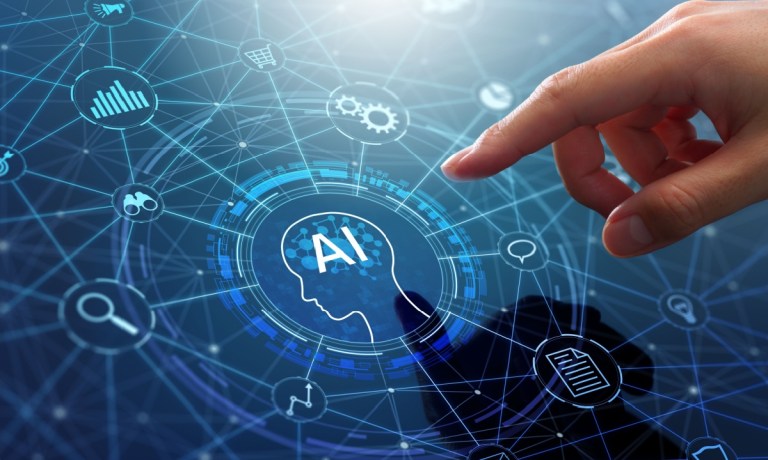
    The Model Context Protocol, or MCP, is an open standard introduced by Anthropic in late 2024 to make artificial intelligence (AI) systems more useful in real-world business settings. At its core, MCP allows AI models such as Claude, ChatGPT or Gemini to securely connect to business tools, databases and workflows.

    This foundational integration layer allows AI to move beyond generating passive insights and become an active enterprise agent that retrieves live operational data, updates records, and performs actions within approved systems.

    Before MCP, connections between an AI system and a business application often had to be custom built. A developer might need one integration for Salesforce, another for Slack and another for a legacy database, which made adoption costly and slow. According to Google Cloud, MCP uses a simple structure: A host runs the AI model, a client acts as the intermediary and a server exposes the data or tools the model needs. This approach allows companies to connect AI models to live data without rewriting code for every use case.

    Moody’s described MCP as “the foundational layer for enterprise AI connectivity,” noting that its use in regulated industries will depend on clear audit trails, governance and real-time controls. Anthropic called it “a standard way to connect AI models to the tools and data they need,” and early adopters include software and financial institutions seeking more reliable enterprise AI deployment.

    Why MCP Matters

    Modern AI models are great at generating text and insights but generally cannot act on live data. A customer-service chatbot, for example, can explain how to reset a password but cannot perform that action because it lacks secure, structured access to internal systems.

    MCP solves that problem by giving AI systems a way to request and perform actions such as retrieving information, updating records or triggering workflows within approved security boundaries. It allows AI to move from being a passive assistant to an active helper.

    In Anthropic’s engineering blog, engineers demonstrate how MCP lets models safely run code on behalf of users, enabling direct execution of tasks within secure, sandboxed environments. In an enterprise setting, this could mean an AI assistant pulling the latest sales data or summarizing a client report. In healthcare, an AI agent might retrieve lab results or send follow-up reminders without exposing patient files.

    Google Cloud explained that MCP bridges static, trained knowledge and live operational data. Instead of relying solely on training information, models can now access real-time data from business systems in sectors such as finance, logistics and healthcare, where accuracy and timeliness are essential.

    How AWS and Enterprises Use MCP

    Amazon Web Services (AWS) is among the cloud providers integrating MCP to make AI more functional in enterprise settings. In its guidance, AWS outlined how MCP servers act as consistent interfaces to services such as Amazon S3, Amazon RDS and enterprise application programming interfaces (APIs).

    Developers are already applying MCP within tools like Amazon Q Developer, where MCP connects AI assistants to project files, issue trackers and design systems. This enables context-aware software development and simplifies multi-tool workflows.

    In financial services, MCP can connect AI systems to internal databases, compliance dashboards and risk models. For example, a compliance officer could ask, “Show me all transactions over $10,000 flagged this week,” and the AI assistant could retrieve that data through MCP directly from a secure database. Because the protocol supports authentication, permissions and logging, those actions can be monitored for audit and risk control.

    Enterprise Example From Retail

    A clear illustration of MCP’s potential comes from Walmart, which recently overhauled its approach to AI agents, as reported by The Wall Street Journal. The company had deployed dozens of narrow agents that worked separately across departments, leading to inefficiency and confusion. To address this, Walmart consolidated them into four “super agents” for customers, employees, engineers and suppliers that call smaller agents and internal systems through MCP.

    The move provides a unified interface and stronger oversight across its AI infrastructure. Walmart told the Journal that the goal is to make its AI ecosystem more scalable and secure by using MCP to connect disparate systems under one governance model.

    How MCP Differs From RAG

    MCP is often compared with Retrieval-Augmented Generation (RAG), another way of expanding a model’s access to external information. The difference lies in what each method allows the AI to do.

    RAG helps an AI system find and understand information. It retrieves relevant text or documents from an external database and feeds them into the model’s context to improve the quality of its answers. It is best for knowledge-based tasks such as research or customer support.

    MCP, by contrast, allows an AI system to connect and act. It lets the model interact directly with software systems through secure connections. While RAG improves knowledge, MCP expands capability.

    For instance, RAG might help an AI assistant answer, “What were our quarterly earnings?” by retrieving a report and quoting a number. MCP could go further by logging in to the company’s analytics system, pulling live data and updating a dashboard or sending a summary email.

    In essence, RAG operates at the knowledge layer, while MCP functions at the integration layer. They complement each other: An AI assistant in a bank might use RAG to locate a regulatory document and MCP to apply that rule automatically to a new transaction.

    Source: https://www.pymnts.com/
    Share. Facebook Twitter Pinterest LinkedIn Tumblr Email
    Art Ryan

    Related Posts

    AI Summit Seoul 2026 Puts Agentic AI, Physical AI and Enterprise Transformation in the Spotlight

    August 16, 2026

    Norwegian AI Data Center Proponent Walks Out After Oton Residents Oppose Iloilo Project

    August 16, 2026

    Singapore Criminalizes AI-Generated Intimate Images Without Consent

    August 16, 2026

    Comments are closed.

    Latest News

    AI Summit Seoul 2026 Puts Agentic AI, Physical AI and Enterprise Transformation in the Spotlight

    August 16, 2026

    Weekly AI News: Meta Opens Up, Nvidia Courts Wall Street, and AI Moves Deeper Into Everyday Life

    August 16, 2026

    Norwegian AI Data Center Proponent Walks Out After Oton Residents Oppose Iloilo Project

    August 16, 2026

    Singapore Criminalizes AI-Generated Intimate Images Without Consent

    August 16, 2026
    Facebook X (Twitter) Pinterest Vimeo WhatsApp TikTok Instagram LinkedIn YouTube Spotify Reddit Snapchat Threads

    AI University

    • Global Universities
    • Universities in Africa
    • Universities in Asia
    • Universities in Europe
    • Universities in Latin America
    • Universities in Middle East
    • Universities in North America
    • Universities in Oceania

    AI Tools & Apps Directory

    • AI Productivity Tools
    • AI Coding Tools
    • AI Voice Tools
    • AI Video Tools
    • AI Image Generators
    • AI Writing Tools

    Info

    • Home
    • About Us
    • AI Organizations & Associations
    • Contact Us
    • Cookie Policy
    • Copyright Policy
    • Disclaimer
    • Editorial Policy
    • Terms and Conditions

    Subscribe to Updates

    Get the latest creative news from FooBar about art, design and business.

    © 2026 Breaking AI News.
    • Privacy Policy

    Type above and press Enter to search. Press Esc to cancel.

    Sign Up

    Want to stay ahead In Artificial Intelligence?

     Sign up now and get exclusive breaking AI news and special updates—FREE!