


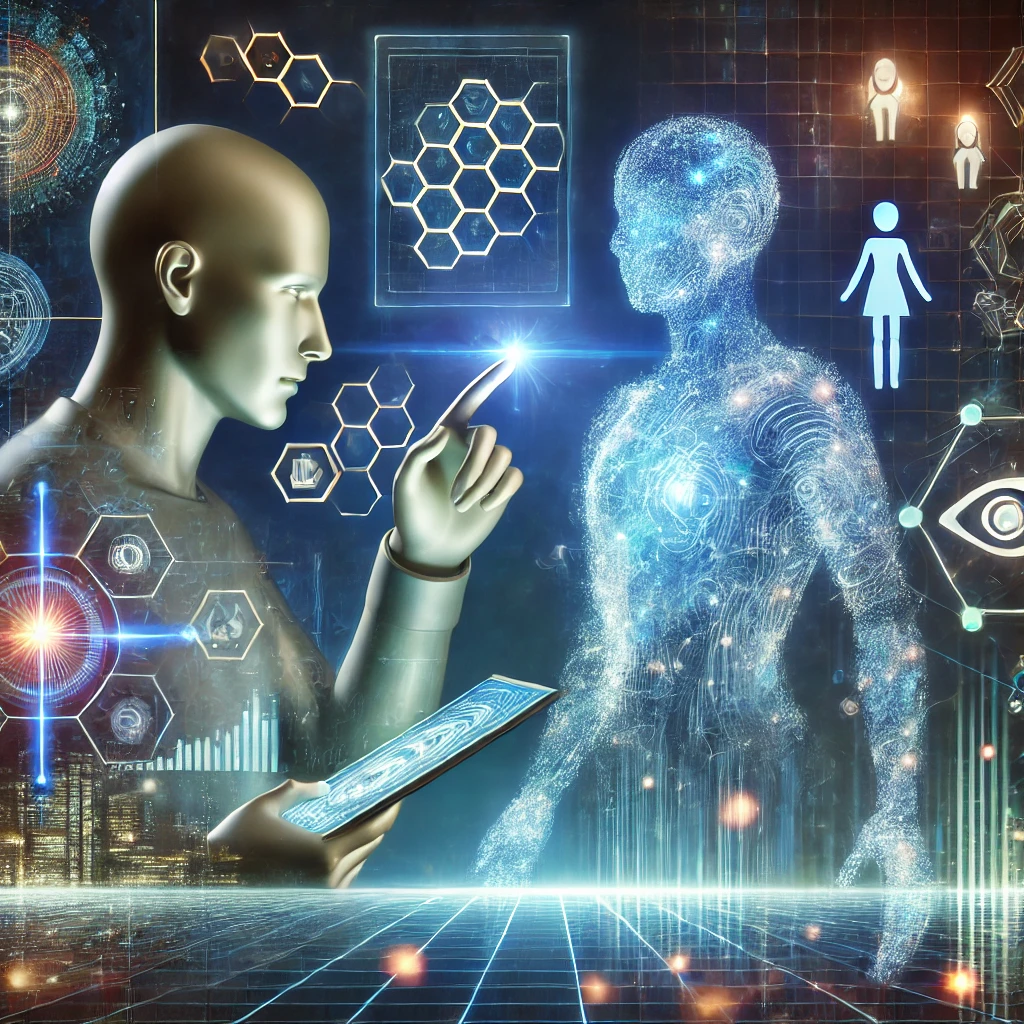
Artificial intelligence (AI) continues to dazzle the world with its ability to perform complex tasks, generate human-like responses, and solve problems across industries. But behind every impressive AI advancement, there’s an often overlooked component that makes these systems smarter: the human trainers who fine-tune and guide these AI models. While AI itself may seem autonomous, much of its intelligence comes from the humans who teach it how to learn, interpret data, and deliver valuable results.
As AI models become more sophisticated, the role of human trainers is evolving to meet the increasing demands of this technology. This is creating a rapidly growing and highly specialized workforce of AI trainers who are crucial to the success of machine learning systems. In the highly competitive AI market, the intelligence of the trainers can be just as important as the intelligence of the machines themselves.
The Role of Human Trainers in AI Development
Training AI involves much more than feeding it raw data. In fact, AI models rely on humans to label data, fine-tune algorithms, and correct errors during the learning process. AI trainers provide real-world context, ensuring that AI systems not only understand how to process information but also how to respond in ways that align with human expectations.
There are several key tasks that human trainers perform in AI development:
- Data Labeling and Annotation: AI models are trained on vast datasets, but these datasets must first be accurately labeled and annotated by humans. For example, in an AI system designed to recognize images, human trainers label each image to teach the AI what it’s seeing. These annotations help the AI identify patterns and features in future images. The more accurately data is labeled, the better the AI will perform.
- Supervised Learning: Human trainers play a critical role in supervised learning, where AI models are trained on labeled datasets. Trainers review the outputs of the AI, making corrections when necessary, so the model can learn from its mistakes. Over time, the AI becomes more accurate as it incorporates human feedback.
- Fine-Tuning: Even after an AI model has been trained on large datasets, human trainers are needed to fine-tune the system. This process involves tweaking the model’s algorithms, refining its performance, and making sure it produces results that are aligned with human judgment. Fine-tuning is particularly important for tasks involving natural language processing, image recognition, and predictive analytics.
- Domain Expertise: For AI systems used in specialized fields like healthcare, finance, or law, human trainers often need domain-specific knowledge. These trainers understand the nuances of the field and help tailor the AI to meet the specific needs of that industry. For instance, in medical AI, trainers with a background in radiology may help the AI model learn how to interpret complex medical scans.
- Ensuring Ethical Outcomes: As AI becomes more integrated into society, there are growing concerns about bias, fairness, and ethics. Human trainers are essential in guiding AI models to ensure that they produce fair and unbiased results. This might involve detecting and removing biased data, as well as ensuring that the AI doesn’t reinforce negative stereotypes or make harmful decisions.
The Expanding Role of Specialized AI Trainers
As AI systems tackle increasingly complex tasks, the demands on human trainers are also growing. In the early days of AI, trainers focused primarily on general tasks like image recognition or language translation. But now, as AI is applied to more specialized fields, trainers need to have deep expertise in the areas where AI is being deployed.
For example, healthcare AI models used to detect diseases from medical scans require trainers with medical backgrounds to ensure the system is making accurate diagnoses. In the financial sector, AI models used to predict market trends or detect fraud are trained by human experts who understand the intricacies of the financial markets.
These specialized trainers are vital because they bring contextual knowledge that is difficult for AI to learn on its own. Without the input of skilled human trainers, AI models would struggle to make nuanced judgments, especially in high-stakes industries where accuracy and reliability are critical.
Human Trainers: The Hidden Competitive Edge
In the fiercely competitive AI landscape, the quality of human trainers can determine how effective an AI model will be. Companies that invest in building a network of highly skilled AI trainers are more likely to produce AI models that outperform their competitors. This is why leading tech companies like Google, Microsoft, and OpenAI are focusing not only on developing better algorithms but also on recruiting and training the best human trainers to refine their models.
These trainers are often experts in machine learning, data science, and specific industries like healthcare or law. By pairing sophisticated AI systems with trainers who have deep domain knowledge, companies can accelerate the development of AI tools that are both powerful and practical.
The Rise of the AI Training Industry
As the need for AI trainers grows, a new industry is emerging around AI training services. Companies that specialize in data annotation, model fine-tuning, and AI consulting are becoming increasingly valuable partners for organizations looking to adopt AI. These companies offer human expertise to ensure that AI systems are trained correctly and perform as expected in real-world scenarios.
In particular, businesses with limited in-house AI expertise are turning to external AI training firms to help them build and refine their models. This trend is driving the creation of a global network of human trainers who are dedicated to advancing the capabilities of AI systems across industries.
Challenges and the Future of Human-AI Collaboration
While human trainers are critical to AI development, the collaboration between humans and AI is not without challenges. As AI models grow more complex, the process of training them becomes increasingly labor-intensive, requiring larger and more diverse teams of trainers. Additionally, there are concerns about bias in AI training—if human trainers introduce biased data or assumptions into the AI model, it can lead to flawed or unfair outcomes.
Looking ahead, the role of human trainers will likely evolve alongside AI itself. As AI models become more autonomous, human trainers may shift from directly teaching AI systems to supervising and correcting their behavior. There’s also the potential for AI to assist in its own training, reducing the workload on human trainers and speeding up the development process.
Despite these challenges, the need for skilled human trainers is only expected to grow as AI becomes more widespread. In the future, AI-human collaboration will be a cornerstone of innovation, with human trainers playing a pivotal role in ensuring that AI systems are ethical, accurate, and aligned with human values.
Conclusion
If your AI seems smarter today than it did yesterday, it’s not just the algorithms and data behind it—it’s the humans guiding its development. AI trainers are the unsung heroes of the AI revolution, providing the expertise, judgment, and contextual knowledge that make AI systems more powerful and practical.
As AI continues to evolve, the importance of human trainers will only increase. Whether it’s teaching AI to understand complex medical diagnoses, helping it navigate financial markets, or ensuring that it produces fair and ethical outcomes, the collaboration between human trainers and AI is driving the future of intelligent technology.
