


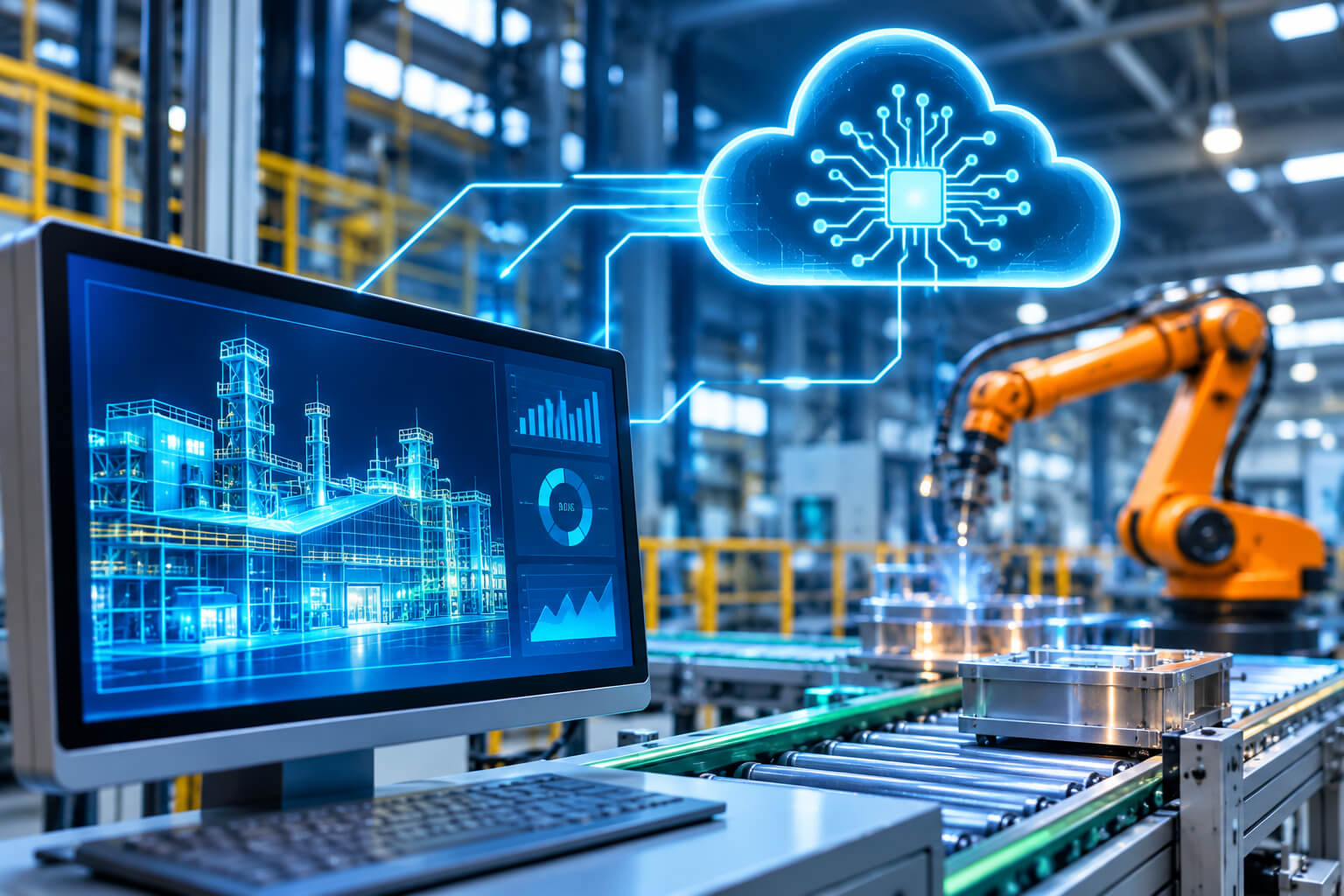
Schneider Electric and Amazon Web Services (AWS) are working together to make industrial artificial intelligence easier to deploy across manufacturing operations. Their latest collaboration combines software-defined automation with AWS cloud and AI technologies, giving manufacturers a way to connect factory equipment with intelligent applications without overhauling existing control systems.
Announced on November 25, 2026, at SPS 2026 in Nuremberg, Germany, the solution focuses on a problem many manufacturers face: moving AI beyond small pilot projects and making it useful across production lines, machines, and multiple facilities.
The companies aim to simplify industrial data integration, reduce engineering complexity, and help businesses introduce AI-powered capabilities while keeping critical factory operations under local control.
Schneider Electric and AWS Address Industrial AI Deployment Challenges
Manufacturers have been experimenting with artificial intelligence for years, particularly in predictive maintenance, energy management, and production optimization. Turning those experiments into reliable systems across entire factories, however, remains a difficult task. Industrial equipment often operates through different software platforms and communication protocols, making it challenging to collect and process information efficiently.
Schneider Electric and AWS are addressing these limitations by connecting industrial automation applications more directly with cloud-based intelligence. Their approach reduces the need for multiple gateways, protocol converters, and custom integration layers that typically complicate industrial technology deployments.
For manufacturers, fewer integration requirements could mean less engineering work and a faster route from collecting operational data to using it in production decisions.
Software-Defined Automation Connects Industrial Systems With AWS
Schneider Electric’s Open Software-Defined Automation technology forms the foundation of the new architecture. Delivered through EcoStruxure Automation Expert, the technology separates industrial control software from the physical hardware traditionally responsible for running it. This allows engineers to develop automation applications that work across compatible computing environments without rebuilding the underlying control logic for every machine.
AWS contributes cloud computing, edge processing, cybersecurity capabilities, and AI development tools. The integration allows manufacturers to apply AI technologies developed with Amazon Bedrock and Amazon SageMaker through advanced EcoStruxure Automation Expert function blocks operating locally on the factory floor.
AWS IoT Greengrass also supports the deployment and management of applications across industrial devices and facilities. By combining these technologies, manufacturers can develop an application for one production environment and adapt it for use elsewhere, potentially reducing repetitive engineering work.
Industrial AI Supports Predictive Maintenance and Energy Optimization
The collaboration focuses on practical applications that manufacturers can introduce into existing operations. Predictive maintenance is one example, allowing businesses to analyze equipment information and identify potential problems before they develop into costly failures. Instead of relying entirely on fixed maintenance schedules, engineering teams could use operational insights to determine when equipment needs attention.
Energy optimization is another area where industrial AI could make a difference. Manufacturing facilities often operate energy-intensive equipment, and understanding consumption patterns across different systems can be difficult. AI-powered analytics could help operators identify inefficient processes and make adjustments that reduce unnecessary energy use.
Production optimization also plays a role. Manufacturers could analyze operational patterns, investigate recurring performance issues, and improve how production resources are managed. The companies present these capabilities as potential benefits of the architecture rather than reporting specific performance improvements achieved by customers.
Manufacturers Can Scale AI Without Replacing Existing Control Systems
One of the more practical aspects of the Schneider Electric and AWS solution is its approach to industrial modernization. Replacing established automation infrastructure can involve significant costs, production interruptions, and operational risks. Many manufacturers cannot simply shut down facilities to introduce an entirely new control architecture.
The new solution allows businesses to modernize gradually while retaining existing systems responsible for critical operations. Time-sensitive processing remains on the factory floor, where industrial equipment requires predictable responses, while AWS services handle broader analytics and AI workloads.
This separation allows manufacturers to explore new intelligent applications without moving every operational function to the cloud. Companies can begin with individual machines or production lines, assess how the technology performs, and expand successful applications across additional facilities.
AWS Cloud and Edge Technology Help Scale Industrial Intelligence
Scaling industrial AI involves more than installing new software. Manufacturers need systems capable of handling different equipment configurations, operational requirements, and computing environments. An AI application that works on one production line may require substantial adjustments before it can operate effectively in another facility.
Schneider Electric and AWS aim to reduce these difficulties through reusable automation applications and a more consistent deployment architecture. AWS provides the computing infrastructure and services needed to support industrial intelligence across multiple locations, while Schneider Electric connects those capabilities with automation systems operating closer to production equipment.
The architecture also preserves local processing for operations that require immediate responses. This matters because industrial facilities cannot depend entirely on cloud connectivity for critical control functions. Keeping these workloads local helps manufacturers maintain operational reliability while extending AI capabilities across their businesses.
Schneider Electric and AWS Push Industrial AI Beyond Pilot Projects
Many manufacturers already understand what artificial intelligence can accomplish in controlled production environments. The bigger challenge is making those capabilities work consistently across entire operations. Different machines, legacy infrastructure, and complicated integration requirements can prevent promising AI projects from progressing beyond their initial testing stages.
Schneider Electric Executive Vice President of Industrial Automation Gwenaelle Huet emphasized the need to connect intelligent insights with real industrial operations. The company’s approach focuses on simplifying deployment while allowing manufacturers to maintain control over essential factory processes.
AWS General Manager of Automotive and Manufacturing Ozgur Tohumcu similarly identified large-scale deployment as a major challenge for industrial AI adoption. Through this collaboration, the companies want to help manufacturers move successful applications from individual production lines into broader operational environments.
Schneider Electric and AWS demonstrated the architecture at SPS 2026, offering manufacturers a closer look at how software-defined automation and cloud intelligence can work together.
What the Collaboration Means for the Future of Smart Manufacturing
The Schneider Electric and AWS partnership reflects a wider change in how industrial companies approach artificial intelligence. Rather than treating AI as a separate technology added to factory operations, manufacturers are exploring ways to connect intelligent applications directly with existing automation systems.
Software-defined automation could make that transition easier by reducing dependence on specific hardware configurations. Combined with cloud and edge technologies, it gives engineering teams more flexibility to develop, manage, and expand industrial applications.
Challenges remain, particularly around cybersecurity, equipment compatibility, workforce skills, and the reliability of industrial networks. Manufacturers will still need to evaluate whether the technology fits their operational requirements before introducing it at scale.
The bigger opportunity lies in making industrial AI repeatable. If manufacturers can deploy successful applications across multiple facilities without rebuilding their integration infrastructure each time, intelligent automation could become a more practical part of everyday production.
For Schneider Electric and AWS, the collaboration represents another effort to bring AI closer to the machines and processes that keep modern factories running.
Sources
- Amazon Press Center – Manufacturers Can Scale Industrial Intelligence Faster With Schneider Electric Open Software-Defined Automation on AWS — November 25, 2026.
- Schneider Electric – Official Website — Company information and industrial automation technologies.
- Amazon Web Services – AWS IoT Greengrass — Edge computing and industrial device software management.
