


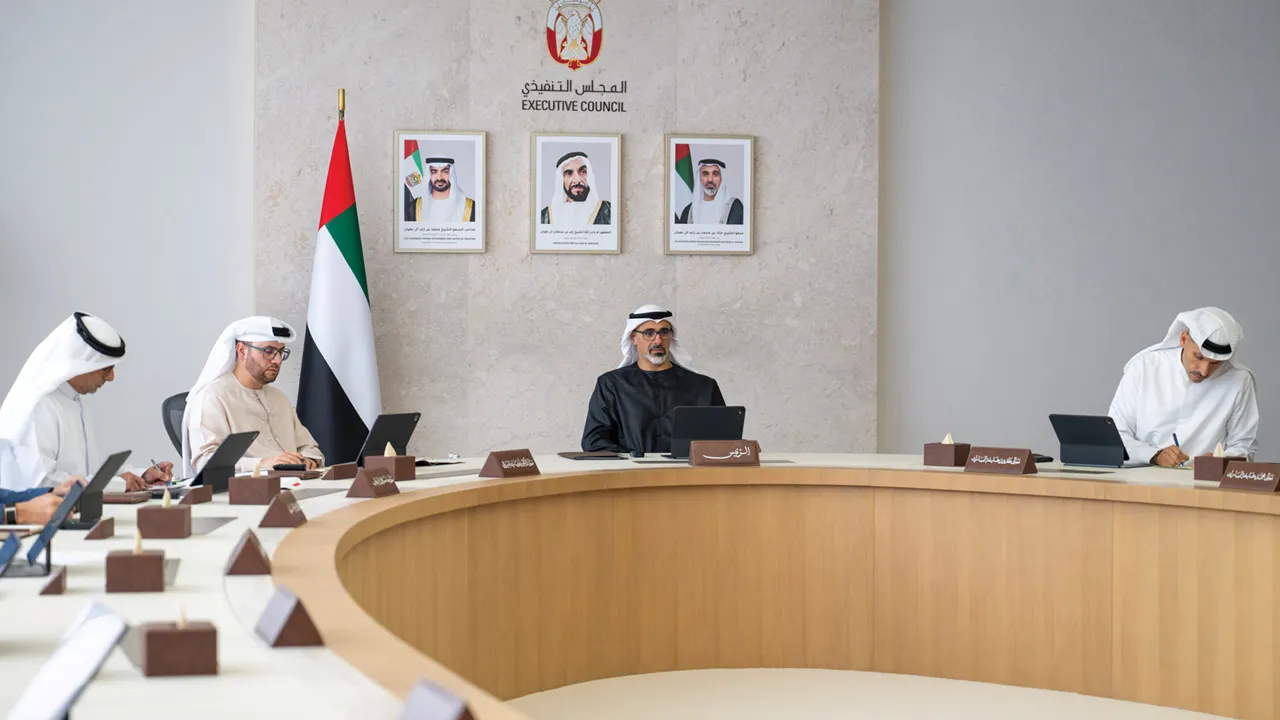
Abu Dhabi has brought agentic AI directly into high-level government decision-making. It did so by using a new artificial intelligence platform during an Executive Council meeting chaired by Crown Prince Sheikh Khaled bin Mohamed bin Zayed Al Nahyan.
The Abu Dhabi Executive Council used the AI Committee System to support discussions, analyse proposals and provide data-driven insights during the meeting. Moreover, the platform is designed to work before, during and after council sessions. This makes AI part of the government workflow rather than a separate tool used only for administrative tasks.
Agentic AI Enters the Abu Dhabi Executive Council
The AI Committee System supports the council by reviewing agenda items and preparing summaries before meetings begin. During discussions, it can surface relevant information, generate questions, check facts and provide analytical support. After the meeting, it can help prepare reports, minutes, recommendations and follow-up actions. The system is designed to assist officials rather than replace them, keeping human decision-makers at the centre of the process.
The AI System Keeps Recommendations Linked to Their Sources
One of the more important features of the platform is traceability. The AI Committee System can keep its analysis and recommendations connected to the original source documents used during the meeting. That gives officials a clearer way to verify information. They can better understand how a recommendation was produced. For government use, where accuracy and accountability matter, that source-linked structure could become just as important as the AI analysis itself.
Abu Dhabi Is Moving From AI Pilots to Government Workflows
The Executive Council deployment fits into Abu Dhabi’s wider effort to become an AI-native government. Under the Government Digital Strategy 2025-2027, the emirate is investing AED13 billion in digital transformation, sovereign cloud infrastructure and AI-powered public services. In fact, Abu Dhabi has already rolled out more than 100 AI use cases across dozens of government entities. So the Executive Council deployment marks another step from experimentation toward daily operational use.
AI Education From Kindergarten to Grade 12 Was Also Reviewed
AI was also part of the meeting agenda beyond government operations. Sheikh Khaled reviewed plans to integrate artificial intelligence education into private school curricula across Abu Dhabi. This will cover students from kindergarten through Grade 12. The initiative aims to introduce AI concepts at an early age while adapting the teaching approach to different age groups. For example, younger students are expected to receive more interactive and hands-on learning. Meanwhile, older students can move into more advanced concepts and practical applications.
Teacher Training Will Be Part of Abu Dhabi’s AI Education Push
The education programme will also focus on teachers, who will need the right skills to introduce AI into classrooms effectively. Training and professional development are expected to help educators understand AI tools, explain core concepts and integrate the technology into existing subjects. That matters because curriculum reform depends heavily on teachers being able to use the technology confidently. It is more than simply adding AI terminology to lesson plans.
AI Is Also Appearing in Abu Dhabi’s Healthcare Plans
Healthcare was another major area discussed during the Executive Council meeting. Sheikh Khaled approved the Abu Dhabi Programme for the Future of Reproductive Health, which will focus on prevention, fertility treatment, genetic screening and advanced reproductive technologies. AI, genomics and precision medicine are expected to play a role in the programme. With this, Abu Dhabi is targeting higher IVF success rates by 2030.
Agentic AI Is Becoming Part of the UAE Government Model
Abu Dhabi’s move also reflects a wider UAE push toward agentic AI in government. Federal initiatives are increasingly exploring systems that can analyse information, coordinate processes and support execution across multiple stages of government work. This goes beyond the earlier generation of public-sector AI tools that mainly focused on chatbots, search functions or basic automation.
Human Oversight Still Matters
The AI Committee System does not mean artificial intelligence is making government decisions independently. The official description presents the platform as a decision-support system that helps officials review information, test assumptions and document outcomes. Human oversight remains central, especially in areas involving policy, public services and strategic decisions. As agentic AI becomes more capable, that balance between automation and human accountability will become increasingly important.
Abu Dhabi’s AI-Native Government Target Is Getting Closer
Abu Dhabi has set 2027 as the target for becoming what it describes as the world’s first fully AI-native government. Its digital strategy is expected to contribute more than AED24 billion to the emirate’s GDP while creating thousands of new jobs. The use of the AI Committee System inside an Executive Council meeting gives a clearer picture of what that target may look like in practice. AI is no longer sitting only in apps and digital services. Instead, it is beginning to move inside the machinery of government itself.
What This Means for Abu Dhabi’s AI Strategy
The significance of the Executive Council deployment is not the novelty of using AI in a meeting. The bigger shift is where the technology is being placed. Abu Dhabi is bringing AI into policy review, executive analysis and government coordination. These areas sit much closer to the centre of public administration. That makes the deployment a useful test of how agentic AI can operate in high-stakes environments where traceability, security and human judgment are essential.
Sources
Abu Dhabi Media Office:
https://www.mediaoffice.abudhabi/en/crown-prince-news/khaled-bin-mohamed-bin-zayed-chairs-first-abu-dhabi-executive-council-meeting-to-use-an-agentic-ai-platform/
Middle East AI News:
https://www.middleeastainews.com/p/abu-dhabi-crown-prince-chairs-first
