


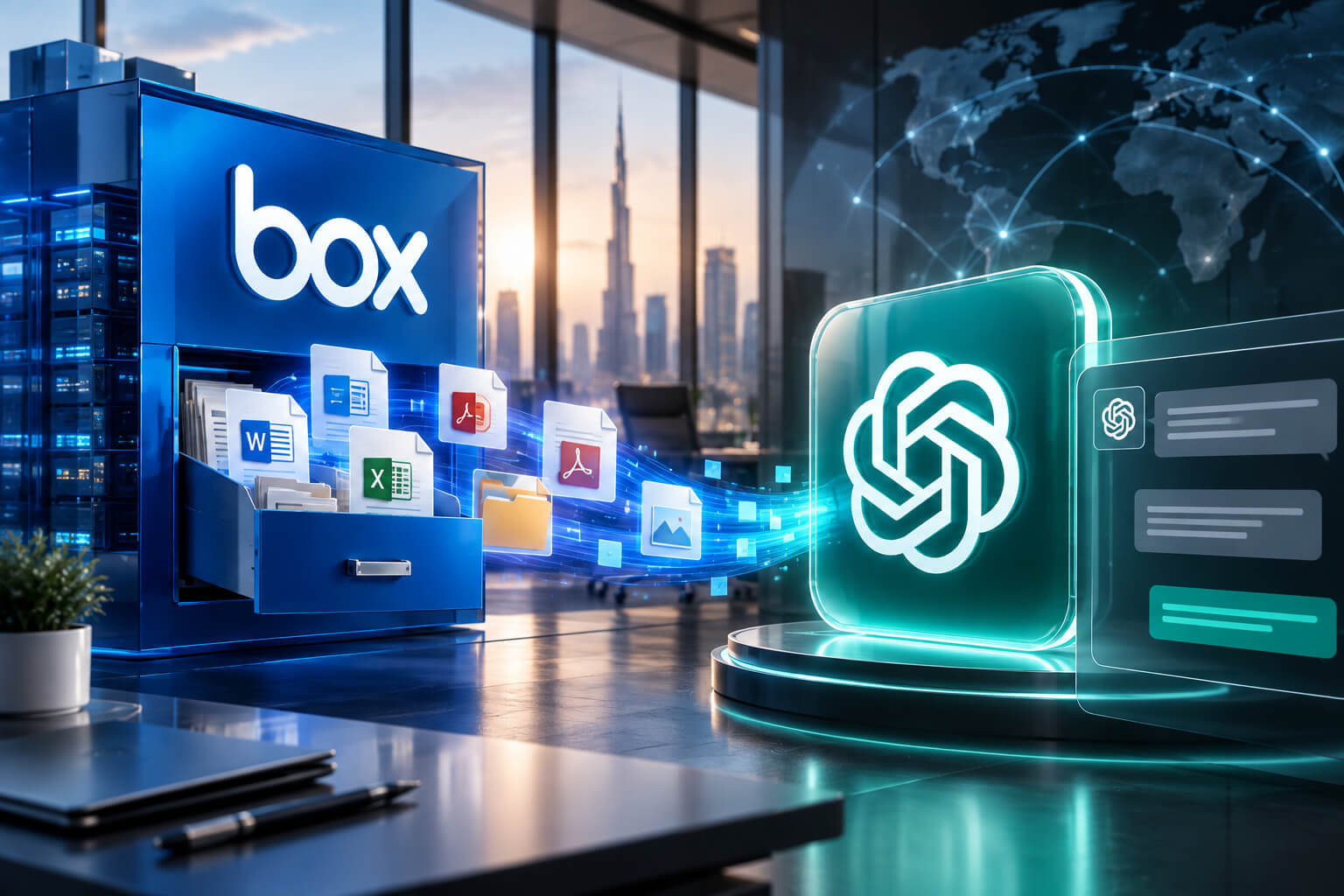
Box is expanding its enterprise AI strategy through a deeper partnership with OpenAI, giving businesses a more direct way to use content stored in Box inside ChatGPT.
The integration connects enterprise documents with AI-assisted work, allowing authorized users to search, reference, analyze, and work with Box content without constantly switching between platforms. The goal is to make company knowledge more useful inside AI workflows while keeping Box permissions, governance, and access controls in place.
Box Content Is Coming Directly Into ChatGPT
Enterprise information rarely lives in one neat system. It is usually spread across contracts, presentations, reports, policies, research documents, project files, and other internal content. The new Box and OpenAI integration is designed to make that information easier to use inside ChatGPT by allowing users to browse their Box folders, search for relevant documents, select files, and bring approved content directly into conversations.
This removes several steps from a typical workflow. Instead of finding a file in Box, downloading it, uploading it into another application, and then asking questions about it, employees can work with the content more directly from within ChatGPT.
ChatGPT Can Use Box Files as Working Context
The integration is not limited to simply finding documents. Users can reference specific Box files as context inside ChatGPT conversations and projects, giving the AI access to the exact information needed for a particular task.
That could make ChatGPT more useful for enterprise work because the system can respond based on relevant business materials rather than relying only on a general prompt. Employees could work with company reports, contracts, policies, research files, presentations, or planning documents while keeping the information tied to its original source in Box.
Box Notes Can Become Part of the AI Workflow
Box is also bringing Box Notes more closely into ChatGPT workflows. Users can work with Box Notes while interacting with AI, making it easier to move from research and analysis into drafting, collaboration, and documentation.
This could be useful for teams that already rely on Box Notes for project planning, internal documentation, meeting notes, and collaborative writing. Instead of treating AI as a separate tool, the integration makes it part of the existing content workflow.
Box MCP Server Expands What AI Can Do With Enterprise Content
A major part of the partnership involves Box’s Model Context Protocol, or MCP, server. MCP is becoming an important layer for connecting AI systems with external tools, applications, and information sources.
Through Box’s MCP capabilities, supported AI systems can securely reference, extract, update, and create content. That opens the door to workflows where AI does more than summarize a document. An AI agent could pull information from approved files, analyze the content, update documents, and continue working across multiple steps while remaining connected to Box.
Enterprise AI Is Moving Beyond Simple Document Summaries
Many early enterprise AI tools focused heavily on summarizing files or answering questions about uploaded documents. The Box and OpenAI partnership points toward a broader model where AI becomes more actively involved in business workflows.
Instead of manually feeding information into an AI system every time, businesses can connect the AI to existing content repositories. That gives the model access to more useful context and reduces the friction involved in moving information between applications.
For employees, this could mean spending less time searching for files and more time using the information inside them.
Box Permissions Will Continue to Control Access
Giving an AI system access to enterprise content creates an immediate security question: who is allowed to see which files? Box says its existing permissions and access controls will continue to apply when users access content through ChatGPT.
This means employees should only be able to use Box information they already have permission to access. Sensitive files remain governed through Box rather than becoming openly available simply because an AI tool is connected.
That control is particularly important for organizations handling confidential contracts, financial records, employee information, intellectual property, research, and other restricted business data.
Legal Teams Could Use AI Across Contracts and Policies
Legal departments are one area where the Box and OpenAI integration could have practical value. Lawyers and legal operations teams often work across contracts, legal playbooks, compliance documents, policies, and supporting materials stored in enterprise content systems.
With Box connected to ChatGPT, authorized users could bring selected legal documents into an AI-assisted workflow, compare provisions, review language, identify potential issues, and develop summaries without manually moving files between multiple applications.
The AI would not replace legal review, but it could reduce the amount of repetitive document handling involved in early-stage analysis.
Finance Teams Could Analyze Reports and Forecasts Faster
Finance teams also deal with large volumes of structured and unstructured information, including quarterly reports, forecasts, budgets, management updates, spreadsheets, and internal presentations.
By connecting Box content with ChatGPT, financial analysts could reference relevant files while exploring trends, preparing internal reports, or comparing results across reporting periods. The value comes from giving the AI direct context rather than forcing analysts to repeatedly copy and paste information into prompts.
This type of workflow could make AI more useful for internal financial research and reporting, particularly in organizations that already use Box as a central content platform.
Researchers Could Connect AI With Existing Knowledge Repositories
Research teams often work with large collections of studies, reports, protocols, technical documents, and supporting materials. Finding the right information across those files can take considerable time before the actual analysis even starts.
With Box integrated into ChatGPT, authorized researchers could reference relevant documents directly and use AI to compare findings, extract information, identify patterns, or prepare early drafts based on approved source material.
That approach could be useful across industries including healthcare, life sciences, technology, professional services, and academic research.
Media and Production Teams Could Use AI Across Project Files
Media and production teams may also benefit from tighter connections between AI and enterprise content. Production workflows often involve scripts, schedules, budgets, creative briefs, research documents, and planning materials stored across shared folders.
Allowing ChatGPT to work with those files could make it easier for teams to summarize project information, compare drafts, prepare production notes, or retrieve specific details from existing material.
For organizations managing large volumes of creative content, the ability to work with files in place could be more useful than repeatedly uploading individual documents into separate AI tools.
Box and OpenAI Already Have an Existing AI Relationship
The partnership builds on an existing relationship between Box and OpenAI. Box customers can already use OpenAI models through Box AI to analyze information and generate content based on files stored on the platform.
Developers have also been able to build AI applications that connect OpenAI models with Box content. The latest ChatGPT integration brings those capabilities closer to everyday users by making Box content available directly inside the ChatGPT experience.
That shift could make enterprise AI adoption easier because employees do not necessarily need a custom-built application to start working with internal content through AI.
The Real Value of Enterprise AI Is Context
The partnership highlights a growing reality in enterprise AI: model capability alone is not enough. An AI system becomes far more useful when it can securely access the right company information at the right time.
Businesses have accumulated years of internal knowledge inside cloud storage systems, collaboration platforms, document repositories, and enterprise applications. AI companies increasingly need access to those information layers if they want their tools to become part of everyday business operations.
Box sits directly in that content layer, which gives the company an important role as enterprises look for ways to connect AI with trusted internal information.
Enterprise Content Is Becoming Part of the AI Infrastructure
The Box and OpenAI partnership also reflects a wider shift across the software industry. Content-management platforms are no longer just places where companies store documents. They are becoming data and context layers for AI systems.
As businesses adopt AI agents and more advanced assistants, these systems will need secure ways to retrieve information, understand permissions, use approved documents, and potentially take actions across enterprise software.
That makes integrations between AI platforms and content systems increasingly important. The next phase of enterprise AI may depend less on isolated chatbot features and more on how effectively models can connect with the systems companies already use.
Box Gives OpenAI Another Route Into Enterprise Workflows
For OpenAI, the Box partnership strengthens ChatGPT’s position as an enterprise work platform. Connecting the assistant to business content gives users more reasons to remain inside ChatGPT while completing research, analysis, writing, and knowledge-based tasks.
For Box, the integration helps ensure its content platform remains central as companies move toward AI-driven work. Instead of AI replacing content-management systems, Box is positioning itself as part of the infrastructure that feeds trusted information into those systems.
Both companies benefit from making the boundary between enterprise content and generative AI less visible to the user.
Availability Brings the Integration to Box Customers
Box said its ChatGPT integration is generally available to Box customers, while OpenAI is making the capability available across eligible paid ChatGPT offerings.
The rollout gives organizations already using Box another way to introduce AI into existing workflows without moving their content into a completely separate environment.
More importantly, it shows where enterprise AI is heading. The focus is shifting from asking a chatbot isolated questions toward giving AI secure access to the documents, context, and systems that actually run a business.
Sources
Business Wire — Box Partners with OpenAI to Reimagine How AI and Content Power Enterprise Work
https://www.businesswire.com/news/home/20260909093837/en/Box-Partners-with-OpenAI-to-Reimagine-How-AI-and-Content-Power-Enterprise-Work
Box — Official Website
https://www.box.com/
OpenAI — Official Website
https://openai.com/
