


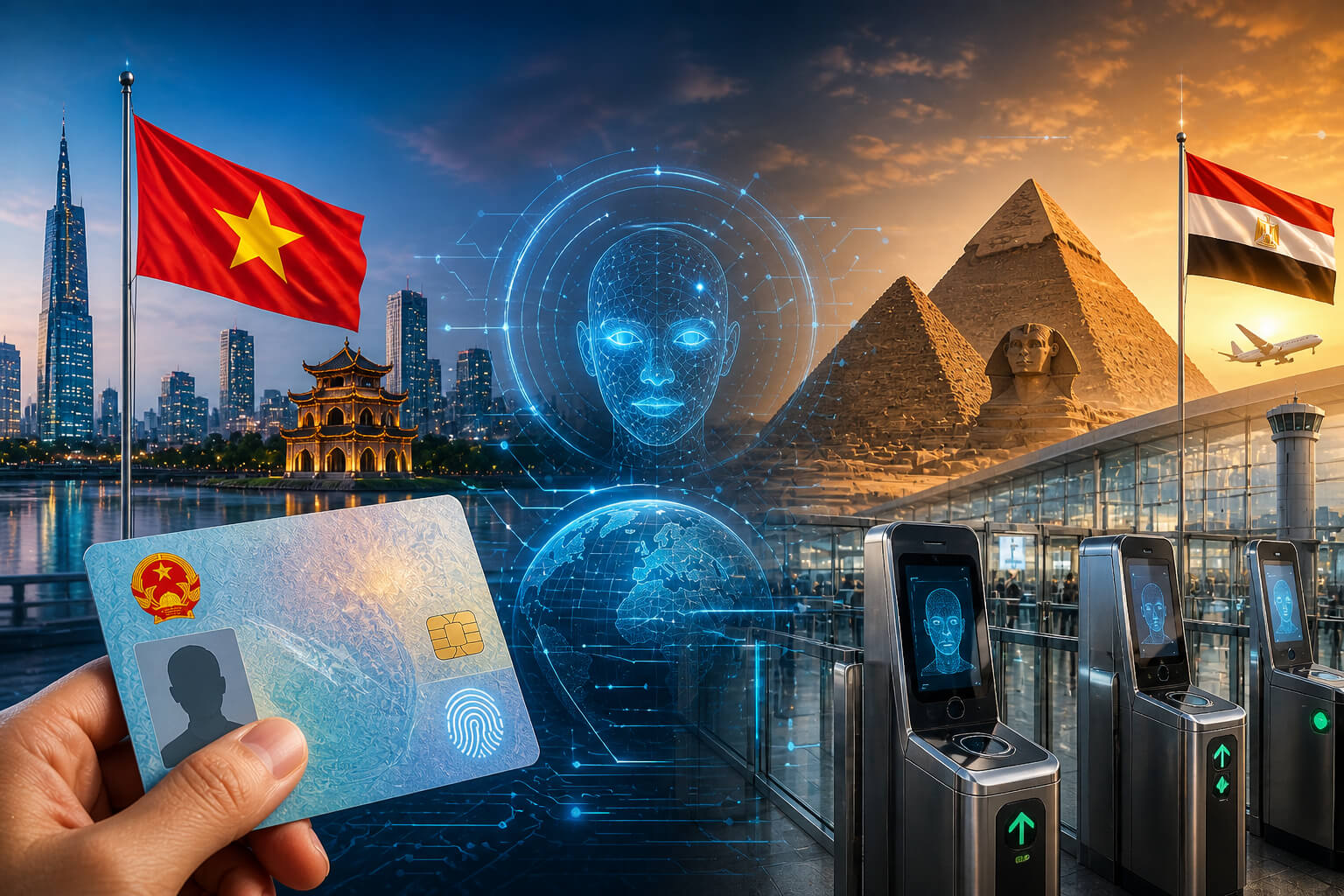
Vietnam and Egypt are becoming leaders in introducing innovations related to artificial intelligence in transforming the way people travel from country to country. Specifically, these two countries have implemented several changes related to introducing smart ID and airport technologies. Recent advances in AI travel smart ID systems have played a significant role in these transformations.
How are the current travel processes going to change?
These two countries are already implementing changes and abandoning some traditional practices related to traveler identification.
For instance, in Vietnam, travelers can utilize their digital IDs with facial recognition technology. Such a system will allow completing various procedures such as security checks much faster compared to traditional systems. Now, people used to spend 30 minutes in these lines; however, thanks to the introduction of digital IDs and face recognition technology, these procedures should take no more than several minutes.
Also, Egypt decided to eliminate all the paperwork associated with traveler identification procedures. Namely, travelers can now provide all the necessary information to the authorities online instead of filling out numerous paper documents.
Biometric Airports: a New Experience for Every Traveler
Another innovation implemented in Vietnam is associated with travelers’ need to undergo biometric check-in. The use of biometric systems allows completing all the procedures automatically; thus, there is no need for physical document presentation anymore. This innovation means that travelers:
Are going to spend less time in lines;
Do not need to provide any paper-based documents;
Are protected due to AI-powered identity check;
Also, Egypt decided to upgrade its airports by adopting various innovations, including automated baggage checking and smart airport technologies similar to those seen in global hubs like Dubai International Airport and Changi Airport.
How Are the Airports Upgraded in These Countries?
Apart from implementing new ID solutions, both countries continue improving airport capacity and introducing innovations related to their infrastructure.
Specifically, Egypt plans to construct additional facilities within existing airports and introduce new advanced systems for better management.
Vietnam introduced smart IDs and AI not only in the context of airport improvements but also as a part of the general smart transportation systems transformation.
What Will Happen to Global Travelers in the Future?
Thus, it becomes obvious that AI-powered ID systems transform travel. For example, travelers can expect the following changes in the near future:
They are going to spend little time waiting at airports;
They are going to use biometrics as a unique identifier at airports;
Travels between countries will become much easier;
There will be more opportunities for personalization through AI-powered personalization.
Conclusion
It goes without saying that both Vietnam and Egypt are on the edge of innovation adoption related to aviation. Thus, the future looks promising.
For more Breaking AI news visit: https://breakingai.news
