


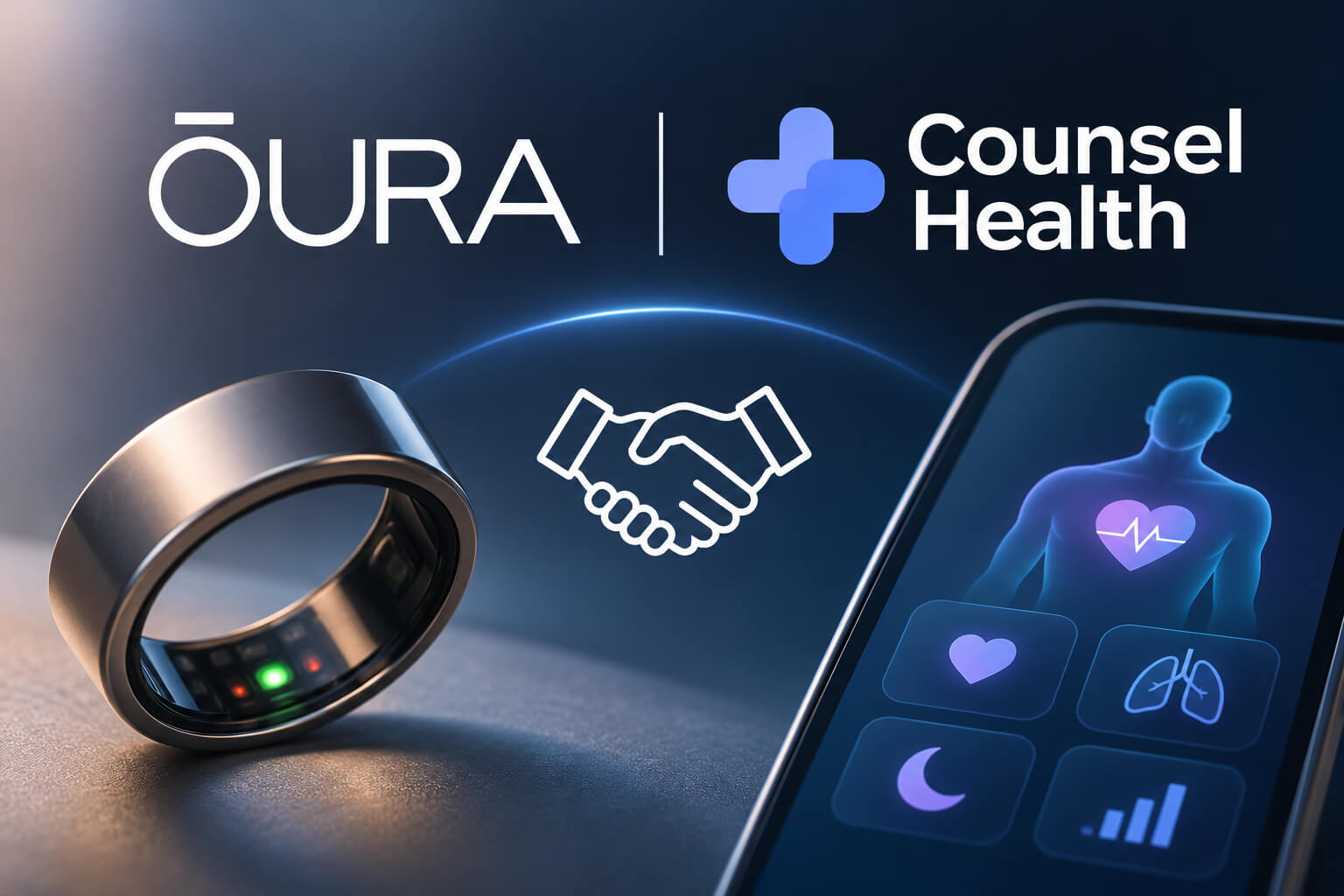
Smart ring maker Oura is taking a much bigger step into healthcare. The company has announced plans to acquire AI-powered primary care startup Counsel Health for $625 million, a deal that could change how millions of users interact with their personal health data.
Announced on November 10, 2026, the acquisition brings together Oura’s wearable technology and Counsel Health’s AI-assisted medical services. The goal is to move beyond tracking sleep, heart rate, and other biometric signals and help users understand what those measurements mean for their health.
It’s an ambitious move for a company best known for its smart rings. Oura already collects a wealth of physiological information, but turning that information into meaningful medical guidance has remained a challenge across the wearable technology industry.
With Counsel Health, Oura wants to close that gap by combining artificial intelligence with access to licensed physicians.
Oura Moves Beyond Wearable Health Tracking Into AI-Powered Medical Care
Oura has spent years building technology that helps people monitor their health through continuous biometric tracking. Its smart rings measure sleep quality, heart rate variability, body temperature trends, physical activity, and other physiological signals. These insights can help users identify changes in their bodies, but they don’t always explain what action someone should take.
The acquisition of Counsel Health could change that experience. Instead of simply receiving a notification about an unusual health trend, Oura users may eventually be able to discuss their concerns through an AI-powered medical platform and connect with a physician when necessary.
The two companies already established a partnership earlier in 2026, giving Oura an opportunity to introduce Counsel’s healthcare services to its members before pursuing the acquisition. Bringing Counsel directly into the business would allow Oura to integrate those capabilities more deeply into its existing ecosystem.
For Oura, the bigger opportunity lies in connecting everyday health monitoring with professional medical guidance, rather than treating wearable data as an isolated collection of statistics.
Counsel Health Combines Medical AI With Licensed Physicians
Counsel Health has developed an AI-native primary care platform designed to make medical assistance more accessible through digital conversations. Users can describe symptoms, ask health-related questions, and receive guidance supported by artificial intelligence. When a situation requires clinical expertise, the platform can connect patients with licensed physicians.
The technology is designed to assist doctors rather than replace them. Counsel uses specialized AI systems to organize medical histories, review relevant clinical information, retrieve guidelines, and help identify situations requiring additional attention. Physicians remain responsible for clinical decisions, including diagnoses, prescriptions, and referrals.
That human involvement is particularly important as healthcare companies experiment with increasingly capable AI systems. Medical advice carries risks that go far beyond those associated with ordinary chatbot interactions, especially when symptoms are complex or potentially serious.
Counsel’s approach attempts to balance the convenience of conversational AI with professional medical oversight. For Oura, that combination offers a way to make its wearable insights more actionable without relying entirely on automated recommendations.
Oura Targets Preventive Care, Acute Conditions, and Long-Term Health Management
The combined platform is expected to focus on three areas of healthcare: preventive care, acute medical needs, and chronic condition management. Each represents a potential application for continuous biometric monitoring supported by AI-assisted medical services.
Preventive care could become particularly valuable because wearable devices collect information between traditional medical appointments. Changes in sleep patterns, resting heart rate, or temperature trends may encourage users to seek professional advice, although such measurements cannot independently establish a medical diagnosis.
For everyday medical concerns, Counsel’s conversational platform could help users obtain guidance without immediately arranging an in-person consultation. Patients may be able to discuss symptoms, ask medication-related questions, or determine whether further evaluation is necessary.
Long-term condition management offers another opportunity. Continuous monitoring could provide useful context for conversations about cardiometabolic health, reproductive health, and other ongoing medical concerns. The effectiveness of these applications will depend on clinical validation, appropriate medical oversight, and how accurately the technology interprets individual health information.
Oura’s ring remains a wellness device rather than a replacement for professional diagnosis or treatment. The acquisition is intended to connect its health insights with clinical services, not turn the ring itself into a doctor.
Oura Reports Strong Revenue Growth Ahead of $625 Million Acquisition
The acquisition comes during a particularly strong period for Oura. The company reported approximately $1.75 billion in preliminary revenue for fiscal 2026, representing a 92% increase from the previous year. Its fiscal fourth-quarter revenue reached $533 million, up 153% year over year, while adjusted EBITDA totaled $87 million. These results remain unaudited, but they show how quickly Oura’s wearable health business has expanded. Counsel Health+1
Oura now has more than six million members worldwide, providing a substantial audience for its growing healthcare services. The company has also postponed its planned initial public offering amid market uncertainty, making the acquisition an important strategic investment as it considers its next stage of growth. Spending $625 million in cash on Counsel Health signals that Oura sees its future extending well beyond hardware sales. AI-powered healthcare services could become an increasingly important part of how the company attracts members, retains subscribers, and competes in the digital health market.
Early Results Suggest Oura Users Value AI-Assisted Healthcare
Oura’s existing partnership with Counsel Health has already generated positive feedback from members. According to the company, more than 90% of surveyed users who accessed Counsel said their Oura data helped them receive better care. Members who consulted a Counsel physician rated their experience an average of 4.6 out of 5, suggesting that access to medical professionals alongside wearable health information is appealing to users. Counsel Health+1
Those numbers are encouraging, although they don’t establish that the platform improves medical outcomes. User satisfaction and clinical effectiveness are different measures, and broader evidence will be needed to determine whether AI-assisted healthcare can consistently improve treatment decisions, reduce unnecessary appointments, or lower costs. For now, the feedback provides Oura with an early indication that members want more than health statistics. They want practical guidance about what to do with them.
Counsel Health Will Continue Serving Hospitals, Insurers, and Employers
Counsel Health’s business extends beyond individual consumers. The startup already works with healthcare organizations, insurance providers, employers, and digital health companies that use its AI-powered medical services. Following the acquisition, Counsel plans to maintain and expand those partnerships, giving Oura access to potential customers outside its existing smart ring membership base. Counsel Health+1
This enterprise business could become an important part of Oura’s expansion. Healthcare organizations are increasingly exploring AI tools that can improve access to medical advice while reducing administrative pressure on clinicians. Counsel’s platform offers a model in which AI handles portions of the initial patient interaction while physicians remain available for more complex needs. Whether that model can deliver meaningful savings at scale remains to be seen, but it gives Oura another route into the healthcare industry without depending entirely on consumer hardware purchases.
Oura’s Acquisition Highlights Growing Competition in AI Healthcare
The $625 million deal reflects a broader shift in how technology companies approach digital health. Wearable devices have become increasingly capable of monitoring physiological signals, while generative AI has made conversational health assistance more accessible. Combining the two creates opportunities for personalized services that respond to a user’s health history and changing biometric information.
The difficult part is making those services medically reliable. AI systems can produce inaccurate recommendations, misunderstand symptoms, or overlook important context. Wearable measurements can also generate false alarms or fail to capture conditions that require clinical testing. Oura and Counsel will need to demonstrate that their technology can support responsible medical decision-making while protecting sensitive patient information. The presence of licensed physicians provides an important safeguard, but it doesn’t eliminate the need for ongoing clinical evaluation.
What the Oura and Counsel Health Deal Means for the Future of Wearable AI
Oura’s acquisition of Counsel Health could mark an important turning point for wearable technology. Smart rings and fitness trackers have traditionally focused on collecting data and presenting insights through mobile applications. Oura now wants to connect that information directly with medical services, potentially making its platform useful beyond daily wellness monitoring.
The acquisition is expected to close before the end of 2026, subject to customary closing conditions. Counsel’s medical AI technology, physician network, and existing healthcare partnerships could help Oura build a more comprehensive health platform. The real test will come after integration, when the company must show that combining biometric monitoring with AI-assisted clinical care delivers measurable benefits.
For the wider AI healthcare industry, the deal raises an interesting possibility. The next generation of wearable devices may not compete solely on sensors, battery life, or tracking accuracy. Their value could increasingly depend on what happens after the data is collected—and whether users can turn those insights into better healthcare decisions.
Sources
1. TechCrunch: Oura to Acquire AI-Native Primary Care Startup Counsel Health for $625M
2. Counsel Health – Official Announcement: Oura to Acquire Counsel Health, Advancing Vision for More Connected, Personalized Healthcare
3. STAT News: Oura to Acquire Counsel Health for $625 Million, a Big Bet on AI Care
4. The Verge: Oura Is Acquiring Medical AI Chatbot Startup Counsel Health
