


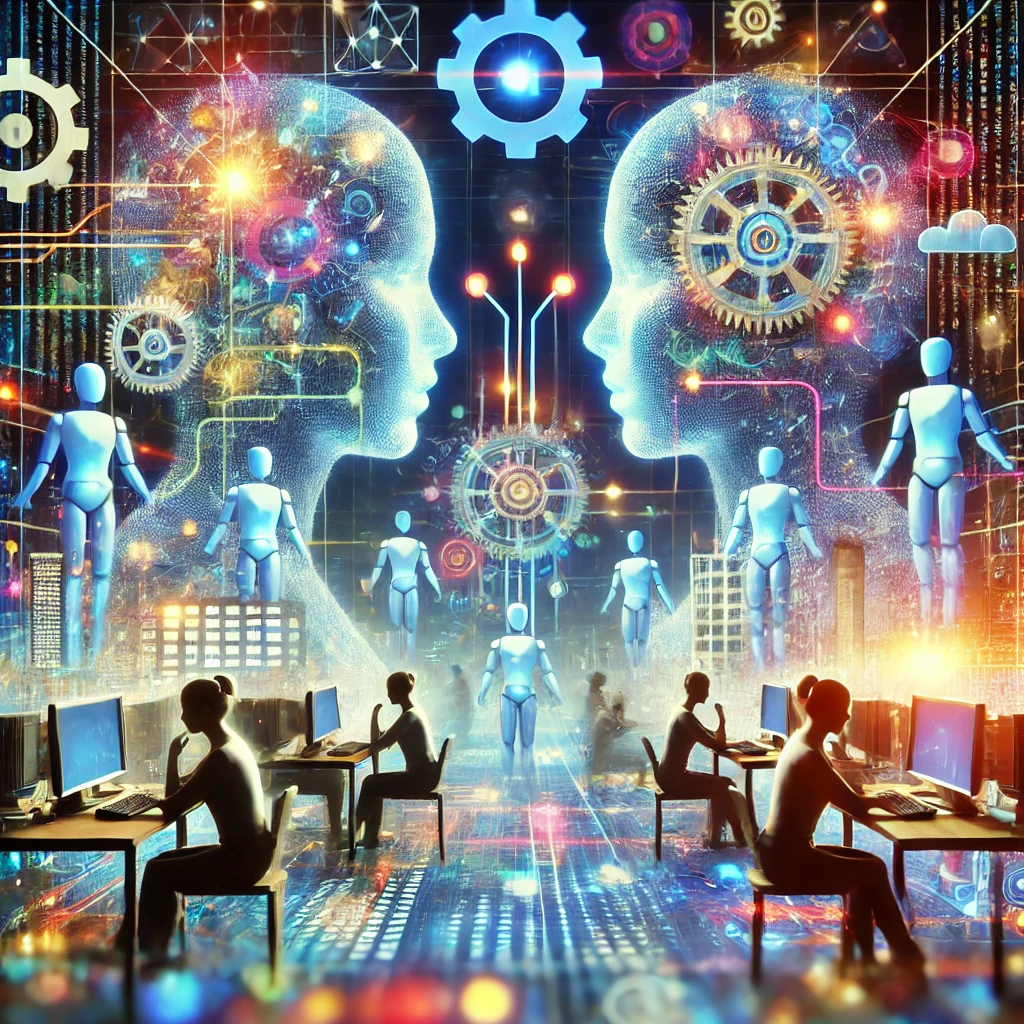
The rise of artificial intelligence (AI) has ushered in a new era of innovation, and the workplace is no exception. As companies increasingly adopt digital agents—AI-powered systems capable of performing complex tasks—many industries are undergoing profound transformations. These AI agents are not just tools; they represent a new kind of workforce, one that will fundamentally redefine the nature of work, the roles of human employees, and the future of business operations.
What Are AI Digital Agents?
AI digital agents are advanced software systems that can autonomously carry out a wide range of tasks, from data analysis and customer service to supply chain management and decision-making processes. Unlike traditional software, which requires human input to perform specific actions, AI agents leverage machine learning, natural language processing, and predictive analytics to learn, adapt, and operate independently. They are capable of handling both routine and complex tasks, often surpassing human efficiency and accuracy.
Examples of AI digital agents include:
- Chatbots: AI-driven systems that handle customer inquiries, troubleshoot issues, and provide product recommendations in real time.
- Robotic Process Automation (RPA): AI systems that automate repetitive tasks such as data entry, order processing, and compliance checks.
- Virtual Assistants: Digital agents that can manage calendars, schedule meetings, and assist with email correspondence, allowing human workers to focus on more strategic tasks.
AI Agents as a New Workforce
As AI continues to evolve, digital agents are being integrated into everyday business processes, acting as a new kind of workforce. These AI agents work alongside human employees, augmenting their capabilities by taking over mundane or time-consuming tasks, thereby freeing up humans for more creative and decision-centric roles. This shift is transforming work in several key ways:
- Automation of Routine Tasks: AI digital agents are capable of automating repetitive tasks such as processing invoices, managing payroll, and monitoring inventory. This enables companies to reduce the time and cost associated with manual labor, while improving accuracy and consistency. Human workers are thus freed from monotonous tasks and can focus on higher-value activities, such as strategic planning, innovation, and relationship building.
- Enhanced Decision-Making: AI agents can analyze vast amounts of data at speeds no human could match. They can provide insights, predictions, and recommendations to support business decisions. For example, AI systems can identify market trends, optimize supply chains, and detect potential risks before they materialize. This means human managers and executives can make data-driven decisions faster and with greater confidence, reshaping the decision-making process across industries.
- Personalized Customer Experiences: AI-powered digital agents are revolutionizing customer service by providing highly personalized and efficient experiences. Chatbots and virtual assistants can handle customer inquiries 24/7, offering instant responses and tailored recommendations. These agents learn from customer interactions, improving their responses over time and providing a seamless, AI-driven experience that is increasingly indistinguishable from human service.
- Collaboration Between Humans and AI: In the modern workplace, human employees are increasingly collaborating with AI agents, creating a hybrid workforce. Rather than replacing humans, AI digital agents complement their skills. For instance, in creative industries, AI can assist in generating ideas or optimizing workflows, while human workers focus on creative direction and innovation. This collaboration enables businesses to achieve new levels of productivity and efficiency.
The Impact on Jobs and Employment
As AI digital agents take on more tasks traditionally performed by humans, concerns about job displacement have emerged. While some roles may be automated, experts argue that AI will redefine rather than replace the human workforce. Jobs that involve repetitive, predictable tasks are most vulnerable to automation, but these roles are expected to evolve as new opportunities arise in areas that require human creativity, emotional intelligence, and complex problem-solving.
Several trends are emerging in the AI-driven workplace:
- Reskilling and Upskilling: As AI takes over routine tasks, there will be an increasing need for employees to acquire new skills. Workers will need to develop technical expertise in managing and working alongside AI systems, as well as soft skills like leadership, creativity, and critical thinking. Companies are already investing in reskilling programs to help employees transition into new roles that leverage AI technologies.
- AI Augmentation: Rather than being replaced by AI, many jobs will be augmented by it. For example, AI agents can assist doctors by analyzing medical images and patient data, but the human touch in diagnosing, communicating, and treating patients remains irreplaceable. Similarly, in legal professions, AI can help process legal documents and identify key information, but human lawyers are still needed to interpret, negotiate, and apply this information.
- New Job Categories: The integration of AI into the workforce will also create entirely new job categories. For instance, companies will need AI specialists, data scientists, and AI ethicists to manage, program, and oversee the ethical use of AI systems. Additionally, human oversight will be required to ensure that AI systems are functioning properly and that they adhere to ethical standards.
AI and the Future of Work Culture
AI digital agents are not only changing the nature of tasks but also reshaping workplace culture. With AI taking over routine responsibilities, employees are likely to experience a shift toward more flexible, creative, and strategic roles. The rise of AI could also result in more remote and asynchronous work environments, as digital agents can operate autonomously without the need for constant supervision or a physical presence.
AI-driven workplaces may also foster a culture of continuous learning and innovation. As AI tools evolve, businesses will need to stay on the cutting edge of technological advancements, encouraging employees to adopt a mindset of lifelong learning and adaptability. Workers who are able to embrace new technologies and collaborate effectively with AI will be essential to the success of future organizations.
Challenges and Ethical Considerations
While AI offers tremendous potential to revolutionize the workforce, it also presents significant challenges. Ethical concerns about privacy, bias, and accountability must be addressed as AI becomes more integrated into decision-making processes. AI agents, for example, are only as good as the data they are trained on, and biased data can lead to biased outcomes.
Moreover, businesses must consider the potential psychological impact on employees who may feel displaced or devalued by AI systems. Transparent communication about how AI will be used, combined with programs that emphasize the value of human skills, will be critical in fostering a positive work environment.
Conclusion: A New Workforce for a New Era
AI digital agents represent the future of the workforce, bringing about unprecedented changes in how businesses operate and how employees work. Rather than viewing AI as a threat, companies and workers alike can see AI as an opportunity—one that allows humans to focus on creative, strategic, and impactful work while AI handles the repetitive, data-driven tasks.
By embracing AI and preparing for its integration, businesses can unlock new levels of efficiency and innovation, ultimately redefining what work itself means in the digital age. As digital agents become increasingly capable, the relationship between human workers and AI will shape the future of industries across the globe.
