


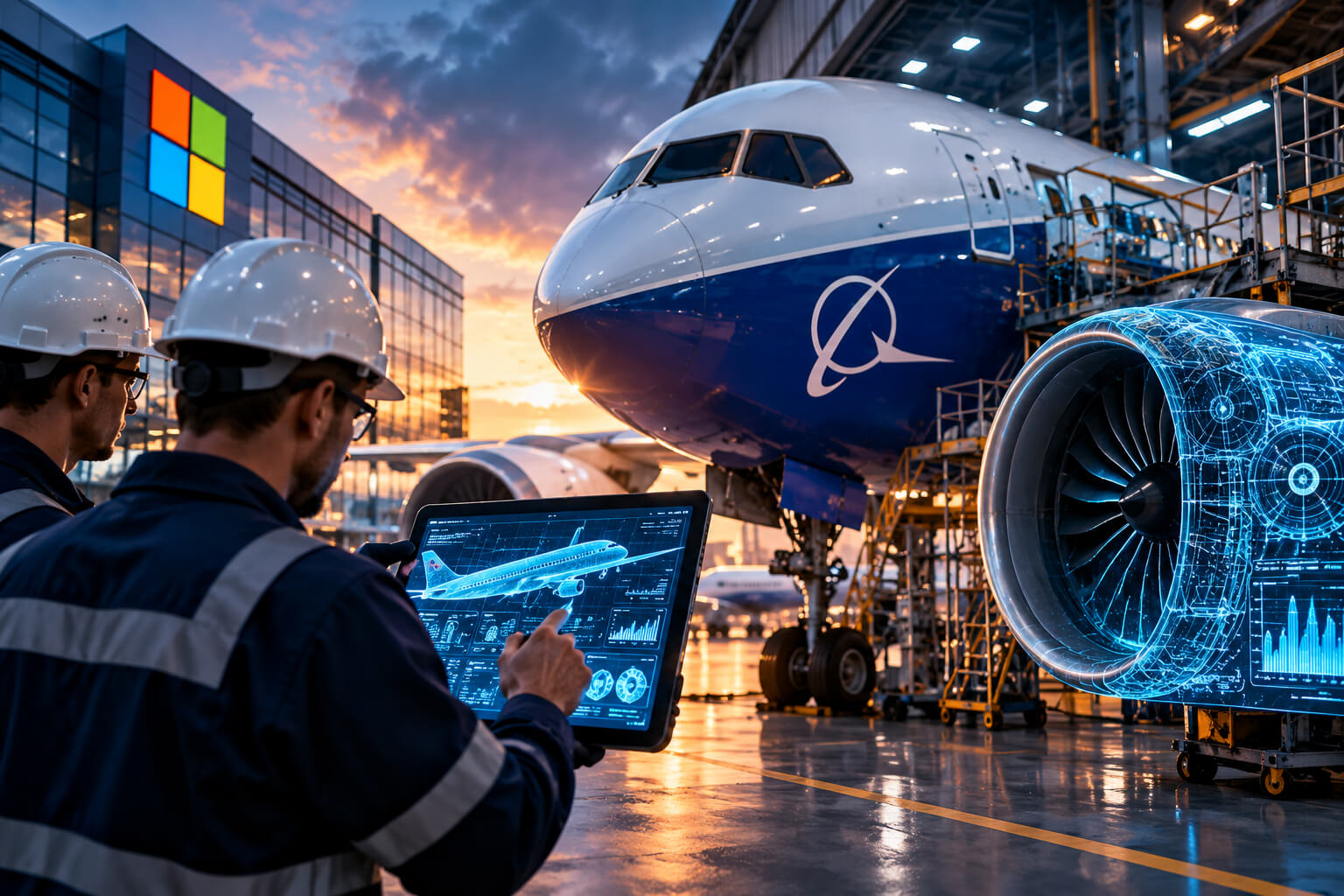
Boeing and Microsoft are turning to artificial intelligence to address one of aviation’s most expensive challenges: keeping aircraft flying while maintenance costs continue to rise.
The aerospace manufacturer has introduced Dataliner, an AI-powered aviation data platform developed with Microsoft. The technology aims to help airlines identify potential aircraft problems earlier, improve maintenance planning and make better use of the enormous amounts of operational information generated by modern fleets.
The announcement comes as airlines struggle with aging aircraft, supply chain shortages and expensive repairs. Industry estimates suggest that keeping older aircraft in service could add approximately $3.1 billion in maintenance expenses, putting further pressure on operators already dealing with delayed aircraft deliveries.
For Boeing and Microsoft, the opportunity goes beyond reducing repair bills. They want to change how airlines use aircraft data to make everyday operational decisions.
Boeing Dataliner Brings AI Into Aircraft Maintenance
Modern aircraft generate vast amounts of technical information during every flight. Engine performance, component conditions, maintenance histories and operational records all provide valuable clues about an aircraft’s health. The challenge is making sense of that information before something goes wrong.
Boeing’s Dataliner platform aims to bring those scattered data sources together, allowing airlines to examine maintenance conditions across entire fleets rather than reviewing individual aircraft in isolation.
Developed using Microsoft’s Azure AI Foundry and related data technologies, the platform combines artificial intelligence with Boeing’s aircraft engineering knowledge. Maintenance teams can use these capabilities to recognize recurring technical problems, investigate unusual performance patterns and identify components that may require attention.
Dataliner also serves as a foundation for additional digital services, including TechOps AI Agent and Asset Lifecycle Planning. Boeing expects the platform to support connections with existing products such as Airplane Health Management, Insight Accelerator and Maintenance Performance Toolbox.
The approach could make maintenance planning less reactive. Instead of waiting for a technical issue to disrupt operations, airlines may be able to recognize warning signs and arrange repairs earlier.
Airlines Face $3.1 Billion in Additional Maintenance Costs
Aircraft maintenance has become particularly challenging as manufacturers struggle to deliver new planes quickly enough to satisfy demand. Airlines that expected to replace older aircraft have instead been forced to keep them operating longer, increasing the need for inspections, repairs and replacement components.
A 2025 report from the International Air Transport Association and Oliver Wyman estimated that aging aircraft could add approximately $3.1 billion to airline maintenance expenses. The same research placed the broader financial impact of aircraft supply chain disruptions at more than $11 billion.
Engine maintenance has become another major concern. Some repair shop visits that previously required between 30 and 60 days have stretched to 300 days or longer, leaving airlines waiting months for aircraft to return to service.
These delays affect more than maintenance departments. Aircraft sitting idle can disrupt flight schedules, reduce available capacity and force operators to adjust their fleets.
Artificial intelligence cannot resolve every supply chain shortage or speed up the manufacturing of critical components. However, better maintenance predictions could help airlines prepare for repairs sooner, coordinate available resources and avoid some unexpected disruptions.
Microsoft Azure AI Foundry Powers Aircraft Data Intelligence
Microsoft’s involvement gives Boeing access to cloud and artificial intelligence technologies designed to process complex information and support data-driven decisions.
Through Azure AI Foundry, Dataliner can help airlines examine operational records, identify relationships between technical events and turn fragmented information into insights that engineering teams can use.
One important part of the platform involves data ownership. Airlines can maintain sensitive operational information within their existing technology environments while controlling what they choose to share with Boeing.
The system also incorporates security capabilities such as encryption, access management and monitoring. These measures are particularly relevant in aviation, where aircraft information can involve commercially sensitive operations and strict regulatory requirements.
Boeing believes combining its engineering expertise with Microsoft’s AI infrastructure could help customers gain a clearer understanding of aircraft performance and maintenance requirements.
The collaboration builds on a relationship between the two companies that has included aviation cloud technology initiatives for several years.
Airbus Is Already Expanding AI-Powered Predictive Maintenance
Boeing is not alone in pursuing artificial intelligence for aircraft maintenance. Airbus has spent years developing Skywise, its digital aviation platform designed to help operators analyze aircraft information and improve technical performance.
Skywise uses operational data and predictive analytics to identify potential maintenance problems, giving airlines opportunities to investigate faults before they develop into larger disruptions.
In April 2026, JetBlue agreed to deploy Airbus’s Fleet Performance+ solution across its Airbus A320-family and A220 aircraft. The system supports maintenance teams by providing information that can help improve aircraft reliability and operational planning.
Airbus also expects demand for aviation digital services to continue growing. Its Global Services Forecast 2026–2045 projects annual growth of approximately 5.3% in digital and connectivity services, with the market reaching $27 billion by 2045.
This growing interest reflects a shift in the aerospace industry. Aircraft manufacturers are increasingly competing through software, analytics and digital services that support airlines throughout an aircraft’s operational life.
For Boeing, Dataliner represents another step into a market where advanced data intelligence could become an important competitive advantage.
AI Could Help Airlines Predict Repairs Before Aircraft Fail
Traditional aircraft maintenance relies on scheduled inspections, technical assessments and corrective work when problems appear. Although these procedures remain essential for safety, unexpected faults can still disrupt airline operations.
Predictive maintenance adds another layer by examining historical records, aircraft conditions and recurring technical patterns to identify potential problems earlier.
For example, unusual performance readings combined with previous maintenance information could indicate that a particular component needs further inspection. Engineering teams could then investigate the issue and arrange maintenance before it leads to an unplanned aircraft grounding.
Earlier warnings may also give airlines more time to secure replacement parts and coordinate repairs with scheduled maintenance periods.
The financial implications are significant. Aircraft downtime can affect passenger schedules, maintenance budgets and fleet availability, particularly for airlines operating with limited spare capacity.
Boeing has not yet disclosed specific customer savings associated with Dataliner or provided independently verified figures showing how much the platform can reduce maintenance costs.
Its effectiveness will depend on the quality of available aircraft information, the accuracy of its predictions and how successfully airlines incorporate those insights into existing maintenance procedures.
Boeing and Microsoft Target a Growing Aviation AI Market
The commercial aviation industry is facing sustained pressure to improve operational efficiency while managing rising maintenance expenses.
Research from IATA and Oliver Wyman has projected continued growth in the global maintenance, repair and overhaul market, creating opportunities for technology companies that can help airlines manage aircraft more efficiently.
Boeing’s decision to introduce Dataliner reflects the increasing importance of digital services within its broader aviation business. The company is looking beyond aircraft manufacturing toward software systems that can support customers throughout an aircraft’s service life.
Microsoft also stands to benefit as aviation companies adopt more cloud-based analytics and artificial intelligence tools.
The partnership highlights how AI is moving into specialized industrial environments where accurate information can influence expensive operational decisions.
For airlines, however, the value of these technologies will ultimately depend on measurable results. Reducing unexpected aircraft downtime, improving maintenance planning and managing costs more effectively will matter far more than simply adding another AI platform.
The Future of AI-Powered Airline Maintenance
Boeing and Microsoft’s Dataliner platform arrives at a difficult moment for commercial aviation. Airlines are keeping older aircraft flying, maintenance facilities face lengthy repair schedules and replacement parts remain difficult to secure.
The industry needs practical solutions that help maintenance teams make better decisions with the resources already available.
Dataliner could contribute by connecting aircraft information, identifying potential technical issues and helping operators plan maintenance activities more effectively.
There are limits to what software can accomplish. Artificial intelligence will not manufacture missing engine components or eliminate the need for certified technicians and mandatory inspections.
Still, the ability to recognize emerging problems earlier could become increasingly valuable as airlines search for ways to protect aircraft availability and control operating expenses.
For Boeing and Microsoft, the next challenge is proving that AI-powered maintenance intelligence can deliver measurable improvements across real airline fleets.
Sources
- PYMNTS — Boeing, Microsoft Aim AI at Airlines’ $3.1 Billion Repair Bill — October 21, 2026.
- Boeing — Boeing Introduces Dataliner, a New Aircraft Data Intelligence Platform — October 20, 2026.
- Aviation Week — Boeing Launches AI-Powered Data Platform for Digital Services.
- AeroTime — New Boeing Data Platform to Give Airlines Greater Fleet Insight.
