


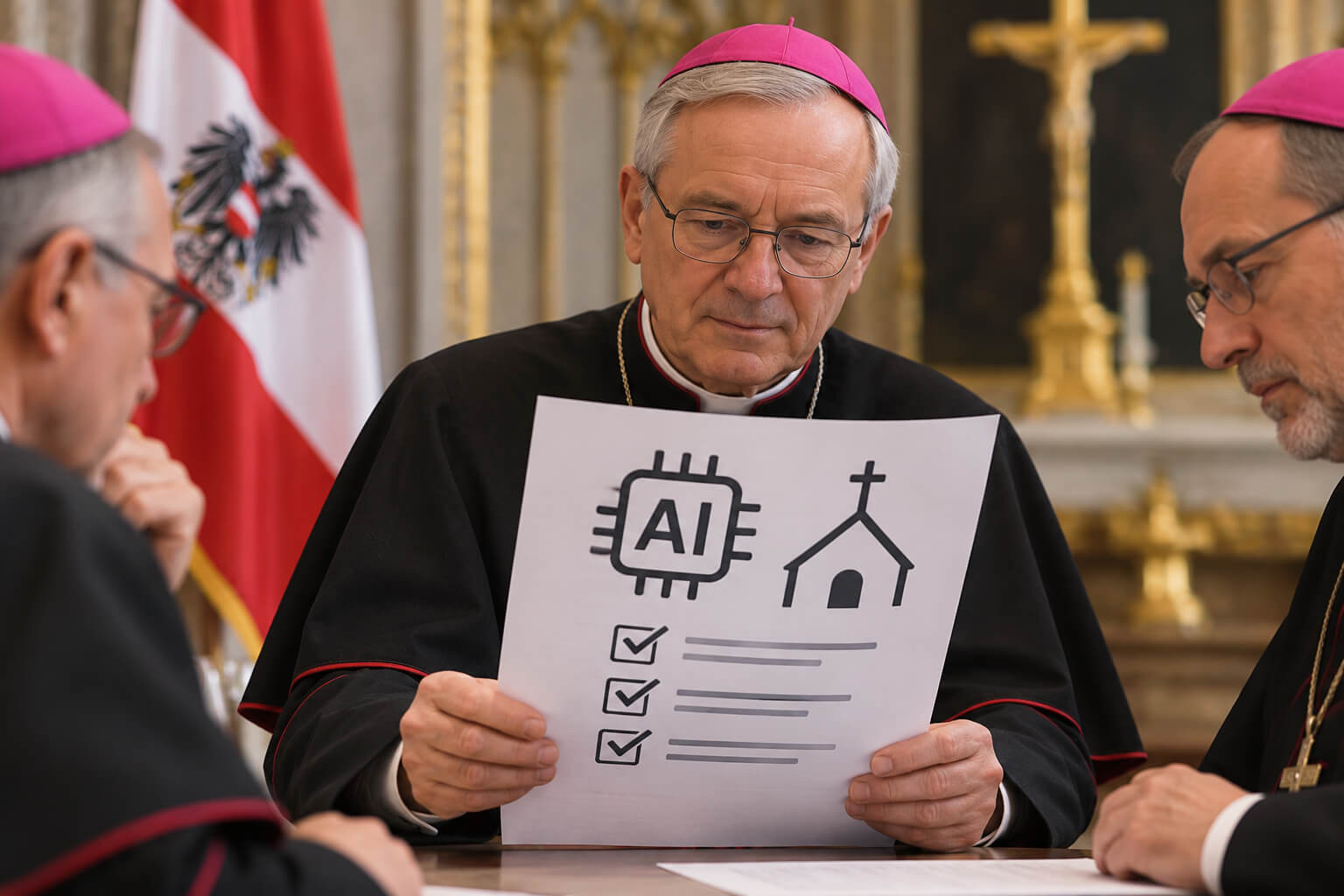
The Catholic Church in Austria is setting boundaries for artificial intelligence, making it clear that technology can support religious activities but should never replace the human relationships at the center of Church life. The new Austrian Bishops AI Rules address these concerns by outlining how technology should be used within the Church.
The Austrian Bishops’ Conference has adopted its first formal rules governing the use of AI across Catholic institutions. The framework addresses how artificial intelligence can be used in worship, preaching, pastoral care, and other Church activities while emphasizing human dignity, personal responsibility, and ethical oversight.
The decision follows growing interest in AI tools capable of generating religious content, answering spiritual questions, and assisting organizations with administrative work. For Austria’s Catholic leadership, the challenge is no longer simply whether the Church should use AI, but how far that use should go.
Austrian Bishops Set Clear Boundaries for AI in Religious Activities
Under the newly adopted framework, artificial intelligence may assist with certain Church responsibilities, but it cannot replace essential human interactions. The bishops have placed particular emphasis on sacramental celebrations, preaching, liturgy, and pastoral care, where personal presence and human relationships remain fundamental. While AI tools may help prepare materials or organize information, the technology cannot take over responsibilities that require direct human involvement. The distinction reflects the Church’s concern that automated systems, regardless of their capabilities, cannot reproduce the spiritual and emotional dimensions of religious life.
AI Cannot Replace Priests or Personal Pastoral Care
One of the framework’s central principles is the protection of personal relationships between clergy and the faithful. AI-powered chatbots may be capable of providing religious information or responding to questions about Catholic teachings, but they cannot substitute for priests, spiritual advisers, or genuine pastoral conversations. The bishops recognize that religious guidance involves trust, empathy, moral judgment, and personal responsibility. These qualities cannot simply be reduced to automated responses, even as conversational AI becomes increasingly sophisticated.
Austrian Catholic Dioceses Must Establish AI Oversight
The new rules also introduce accountability measures for Catholic institutions using artificial intelligence. Each Austrian diocese will be required to designate a person responsible for overseeing AI-related matters. These representatives will work through a nationwide coordination group involving specialists in technology, data protection, and theological ethics. The arrangement is intended to help Church institutions evaluate AI applications, identify potential risks, and ensure that technological decisions remain consistent with Catholic principles. Rather than allowing individual organizations to adopt AI tools without clear guidance, the bishops are establishing a more coordinated approach to responsible use.
Human Dignity Remains Central to the Church’s AI Policy
The Austrian bishops have grounded their AI framework in Catholic teachings concerning human dignity, freedom, justice, and the common good. Their position recognizes that technological efficiency should not become the sole measure of whether an AI application is appropriate. Systems that process information, generate recommendations, or automate decisions must remain subject to meaningful human supervision. This approach also reflects wider concerns about AI-generated misinformation, unreliable outputs, and the possibility of people becoming overly dependent on automated systems. For the Church, preserving human judgment is especially important when technology enters areas involving faith, ethics, and personal well-being.
Church Leaders Have Been Examining AI Risks Since 2025
The adoption of formal rules follows earlier discussions within the Austrian Bishops’ Conference about the opportunities and challenges associated with artificial intelligence. In November 2025, the bishops established a working group led by Bishop Hermann Glettler of Innsbruck to examine the technology’s implications for Church institutions. The discussions covered ethical responsibilities, legal considerations, and possible practical applications. That work helped shape the framework adopted during the bishops’ autumn assembly in Salzburg in November 2026. The resulting policy reflects a broader effort to move beyond general statements about responsible AI and establish concrete institutional expectations.
Austria’s AI Rules Could Influence Other Religious Institutions
Although the framework applies to Catholic institutions in Austria, its approach may attract attention from religious organizations elsewhere. Churches, schools, and faith-based institutions increasingly encounter AI tools that can draft sermons, prepare educational resources, translate religious materials, and respond to questions from the public. Austria’s bishops have chosen to distinguish between using AI as a practical assistant and allowing it to assume responsibilities rooted in human relationships. Other religious organizations may face similar decisions as AI becomes more accessible and capable. The Austrian framework provides one example of how institutions can adopt emerging technologies without abandoning their established ethical principles.
AI Governance Is Becoming an Important Issue for Religious Organizations
The Austrian Bishops’ Conference has taken a significant step toward defining how artificial intelligence should operate within Catholic institutions. Instead of rejecting AI entirely, the bishops have acknowledged its potential benefits while establishing restrictions in areas where human involvement remains essential. The next challenge will be implementing these requirements across dioceses and ensuring that Church personnel understand their responsibilities when using AI-powered tools. As artificial intelligence continues to enter education, healthcare, government, and religious organizations, Austria’s decision highlights a question that extends far beyond the Catholic Church: how can institutions benefit from automation without allowing technology to displace human judgment and connection?
Sources
- Austrian Bishops’ Conference (Official Statement) — Bishops Regulate the Use of AI in the Church — November 12, 2026.
- EWTN News — Austrian Bishops Adopt First Rules for AI in the Church — November 13, 2026.
- Austrian Bishops’ Conference — Official Autumn 2026 Assembly Statements (PDF).
- ORF Religion — Austrian Bishops Discuss New AI Regulations — November 12, 2026.
