


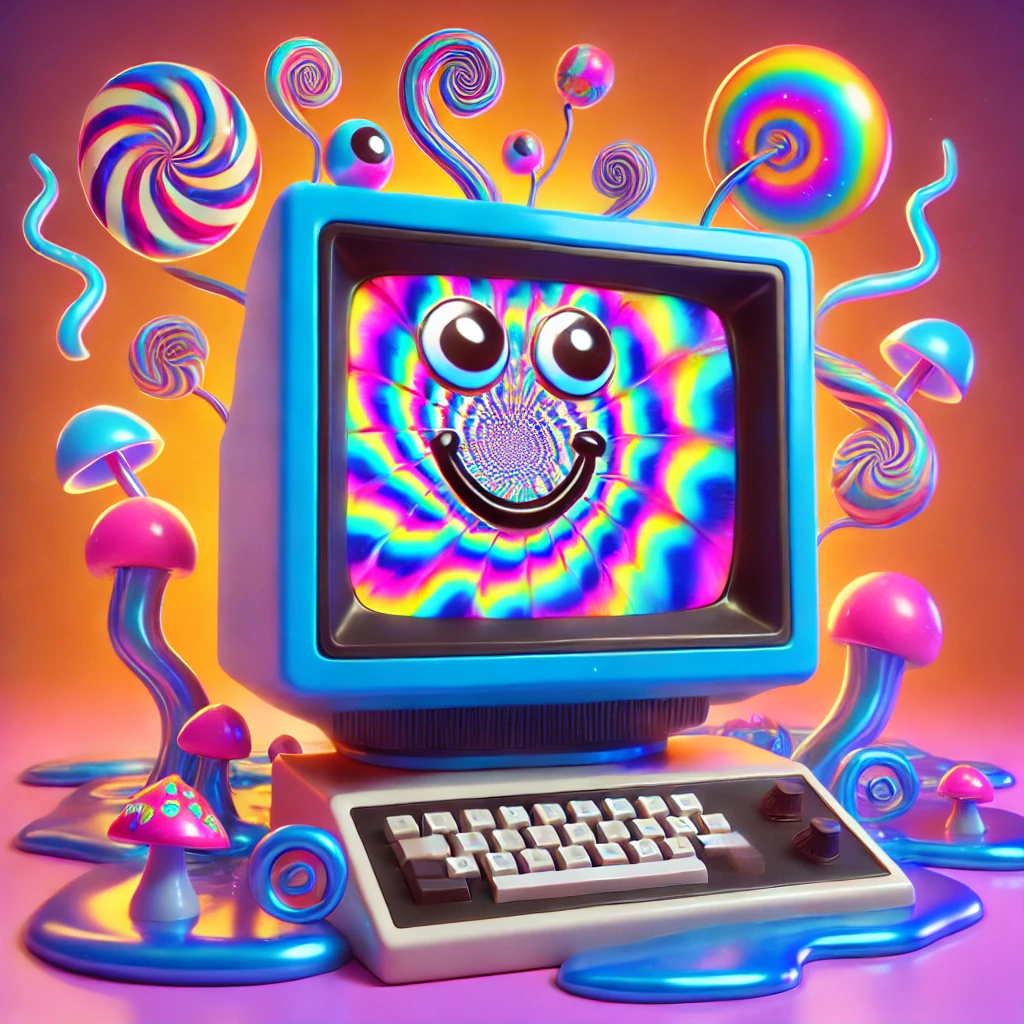
OpenAI’s latest language model, GPT-O1, has been hailed as a significant advancement in artificial intelligence, boasting enhanced capabilities in reasoning, creativity, and conversational fluency. However, a new issue has emerged that is causing concern among researchers and users alike: AI hallucinations. These hallucinations, where the AI confidently generates incorrect or nonsensical information, have been appearing in unexpected contexts, prompting questions about the reliability of the new model.
The Nature of AI Hallucinations
AI hallucinations are not new to large language models like GPT, but their frequency and subtlety in GPT-O1 are drawing attention. Unlike earlier versions where hallucinations were often easy to spot—like factual errors in response to historical or scientific questions—GPT-O1 is generating them in more surprising and nuanced ways.
These hallucinations are most prevalent in contexts where the AI is expected to provide reliable, factual information. For instance, users have reported seeing fabricated academic citations, fictitious news events, or made-up references during in-depth conversations. What makes these hallucinations alarming is the model’s confidence in presenting incorrect information, often woven seamlessly into otherwise accurate and coherent responses.
“One moment, the AI is providing spot-on technical advice or perfectly summarizing an article, and the next, it’s referencing a completely fictional study as if it’s a well-known fact,” said Dr. Rebecca Norton, a computer scientist and AI ethics researcher. “The hallucinations are subtle, making them harder to detect, and that’s what’s concerning.”
Hallucinations in Unexpected Places
What’s especially surprising about GPT-O1’s hallucinations is where they’re cropping up. Beyond technical or academic queries, hallucinations are appearing in creative writing, coding assistance, and even casual conversations.
For example, some users have found that when tasked with generating creative stories or poems, GPT-O1 occasionally inserts characters or plot points that seem plausible but don’t exist in the user’s original prompt. Others have reported that when the model is used to assist in writing code, it sometimes fabricates function names or programming libraries that don’t exist, leading to errors when developers attempt to implement the code.
“I asked GPT-O1 to help debug some code, and it recommended a function from a library that doesn’t exist,” said software developer Tim Cardenas. “It was completely confident, even explaining how the function should work. I didn’t realize until I tried to implement it that it was a hallucination.”
More puzzling still, GPT-O1 has been known to hallucinate during basic, informal conversations, introducing imaginary events or people without prompting. In some cases, these hallucinations are humorous—such as inventing fictional celebrities or describing an alternate history where seemingly innocuous events unfolded differently.
“I was chatting with GPT-O1 about recent movies, and it confidently told me about a blockbuster film released last summer that never existed,” said one casual user. “It sounded so convincing that I had to Google it to be sure.”
The Impact on Trust and Usefulness
While GPT-O1 represents a technical leap forward in many respects, the unpredictability of its hallucinations has raised concerns about trust and reliability, particularly in professional settings where accuracy is critical. For users in fields like research, journalism, and software development, even occasional hallucinations can undermine the utility of the model.
“AI is supposed to assist with decision-making and provide accurate information,” said Dr. Sarah Levin, an expert in AI and human-computer interaction. “But when hallucinations appear unpredictably, it forces users to question every output, even the parts that are correct.”
This issue has implications for industries such as healthcare, where AI models like GPT-O1 are being tested for use in medical diagnostics, treatment recommendations, and patient communication. In these high-stakes environments, even a single hallucination could lead to harmful outcomes.
“If AI models are going to be used in critical fields like medicine, we need to ensure that they’re not fabricating information that could lead to misdiagnosis or mistreatment,” said Dr. Levin.
OpenAI’s Response and the Path Forward
In response to the growing concerns, OpenAI has acknowledged the issue and is working on refining the model’s ability to differentiate between fact and fabrication. According to a statement from OpenAI, the hallucination problem stems from the complexity of training large language models on vast, diverse datasets, which sometimes leads the model to overgeneralize or create plausible-sounding but incorrect outputs.
“We are aware of the hallucination issue in GPT-O1, and we’re actively addressing it,” said an OpenAI spokesperson. “Our goal is to improve the model’s accuracy while maintaining its creative and generative capabilities. We believe that with more targeted training and enhanced fact-checking systems, we can reduce these hallucinations.”
To that end, OpenAI is exploring several solutions, including improved post-processing techniques, where the model’s outputs are automatically checked for factual accuracy before being presented to users. Additionally, OpenAI is working on ways to give the model better tools for self-reflection, enabling it to recognize when it might be hallucinating and alerting users to potential inaccuracies.
Balancing Creativity and Accuracy
Despite the hallucination problem, GPT-O1’s capabilities are impressive, particularly in creative fields where the AI’s generative skills shine. In contexts like storytelling, brainstorming, and artistic collaboration, the occasional hallucination can actually add to the charm or unpredictability of the output. However, the challenge lies in striking a balance between creativity and reliability.
For now, users are advised to be cautious when using GPT-O1 for tasks requiring factual precision. Fact-checking AI-generated content remains essential, particularly in professional or high-stakes environments.
As AI models like GPT-O1 continue to evolve, the issue of hallucinations will remain a central focus for developers and users alike. The future of AI will depend not only on the technology’s ability to generate compelling and creative outputs but also on its capacity to distinguish truth from fiction.
