

Close Menu
    What's Hot
    Technology & Innovation

    Avnet Brings AI Ecosystem Together to Scale Edge AI in Singapore

    By Art RyanJune 30, 20260

    Edge AI Moves Past the Demo Stage Avnet is bringing a wide technology ecosystem together…

    AI Could Unlock $79 Billion for the Philippines by 2030, Accenture Says

    June 30, 2026

    From AI to AGI: Should Nations Build Intelligence as Critical Infrastructure?

    June 30, 2026

    From Digital Transformation to AI Transformation: Enterprise Leadership Enters Its Next Phase at AI Vision 2030

    June 30, 2026
    Facebook X (Twitter) Instagram
    Facebook X (Twitter) Instagram
    Breaking AI News
    Tuesday, June 30
    • Home
    • Events
    • Videos
      • Machine Can Think Summit 2026
      • Step Dubai Conference 2026
    • Technology & Innovation

      Avnet Brings AI Ecosystem Together to Scale Edge AI in Singapore

      June 30, 2026

      AI Could Unlock $79 Billion for the Philippines by 2030, Accenture Says

      June 30, 2026

      From AI to AGI: Should Nations Build Intelligence as Critical Infrastructure?

      June 30, 2026

      From Digital Transformation to AI Transformation: Enterprise Leadership Enters Its Next Phase at AI Vision 2030

      June 30, 2026

      Predict, Diagnose, Act: AI’s Revolution in Healthcare Outcomes at Global AI Show Riyadh 2026

      June 30, 2026
    • Business & Marketing

      AI Could Unlock $79 Billion for the Philippines by 2030, Accenture Says

      June 30, 2026

      AI Debt Boom Reshapes U.S. Bond Market as Tech Giants Fund Infrastructure Expansion

      June 30, 2026

      xAI Grok 4.5 Enters Private Beta at Tesla and SpaceX

      June 29, 2026

      Meta Gemini AI Tokens: Why Meta Is Asking Staff to Use Gemini More Efficiently

      June 29, 2026

      MGX Raises Nearly $50 Billion to Accelerate Global AI Investments

      June 28, 2026
    • Industry Applications

      AI Could Unlock $79 Billion for the Philippines by 2030, Accenture Says

      June 30, 2026

      Dubai Launches World’s First AI Park Design Challenge for Al Safa 2 Park

      June 30, 2026

      HP and OpenAI Alliance Expands Frontier AI Use for Enterprise Cybersecurity

      June 30, 2026

      South Korea’s $519 Billion Chip Bet Powers Its AI Economy

      June 30, 2026

      OpenAI Tests Excel and PowerPoint Controls for Codex

      June 30, 2026
    • Trends & Insights

      Gemini 3.5 Pro Leaks Reveal Key Details About Google’s Next AI Model

      June 30, 2026

      Claude’s Agentic Work Reshapes Anthropic Economic Index

      June 28, 2026

      Tech Equity Sales Renew AI Debt Binge Worries as AI Infrastructure Spending Accelerates

      June 28, 2026

      UAE Investors Lead the World in AI Adoption, HSBC Survey Finds

      June 26, 2026

      Google Says Generative AI Is Creating a New Language for Marketing and Creativity at Cannes Lions 2026

      June 24, 2026
    • AI in Travel

      Global AI Show Riyadh 2026 Opens in 2 Days as Saudi Arabia Prepares for Major AI Conference

      June 27, 2026

      Agoda AI Travel Features Bring Real-Time Updates and Smarter Trip Planning

      June 26, 2026

      AI Travel Agents Could Disrupt Brand Loyalty as Travelers Embrace Smarter Booking Decisions

      June 26, 2026

      Jamaica Tourism 3.0 Uses AI to Transform Visitor Economy Into National Development Platform

      June 26, 2026

      Southwest Airlines Teams Up with AWS to Speed Up AI and Cloud Modernization

      June 21, 2026
    Breaking AI News
    Home » Meta and Spotify Criticize EU’s AI Regulations
    Technology & Innovation

    Meta and Spotify Criticize EU’s AI Regulations

    AdminBy AdminSeptember 22, 2024No Comments4 Mins Read
    Facebook Twitter Pinterest LinkedIn Tumblr Email
    Share
    Facebook Twitter LinkedIn Pinterest Email

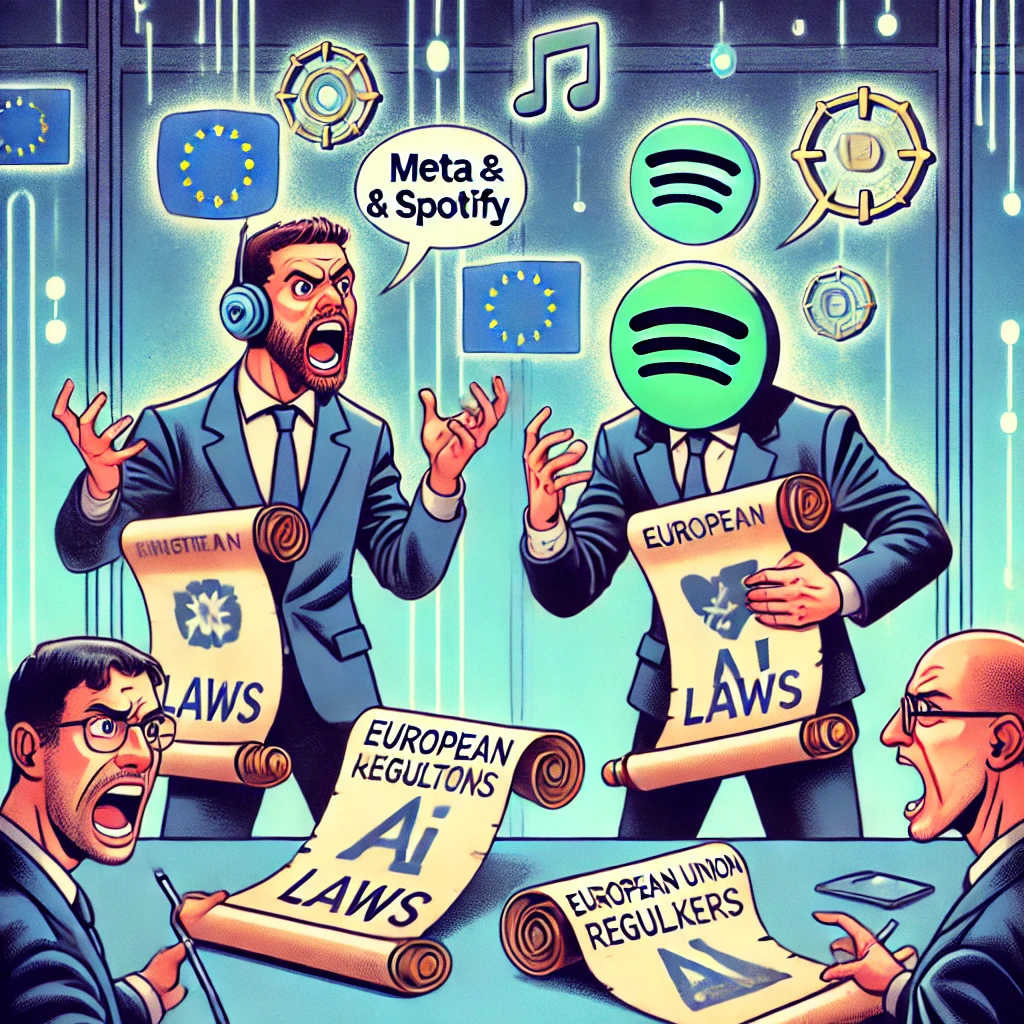
    Meta and Spotify, two major players in the global tech industry, have publicly expressed their discontent with recent decisions made by the European Union regarding artificial intelligence (AI). The EU’s new AI regulations, aimed at controlling the development and deployment of AI technologies, have been met with criticism from these companies, which argue that the rules could stifle innovation and harm businesses operating in the digital economy.

    The EU’s AI Act

    The European Union has been working on its AI Act, which aims to create comprehensive regulations around the use of artificial intelligence across member states. The legislation introduces a tiered system that classifies AI systems based on the risk they pose to society, from minimal to high-risk applications. The Act also sets strict requirements for transparency, data handling, and ethical usage of AI in high-risk sectors like healthcare, finance, and public services.

    While the EU seeks to ensure AI is used responsibly, companies like Meta and Spotify believe the regulations are too restrictive and could hinder the growth of the AI industry in Europe.

    Meta’s Response

    Meta, the parent company of Facebook, Instagram, and WhatsApp, has been particularly vocal in its criticism of the EU’s approach to regulating AI. The company argues that the new rules impose unnecessary burdens on AI development and could limit the scope of innovation in areas like natural language processing and content recommendation systems, both of which are crucial to Meta’s business model.

    Meta is concerned that the compliance requirements will make it harder for tech companies to operate in the EU, forcing them to invest significant resources into meeting regulatory standards. These added costs could slow down the rollout of new AI-driven features and services, especially for smaller tech companies that lack the financial muscle of global giants.

    Spotify’s Concerns

    Spotify, the world’s largest music streaming service, has also expressed dissatisfaction with the EU’s AI regulations. As a company that relies heavily on AI algorithms for personalized music recommendations, Spotify fears that the new rules could impede its ability to deliver a seamless user experience.

    The company has pointed out that the AI Act’s broad categorization of “high-risk” AI systems could apply to its recommendation algorithms, even though these systems are designed to enhance user experience rather than pose societal risks. Spotify argues that imposing stringent regulations on such algorithms could reduce their effectiveness and limit the company’s ability to innovate in areas like content discovery and user engagement.

    Impact on Innovation and Competition

    Both Meta and Spotify have warned that the EU’s regulations could have unintended consequences for the region’s tech industry. They argue that while the aim of the regulations is to ensure ethical AI development, the overly cautious approach could stifle innovation and make Europe less competitive in the global tech landscape.

    Critics of the regulations also worry that the rules may favor large companies with the resources to comply, while smaller startups and tech companies may struggle to meet the EU’s stringent standards, further concentrating power in the hands of tech giants.

    The EU’s Perspective

    The European Union, for its part, defends the AI Act as necessary to safeguard citizens’ rights and ensure that AI is developed and used in an ethical and transparent manner. The EU believes that establishing clear rules around AI development will foster trust and protect consumers from potential harms, such as bias, privacy violations, and the misuse of AI in surveillance.

    While the EU has acknowledged the concerns raised by tech companies, it remains committed to implementing the AI Act to set a global standard for AI governance.

    Conclusion

    Meta and Spotify’s pushback against the EU’s AI regulations underscores the ongoing tension between government efforts to regulate emerging technologies and the tech industry’s desire for innovation. As the AI Act moves closer to becoming law, the debate over how to balance regulation with innovation will likely intensify, with tech companies advocating for more flexible rules that encourage growth without compromising on ethics and safety.

    Share. Facebook Twitter Pinterest LinkedIn Tumblr Email
    Admin

    Related Posts

    Avnet Brings AI Ecosystem Together to Scale Edge AI in Singapore

    June 30, 2026

    AI Could Unlock $79 Billion for the Philippines by 2030, Accenture Says

    June 30, 2026

    From AI to AGI: Should Nations Build Intelligence as Critical Infrastructure?

    June 30, 2026

    Comments are closed.

    Latest News

    Avnet Brings AI Ecosystem Together to Scale Edge AI in Singapore

    June 30, 2026

    AI Could Unlock $79 Billion for the Philippines by 2030, Accenture Says

    June 30, 2026

    From AI to AGI: Should Nations Build Intelligence as Critical Infrastructure?

    June 30, 2026

    From Digital Transformation to AI Transformation: Enterprise Leadership Enters Its Next Phase at AI Vision 2030

    June 30, 2026
    Facebook X (Twitter) Pinterest Vimeo WhatsApp TikTok Instagram LinkedIn YouTube Spotify Reddit Snapchat Threads

    AI University

    • Global Universities
    • Universities in Africa
    • Universities in Asia
    • Universities in Europe
    • Universities in Latin America
    • Universities in Middle East
    • Universities in North America
    • Universities in Oceania

    AI Tools & Apps Directory

    • AI Productivity Tools
    • AI Coding Tools
    • AI Voice Tools
    • AI Video Tools
    • AI Image Generators
    • AI Writing Tools

    Info

    • Home
    • About Us
    • AI Organizations & Associations
    • Contact Us
    • Cookie Policy
    • Copyright Policy
    • Disclaimer
    • Editorial Policy
    • Terms and Conditions

    Subscribe to Updates

    Get the latest creative news from FooBar about art, design and business.

    © 2026 Breaking AI News.
    • Privacy Policy

    Type above and press Enter to search. Press Esc to cancel.

    Sign Up

    Want to stay ahead In Artificial Intelligence?

     Sign up now and get exclusive breaking AI news and special updates—FREE!